Sewer pipe
About Sewer Pipes in India
Sewer pipes are underground pipes that transport sewage from houses and commercial buildings (but not stormwater) to the municipal sewerage system for eventual transportation to treatment facilities or final disposal. Understanding sewer pipes in India is essential for anyone planning a home, since the choice of piping directly affects the durability and safety of the entire drainage network.
No house or building can be built without sewer pipes, because they form the foundation of any structure. A well-connected network of pocket-friendly sewage and drainage pipes ensures that all human-produced waste reaches the septic tank or the sewer freely. Consequently, builders choose from many different types of pipes for different purposes in a building, depending on the material of construction.
Understanding The Sewer Drain
A sewer main drain is the most crucial part of any sewer system. This main drain connects to all the different drain lines and collects the wastewater flowing through them. After that, the main drain leads to the main sewer, which in turn leads to treatment plants or disposal points. Therefore, it is vital to check these drain piping networks regularly for signs of pollution. Any leakage will cause water pollution in your house’s water supply.

Sewer Plumbing And Drainage Systems
People also call sewerage inside the home sewer plumbing or sewer drainage. For this application, plumbers in India use PVC SWR pipes, where SWR stands for soil, waste, and rainwater drainage system. As the name suggests, this drainline collects runoff water and directs it to the nearest sewer drainage or septic tank. Manufacturers design these pipes to resist bacterial attack, microbial infestation, and fungal growth. Most homes and buildings maintain separate drainage for rainwater and wastewater to ensure zero water pollution. Ajay Pipes offers Drainline SWR pipes and fittings that are lightweight, long-lasting, and cost-effective.

Why Choose Ajay Terraline PVC Foam Core Pipe
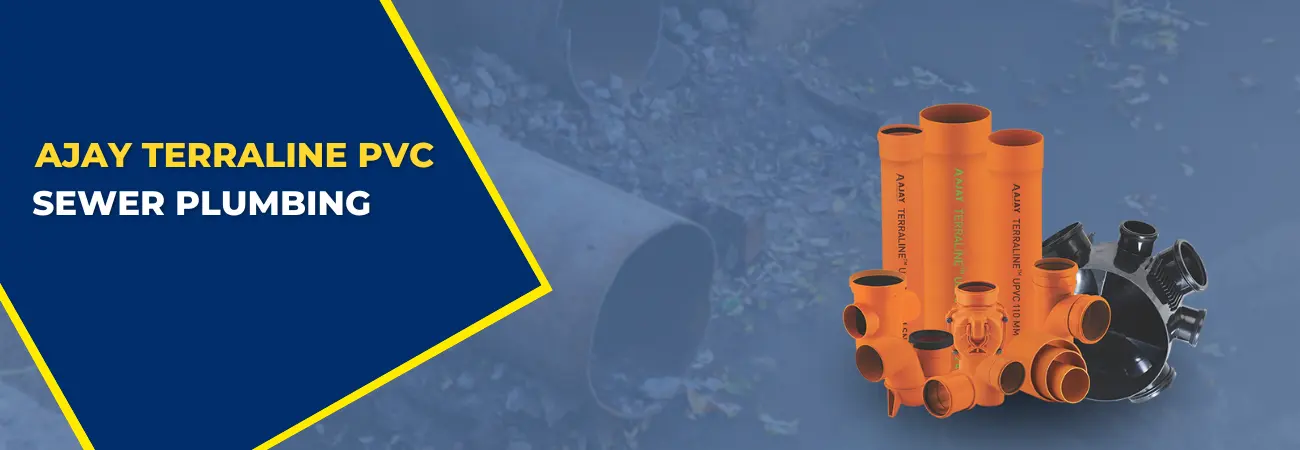
Ajay Terraline PVC foam core pipe is the new-generation PVC pipe for sewer lines. It is lightweight and easy to install, requires no special tools during installation, needs less manpower, and is easy to repair. In simple terms, foam core pipes are multilayered (three-layer) pipes. Specifically, they consist of an outer and inner layer of solid PVC along with a middle layer of foamed PVC. Compared to solid-wall PVC pipes, foam core pipe is considerably more lightweight (approximately 25% lighter). Additionally, Terraline PVC foam core pipes are anti-rodent, so rodents will not attack or damage the pipe. Ajay Terraline PVC foam core pipes comply with IS: 16098-Part 1 and come in sizes from 110mm to 315mm across three different classes (SN-2, SN-4, and SN-8). Overall, for a stress-free drainage system, Ajay Terraline PVC foam core is a great choice.
According to the Bureau of Indian Standards, following recognized pipe standards like IS: 16098 helps ensure long-term structural performance in underground drainage applications.
TYPES OF SEWER PIPES IN INDIA

PVC SEWER PIPE
Sewer pipes are highly corrosion and chemical resistant especially designed to carry toxic human waste. These plastic PVC pipes are most suited for use in home and industrial sewer systems.
CAST IRON SEWER PIPE
Typically used in earlier days, these pipes are made of gray cast iron.
CLAY SEWER PIPE
Clay pipes are made of clay, air dried and then fired in a kiln.
CONCRETE SEWER PIPE
Most widely used are the sewer pipes made of concrete finding their use in municipality sewer lines.