
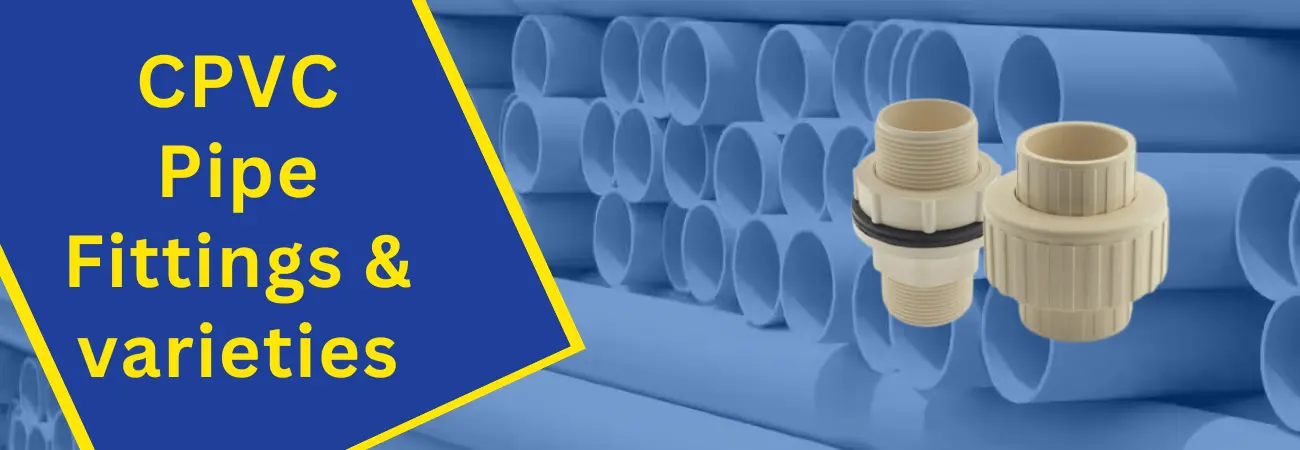
CPVC Pipe Fitting
Introduction
Chlorinated Polyvinyl Chloride (CPVC) pipes and fittings are thermoplastic products that manufacturers make from CPVC resins. Moreover, they rank among the most durable and high-performance piping materials, and people have used them globally for over 60 years. CPVC is more flexible than standard PVC pipes, and it also withstands higher temperatures.
CPVC is highly resistant to chemicals, heat, and pressure. Therefore, it is an ideal choice for residential, commercial, and industrial plumbing systems, including fire sprinkler applications.
Ajay manufactures its CPVC plumbing fittings from a premium blend of CPVC material, so they perform superbly in both hot and cold water distribution systems. In addition, advanced technology and high-quality raw materials help Ajay Pipes deliver reliable CPVC piping solutions.
CPVC Pipe Fitting Types and Varieties
1. CPVC Plain Pipe Fittings
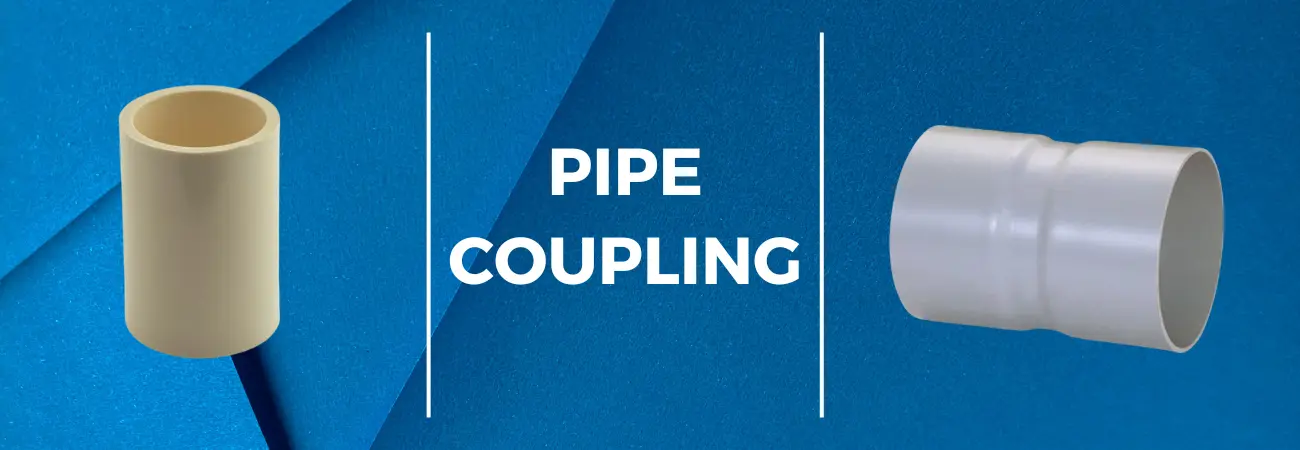
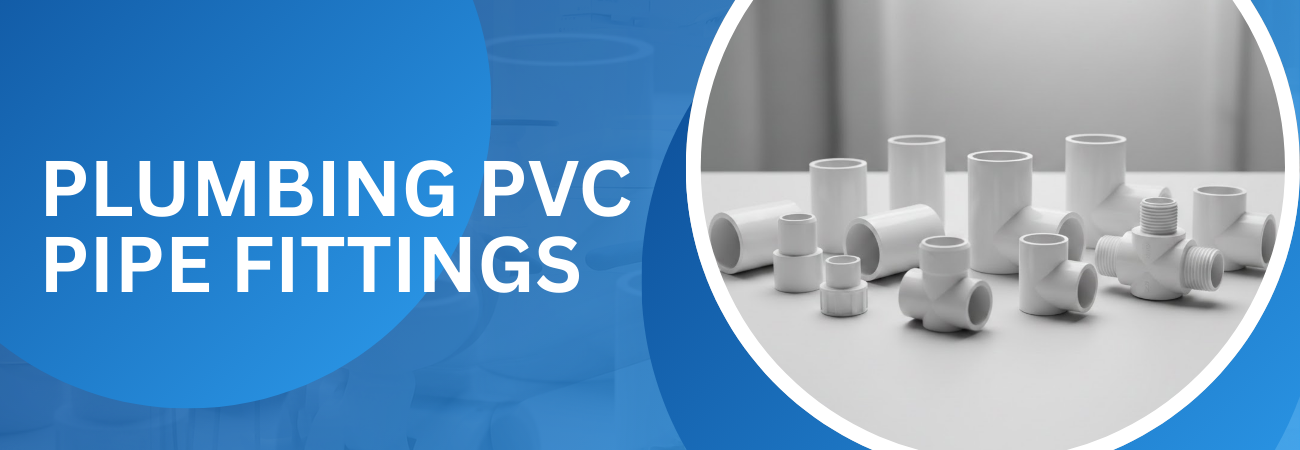
Installers use CPVC plain fittings to connect two or more CPVC pipes with solvent cement. These fittings come in various types, including tees and reducing tees, elbows and reducing elbows, 45 degree elbows, sockets or couplers and reducing couplers, bushings, step over bends, long bends, end caps, and 3-way elbows.
As a result, plumbers widely use these fittings in permanent plumbing systems.
2. CPVC Threaded Pipe Fittings
Plumbers use threaded fittings to connect pipes with bathroom fixtures and plumbing equipment such as taps, showers, pumps, and tanks. The threads can be CPVC or brass.
Common types include the male threaded adaptor (MTA), female threaded adaptor (FTA), brass tee, brass MTA / FTA, and brass elbow. Furthermore, brass insert fittings suit hot water applications best because of their higher strength and durability.
3. CPVC Union
A CPVC union combines threaded and plain adaptors with a threaded ring. As a result, it allows easy connection and disconnection of pipes without cutting them, whereas socket joints stay permanent.
4. CPVC Valves
CPVC valves control the flow of water in a piping system. Common types include the CPVC ball valve and the CPVC concealed valve. Therefore, these valves are essential for flow regulation in plumbing systems.
5. CPVC Flange
Plumbers use flanges to connect pipes, valves, pumps, and other equipment. In addition, flanges allow easy maintenance and inspection.
To create a flange joint, installers bolt two flanges together with a gasket in between, so the joint seals properly.
6. CPVC Tank Nipple
Tank nipples connect the plumbing system with overhead tanks. Also, they come in both single-thread and double-thread configurations.
Sizes of CPVC Pipe Fittings
CPVC fittings come in two sizing systems, so you can match them to the needs of your project.
Copper Tube Size (CTS)
CTS fittings come in ½” (15 mm), ¾” (20 mm), 1” (25 mm), 1¼” (32 mm), 1½” (40 mm), and 2” (50 mm). As a result, they cover residential plumbing branches.
Iron Pipe Size (IPS)
IPS fittings come in 2½” (75 mm), 3” (90 mm), 4” (110 mm), 6” (160 mm), and 8” (200 mm). Consequently, they serve larger commercial and industrial distribution lines.
CPVC Pipe Fitting Standards
Manufacturers make CPVC fittings as per international standards, namely ASTM D2846 (Copper Tube Size), ASTM F438 and ASTM F439 (Iron Pipe Size, Schedule 40 & 80), and Indian Standard IS 17546 (introduced in 2021). Overall, these standards ensure quality, safety, and performance.
CPVC Plumbing Fittings Joining Techniques
1. Solvent Cement Joint
Installers join plain CPVC fittings with solvent cement. As a result, the joint forms a strong and permanent bond between pipes.
2. Threaded Joint
Threaded joints connect CPVC pipes with other plumbing components like valves, pumps, and tanks. Additionally, plumbers use Teflon tape as a sealing material to prevent leakage.
Why Choose Ajay Flowline Plus CPVC Plumbing Fittings?
Ajay Pipes delivers high-quality CPVC plumbing solutions in India. Ajay designs Flowline Plus for durability, ease of installation, and superior performance.
The key advantages are clear. First, Ajay manufactures Flowline Plus using NSF-certified CPVC compounds. Second, it offers a 25% higher pressure rating at elevated temperatures. Third, it delivers enhanced impact strength compared to generic CPVC. In addition, plumbers install it easily, and it lasts long and resists corrosion. Finally, the range runs from ½” to 8” and includes valves, primers, and solvent cement.
Overall, Ajay Flowline Plus is one of the most certified CPVC systems in India.
Difference Between UPVC and CPVC Pipe Fittings
Therefore, CPVC fittings suit high-temperature applications better, and they offer better durability and performance compared to UPVC fittings.
Conclusion
CPVC pipe fittings are a reliable solution for modern plumbing systems because of their strength, chemical resistance, and high-temperature tolerance. Moreover, with advanced manufacturing and certified quality, Ajay Flowline Plus CPVC fittings ensure long-term performance for residential, commercial, and industrial applications.
A CPVC pipe fitting is a connector that joins, diverts, or terminates CPVC pipes in hot and cold water plumbing systems. Manufacturers make it from Chlorinated Polyvinyl Chloride resin to standards such as ASTM D2846, ASTM F438/F439, and IS 17546 in India.
CPVC pipe fittings withstand temperatures up to 93°C, whereas UPVC fittings handle only up to 60°C. Therefore, CPVC suits both hot and cold water distribution, while UPVC suits cold water systems only.
CPVC fittings come in Copper Tube Size (CTS) from ½” (15mm) to 2″ (50mm) and in Iron Pipe Size (IPS) from 2½” (75mm) to 8″ (200mm). As a result, they cover both residential plumbing branches and larger commercial or industrial lines.
Installers join CPVC plain fittings with solvent cement, which creates a permanent chemical bond. However, they seal threaded fittings for valves, pumps, or tanks with Teflon tape, because that joint must stay serviceable.
A CPVC union lets you disconnect and reconnect a pipe without cutting, because it combines threaded adaptors with a threaded ring. In contrast, a CPVC coupler (socket) forms a permanent solvent-welded joint that you cannot undo without cutting the pipe.
FAQs
A CPVC pipe fitting is a connector made from Chlorinated Polyvinyl Chloride resin, used to join, divert, or terminate CPVC pipes in hot and cold water plumbing systems. CPVC fittings are manufactured to standards like ASTM D2846 (Copper Tube Size) and ASTM F438/F439 (Iron Pipe Size), and in India additionally to IS 17546, introduced in 2021.
CPVC pipe fittings can withstand temperatures up to 93°C, compared to UPVC fittings which are rated up to 60°C. This higher heat tolerance is why CPVC is used for both hot and cold water distribution, while UPVC is limited to cold water systems.
CPVC fittings are available in Copper Tube Size (CTS) from ½” (15mm) to 2″ (50mm), and in Iron Pipe Size (IPS) from 2½” (75mm) to 8″ (200mm). This dual-sizing system covers both residential plumbing branches and larger commercial or industrial distribution lines.
CPVC plain fittings are joined using solvent cement, which creates a permanent chemical bond between the pipe and fitting. Threaded CPVC fittings, used to connect valves, pumps, or tanks, are sealed with Teflon tape instead, since that joint needs to remain serviceable rather than permanent.
A CPVC union allows a pipe connection to be disconnected and reconnected without cutting, since it combines threaded adaptors with a threaded ring. A CPVC coupler (socket), by contrast, is solvent-welded and creates a permanent joint that can’t be undone without cutting the pipe.
For any queries, contact the plumbing experts at Ajay pipes on the Toll Free No. : 1800-11-4050 or via email at our email address info@ajaypipes.com




One Comment