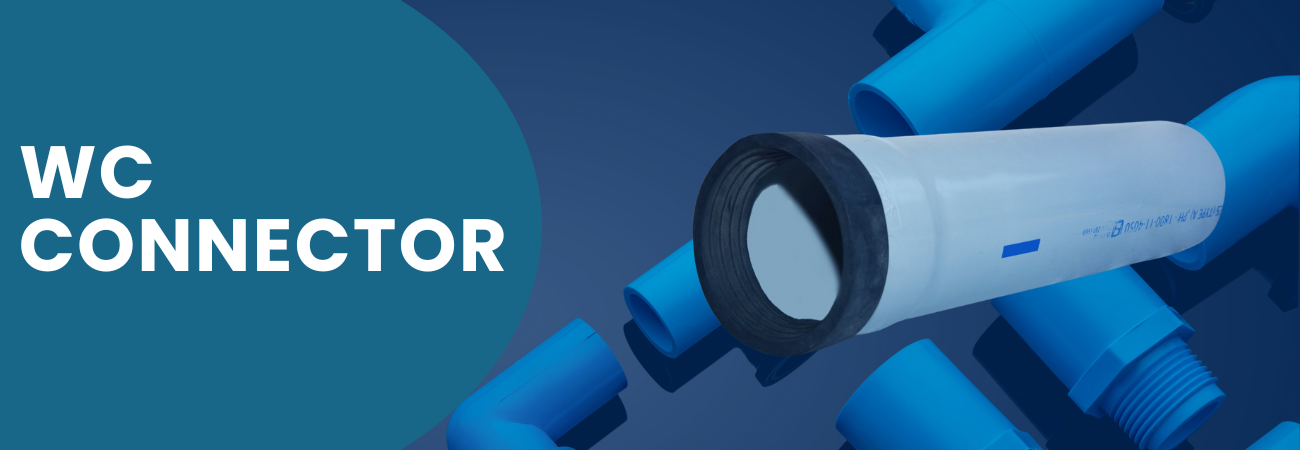
Wc Connector
Introduction
WC CONNECTOR:
WC connector pipes connect the toilet pans with the soil drain pipes that are present underground and are a part of the underground drainage system. Toilet connectors are a very important fitting and thus are available in varying types like :
- Straight WC pan connector – Generally used with wall mounted toilet pans, these connectors are straight and rigid.
- 14 degree angle WC pan connector– these connectors are bent at a slight angle of 14 degrees for gravity to come into action.
- 20mm offset WC pan connector pipe– these pipes are narrow and are capable of carrying lesser waste at once.
- 40mm offset WC pan connector pipe- These are wide connectors and capable of carrying more waste without clogging up.
- Extended straight WC pan connector- these connectors are longer in length than normal WC pan connectors
- 90 degree bend WC pan connector- These connectors have a 90 degree bend and are also called elbow pan connectors.
- Swan neck WC pan connector– the curve in this connector is shaped like a swan’s neck, thus the name.
- Flexible WC pan connector- Made of plastic, this connector is flexible and can move after connecting both ends with toilet pan and soil pipes.
- 90 degree flexible WC pan connector – Flexible connector with a 90 degree bend.
These pipes are generally available in large diameters so as to reduce the possibilities of clogging as solid human waste tends to clog small diameter pipes very easily. Modern toilets have WC flexible connectors installed to provide smoother movement to the waste from the toilet pans to the underground drainage soil pipes. Flexible connectors are made of plastic and are strong along with being flexible. The flexibility allows the pipe to swiftly move the waste through it without the need of any anti-clogging agents and devices.
FAQs
A WC connector pipe connects the toilet pan to the underground soil drain pipes that are part of the underground drainage system. It’s a critical fitting since it channels all solid and liquid waste from the toilet into the drainage network.
A straight WC pan connector is rigid and generally used with wall-mounted toilet pans. A 14-degree angle WC pan connector is bent at a slight angle specifically to let gravity assist the flow of waste toward the drain.
A 20mm offset connector is narrower and carries a lesser volume of waste at once, while a 40mm offset connector is wider and can carry more waste without clogging. The choice between them depends on the expected waste volume and clogging risk for the installation.
A flexible WC pan connector is made of plastic and can move after being connected to both the toilet pan and the soil pipe. This flexibility allows waste to move smoothly through the connector without needing anti-clogging agents or devices, which is why it’s common in modern toilet installations.
WC connector pipes are generally manufactured with large diameters to reduce the chances of clogging, since solid human waste tends to block smaller-diameter pipes easily. This is a key design consideration across all WC connector variants, from straight to swan neck to 90-degree bend types.
To buy connector pipes or for guidance regarding bathroom plumbings, contact plumbing experts at Ajay Pipes by calling on the Toll Free No.: 1800-11-4050 or via email at our email address info@ajaypipes.com