

CPVC fitting
What is CPVC Pipe Fitting?
Manufacturers make CPVC pipe fittings (Chlorinated Polyvinyl Chloride) from CPVC compounded material. In fact, it ranks among the strongest and longest-lasting materials used in piping applications for over 50 years.
Additionally, CPVC resists most aggressive chemicals and withstands high temperature and pressure, which makes it an ideal material for residential, commercial, and industrial piping and fire sprinkler applications.
Quick answer: CPVC pipe fittings are Chlorinated Polyvinyl Chloride connectors used to join, branch, or terminate CPVC piping in hot and cold water lines, chemical plumbing, and fire sprinkler systems. They come in two jointing types — solvent-jointed (Tee, Elbow, Socket, End Cap) and threaded (male/female CPVC, MTA, FTA) — and are available in CTS sizes 1/2″ to 2″ and IPS sizes 2½″ and larger.
CPVC Pipe Fitting Based on Jointing
Solvent Jointed CPVC Pipe Fitting
Plain CPVC pipe fittings, such as the Tee, Elbow, Socket, and End Cap, join together with the help of CPVC solvent cement.
Threaded Joint CPVC Pipe Fitting
This method creates a mechanical joint between male and female Plastic/Brass Threaded CPVC Pipe fitting. For this type of joint, use only teflon tape as a thread sealant.
Where Are CPVC Pipe Fittings Used?
Water Supply
These fittings work well for hot and cold water distribution in residential and industrial projects. They carry drinking water and food liquids, and water treatment plants also rely on them.
Chemical
In industrial plumbing, these fittings handle a wide range of chemicals. Specifically, they transport hot, corrosive fluids, including a wide range of inorganic acids and bases used in chemical processing.
Fire Sprinkler
Fire sprinkler systems also rely widely on these fittings.
What Sizes Do CPVC Fittings Come In?
Manufacturers offer CPVC pipe and fittings in CTS (Copper Tube Sizes) from 1/2″ through 2″, while Schedule 40 and Schedule 80 CPVC pipe and fittings come in IPS (Iron Pipe Size) from 2½” and larger for commercial applications like multi-story installations. In addition, the market carries CPVC pipe in 3-metre and 5-metre lengths.
CPVC Fittings
| Class of fittings | Standard | Sizes Available |
|---|---|---|
| SDR-11 | ASTM D 2486 | 1/2″ – 2″ |
| SCH-40 | ASTM F 438 | 2½” – 4″ |
| SCH-80 | ASTM F 439 | 2½” – 8″ |
| Solvent Cement | ASTM F 493 |
- ASTM D2846 covers the specification for CPVC (Chlorinated Poly Vinyl Chloride) plastic hot and cold water distribution systems.
- Under ASTM F493, you’ll find the standard specification for solvent cements used with CPVC plastic pipe and fittings.
- ASTM F441 sets the standard specification for CPVC plastic pipe, Schedule 40 and Schedule 80.
- For Schedule 40 Chlorinated Polyvinyl Chloride pipe fittings (socket-type), ASTM F438 provides the standard specification.
- Similarly, ASTM F439 provides the standard specification for Schedule 80 Chlorinated Polyvinyl Chloride pipe fittings (socket-type).
Why Ajay Flowline-Plus Pipe Fitting?
At Ajay Pipes, we manufacture CPVC pipes and fittings using the latest technology and NSF-certified imported compounded materials. In fact, the Ajay Flowline-Plus CPVC system is the most certified system in India. We design our CPVC pipes and fittings to perform equally well for both cold and hot water distribution systems. As a result, they can be the ideal choice for you, since these pipes are durable, friction-free, corrosion-resistant, and environment-friendly.

Types of CPVC Fittings
Plain Pipe Fittings
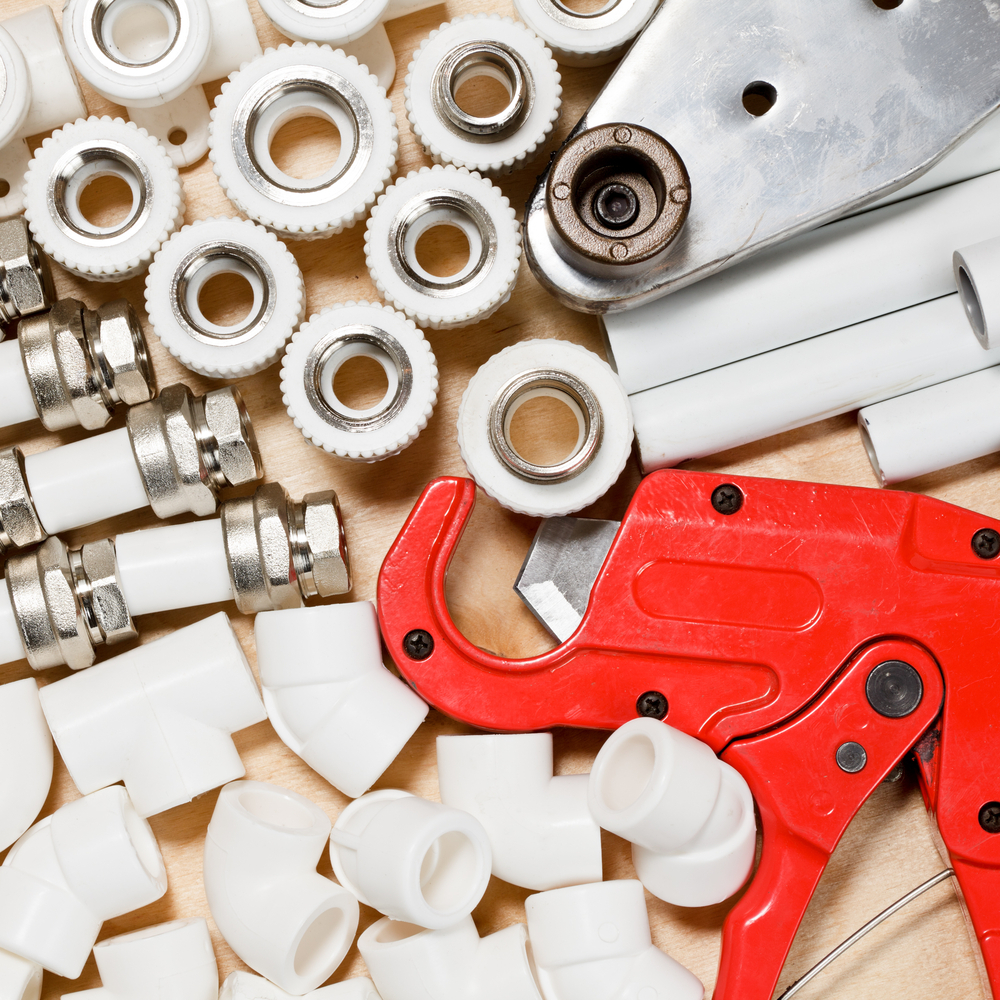
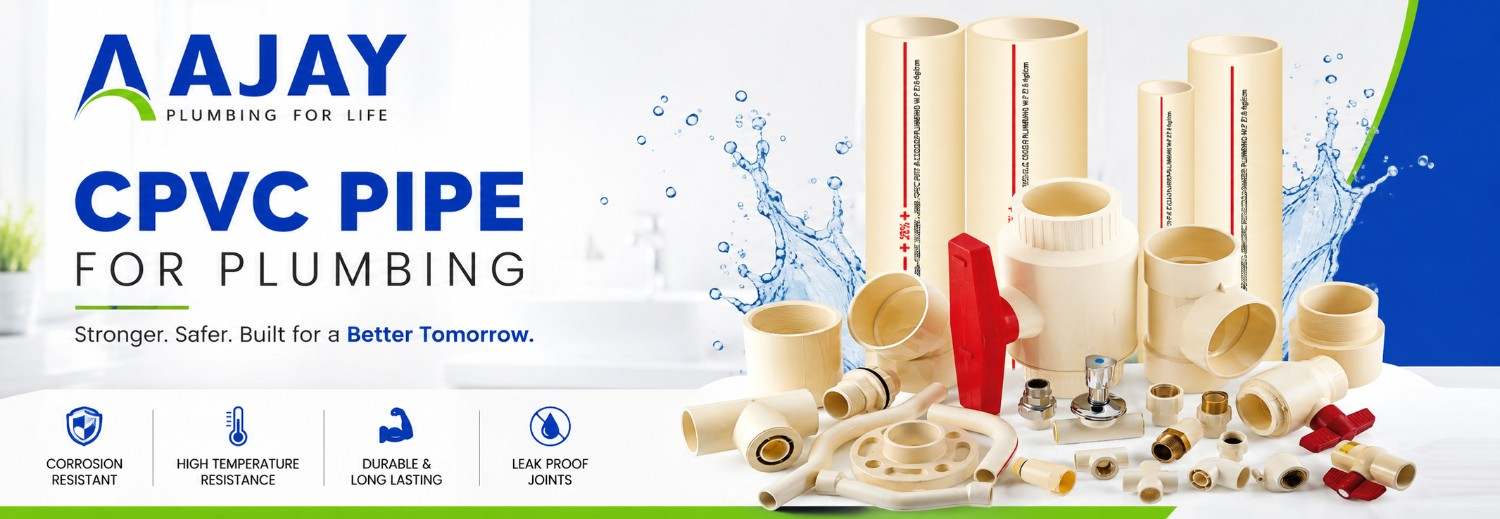
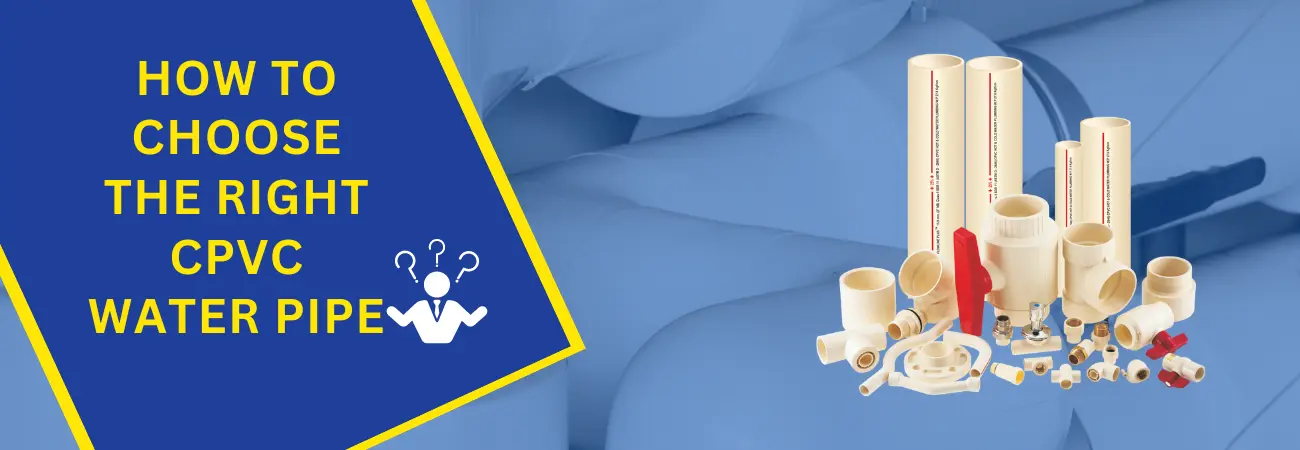
Plain pipe fittings are like CPVC Tee, CPVC Elbow, CPVC Socket, & CPVC End cap.
Threaded Pipe Fittings
Threaded pipe fittings are like CPVC MTA and CPVC FTA.
Transition Pipe Fittings
Transition pipe fittings include Brass Tee, Brass MTA, Brass FTA, and Brass Elbow.
Union
A union is a combination of a threaded adaptor, plain adaptor, and threaded ring. Its basic function is to connect two pipes, much like a socket. The key difference is that a socket joint is a kind of permanent joint, whereas you can easily remove a union at any time.
Valves
The most common feature of valves is to control the flow. Common valve types include the Ball valve and concealed valve, both used in piping systems.
Flange
A flange joint is a method of connecting pipes, valves, pumps, and other equipment to form a piping system. It also provides easy access for cleaning. Installers make flange joints by bolting two flanges together with a gasket between them to create a seal.
Tank Nipple
Tank nipples, with either both ends or one end threaded, usually connect the whole piping system with the overhead tank.
Features and Benefits of Ajay Flowline-Plus CPVC Pipes & Fittings
25% Higher Performance
Our Ajay Flowline-Plus CPVC pipes deliver a pressure rating that is up to 25% higher at elevated operating temperatures compared to generic CPVC.
Higher Impact Strength
These pipes also resist impact loads three times better than generic CPVC, which results in far lower handling, transportation, and installation-related damage.
Non-Toxic
NSF and CFTRI certify our CPVC pipes and fittings for use with potable water, so they stay totally safe for human health.
50-Year Designed Life
We design our CPVC pipes and fittings to withstand operating temperatures and pressures over a very long period, and they incorporate a safety factor of 2.
Ajay Flowline-Plus CPVC pipes & fittings designed to withstand operating temperatures & pressures for a very long period of time & incorporates a factor of safety 2.

Leak-Proof
Together, the easy installation technique, the “Perfect-Fit” system, and the use of a high-performance, one-step Lo-VOC solvent cement ensure leak-proof performance over the system’s lifetime.
Perfect-Fit System
We manufacture Ajay Flowline-Plus CPVC pipes and fittings to very close dimensional tolerances and with a high level of consistency, using state-of-the-art manufacturing technology.


2 Comments