
UPVC Elbow: Complete Plumbing & Fittings Guide 2025
Introduction
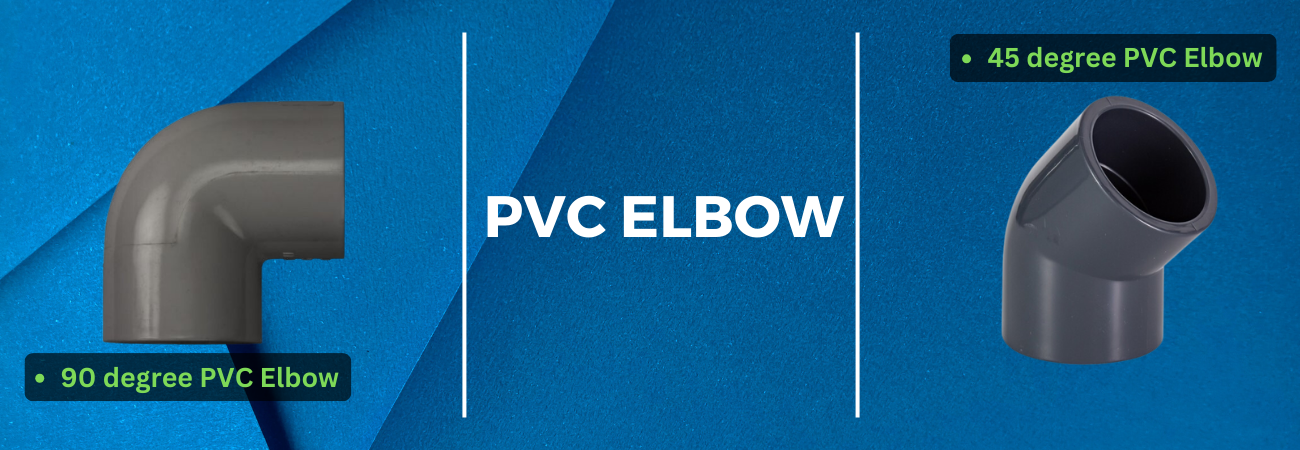
A UPVC elbow is a plumbing fitting designed to connect two UPVC (Unplasticized Polyvinyl Chloride) pipes at a fixed angle, commonly 90° or 45°. It is an essential component in pipeline systems where a change in direction is required while maintaining smooth water flow and leak-free connections.
UPVC elbows are widely used because of their strength, corrosion resistance, lightweight construction, and easy installation. They are suitable for residential plumbing, agricultural irrigation, industrial piping, water treatment systems, pools, and fountains.
Quick Facts About UPVC Elbows
- Material: Lead-free UPVC Fitting, suitable for drinking water applications
- Common Angles: 90° and 45°
- Applications: Residential, agricultural, industrial, and water treatment systems
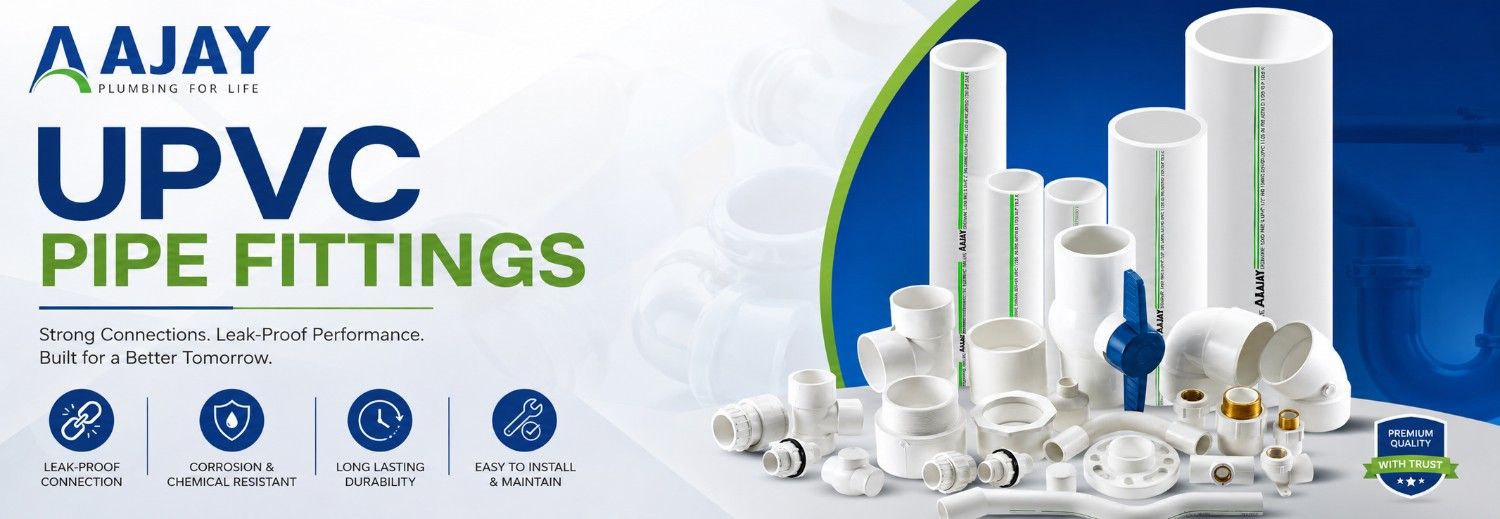
- Compatible Fittings: UPVC coupler, UPVC reducer, elbow socket, and compatible valves
Why Are UPVC Elbows Preferred?
UPVC elbows are a popular choice for cold-water plumbing systems because they offer durability, reliable performance, and easy installation.
Key Benefits of UPVC Elbows
- Corrosion Resistance – UPVC does not rust, scale, or oxidize like many metal fittings.
- Long Service Life – Properly installed UPVC fittings can provide decades of reliable service.
- Smooth Water Flow – The smooth internal surface helps reduce friction and pressure loss.
- Chemical Resistance – UPVC can withstand water and many commonly encountered chemicals.
- Lightweight Construction – Easy handling and installation can help reduce labor requirements.
- Low Maintenance – UPVC elbows require minimal maintenance when properly installed.
Types of UPVC Elbows
UPVC elbows are available in different configurations depending on the required angle, connection type, and pipe size.
| Type | Angle | Purpose |
|---|---|---|
| 90° UPVC Elbow | 90° | Used for sharp directional changes |
| 45° UPVC Elbow | 45° | Used for gradual turns and smoother flow |
| Threaded UPVC Elbow | 90°/45° | Connects with compatible threaded pipes or fittings |
| Reducing UPVC Elbow | 90°/45° | Connects pipes with different diameters |
Standard UPVC Elbow Sizes and Ratings
UPVC elbows are available in various sizes to suit different plumbing and piping requirements. Common sizes include:
20, 25, 32, 40, 50, 63, 75, 90, and 110 mm.
The appropriate pressure rating should always be selected according to the application, pipe specification, operating pressure, and applicable product standard.
Note: Always verify the manufacturer’s technical specifications and applicable Indian standards before selecting a UPVC elbow, as ratings and dimensions can vary by product and application.
How to Install a UPVC Elbow
Correct installation is essential for achieving a strong and leak-free connection.
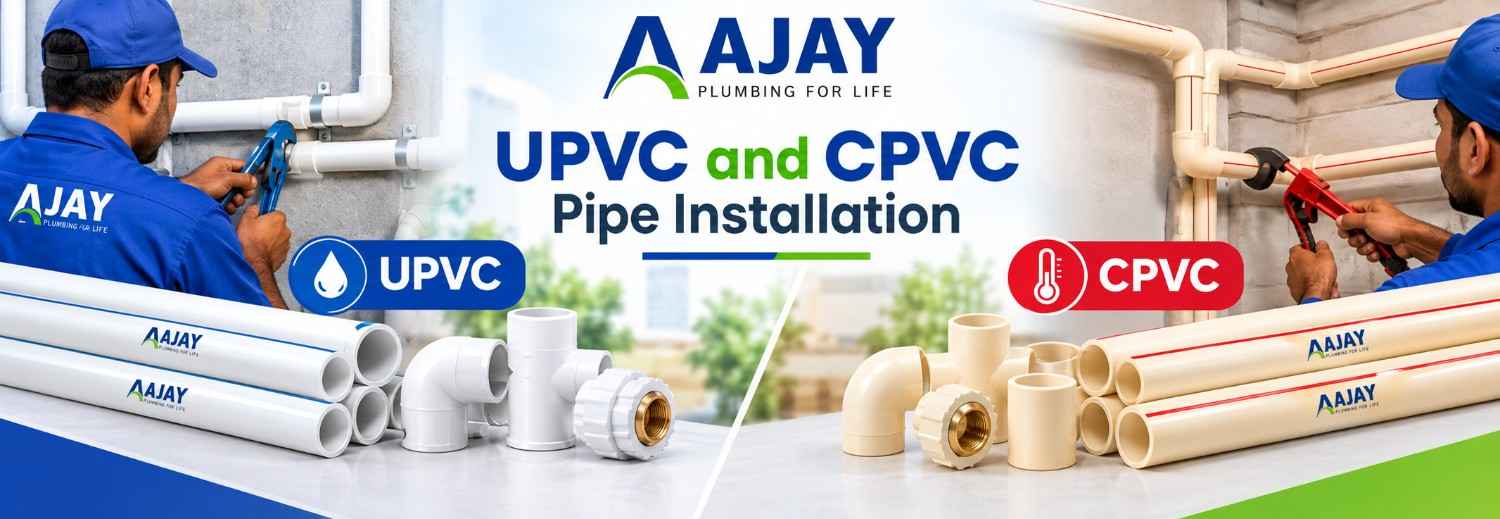
Step-by-Step Installation
- Cut the Pipe
Cut the UPVC pipe squarely using a suitable pipe cutter or hacksaw. - Deburr and Clean
Remove burrs and sharp edges from the pipe. Clean the pipe end and inside of the elbow. - Dry Fit the Connection
Insert the pipe into the elbow without adhesive to check the fit and alignment. - Apply UPVC Solvent Cement
Apply an appropriate UPVC solvent cement evenly to the required surfaces according to the manufacturer’s instructions. - Join the Elbow
Push the pipe into the elbow fully and give it a slight twist if recommended by the adhesive manufacturer. - Allow the Joint to Cure
Allow adequate curing time before applying pressure. The required curing period depends on pipe size, temperature, humidity, and the solvent cement manufacturer’s instructions.
Applications of UPVC Elbows
UPVC elbows are used in a wide range of piping systems, including:
- Residential Plumbing – Cold-water supply lines
- Agriculture – Irrigation and borewell connections
- Industrial Systems – Suitable for compatible non-corrosive chemical applications
- Water Treatment Plants – Filtration and water distribution systems
- Swimming Pools and Fountains – Water circulation systems
- Commercial Buildings – Cold-water plumbing networks
UPVC Elbow vs CPVC Elbow
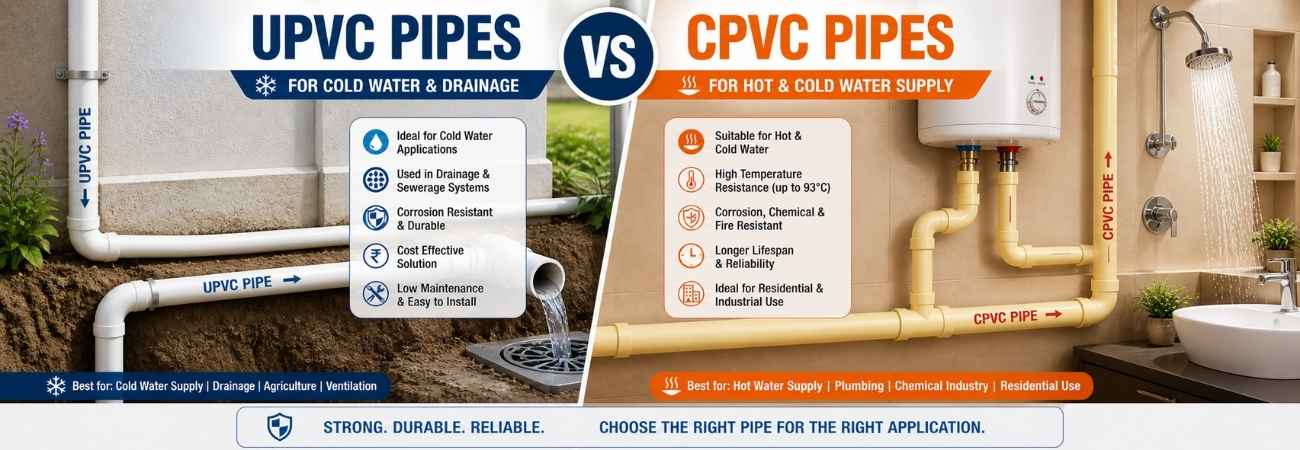
UPVC and CPVC elbows are designed for different applications. The right option depends primarily on the operating temperature and system requirements.
| Feature | UPVC Elbow | CPVC Elbow |
|---|---|---|
| Temperature Application | Generally used for cold-water systems | Suitable for hot and cold-water systems |
| Typical Usage | Cold water and compatible applications | Hot-water and cold-water plumbing |
| Cost | Generally economical | Generally higher than UPVC |
| Corrosion Resistance | Excellent | Excellent |
| Installation | Lightweight and easy to install | Lightweight and easy to install |
| Compatible System | UPVC piping system | CPVC piping system |
Important: Do not select an elbow based only on material or color. Always check the manufacturer’s specified temperature, pressure, dimensional, and compatibility requirements.
Maintenance Tips for UPVC Elbows
Proper maintenance can help extend the service life of UPVC plumbing systems.
- Avoid excessive force when tightening threaded connections.
- Inspect visible fittings periodically for cracks, leaks, or damage.
- Use a suitable UPVC coupler when joining compatible pipe sections.
- Use a suitable UPVC reducer when connecting different pipe diameters.
- Protect stored fittings from direct sunlight, excessive heat, and physical damage.
- Replace damaged fittings promptly to prevent leakage.
How to Choose the Right UPVC Elbow
Consider the following factors before purchasing a UPVC elbow:
1. Pipe Diameter
Select an elbow that matches the outside diameter and connection specification of the pipe.
2. Required Angle
Choose a 90° elbow for sharper directional changes and a 45° elbow when a more gradual turn is required.
3. Connection Type
Choose between solvent-weld/socket and threaded configurations according to the piping system.
4. Pressure Requirement
Select a fitting designed for the pressure conditions of your application.
5. Application
Make sure the UPVC elbow is suitable for the fluid, temperature, pressure, and intended use.
6. Product Quality
Choose products from reputable manufacturers and verify applicable certifications and standards.
Environmental Benefits of UPVC Elbows
UPVC fittings can contribute to more sustainable plumbing systems through their long service life, low maintenance requirements, and resistance to corrosion.
Some potential environmental advantages include:
- Long Service Life – Reduces the frequency of replacement.
- Corrosion Resistance – Helps avoid rust-related deterioration.
- Lightweight Design – Can simplify transportation and handling.
- Recyclability – UPVC can be recycled through appropriate recycling systems.
Conclusion
A UPVC elbow is a small but essential component for creating reliable directional changes in UPVC piping systems. Its corrosion resistance, lightweight construction, durability, smooth internal surface, and easy installation make it a practical choice for many cold-water applications.
Whether you need a 90° UPVC elbow, 45° UPVC elbow, threaded elbow, or reducing elbow, selecting the correct size, connection type, pressure rating, and application-specific specification is essential for achieving a safe and long-lasting plumbing system.
FAQ:-
It changes the direction of a pipeline without affecting water pressure or flow.
No. They are designed for cold water. Use CPVC elbows and a CPVC valve for hot water lines.
Use a reducing UPVC elbow or an UPVC reducer.
Threaded types can be reused if undamaged. Solvent-welded types are permanent.
UPVC-specific solvent cement is recommended for a leak-proof connection.
They range from 20 mm to 110 mm in diameter.
Yes, UPVC is lead-free and suitable for potable water systems.
For any queries, contact the plumbing experts at Ajay pipes on the Toll Free No. : 1800-11-4050 or via email at our email address info@ajaypipes.com