
PVC Ball Valve Types & Guide 2025
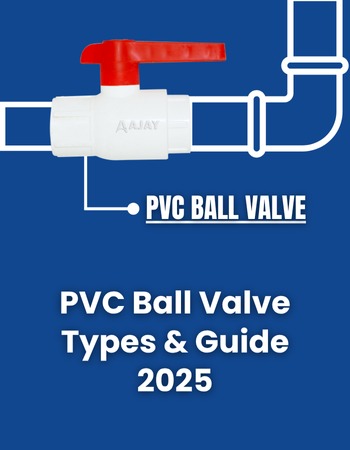
PVC Ball Valve Types & Guide 2025
Introduction
PVC ball valves have become a staple in modern plumbing, irrigation, and industrial water systems due to their simplicity, durability, and cost-effectiveness. Whether you’re a homeowner, a contractor, or an industrial engineer, these valves offer a dependable solution for regulating water and fluid flow.
In this updated 2025 guide, we’ll walk you through everything you need to know about PVC ball valves—including common types like union PVC ball valves, large models such as 3 inch ball valves, and the current 1 inch ball valve price trends in India.
What Is a PVC Ball Valve?
A PVC ball valve is a mechanical device used to control the flow of liquids by rotating a hollow ball inside the valve body. It operates using a simple quarter-turn mechanism, where rotating the handle by 90 degrees either opens or closes the valve.
Constructed from polyvinyl chloride (PVC), these valves are known for being lightweight, resistant to corrosion, and simple to install. They are best suited for cold water systems and are commonly used in applications ranging from garden irrigation to chemical transport systems.
Why Choose a PVC Ball Valve?
PVC ball valves are widely favored over metal alternatives due to their:
- Compact and easy to install due to its lightweight structure.
- Corrosion resistance – Unaffected by rust or water degradation.
- Chemical durability – Suitable for chemical transfer applications.
- Minimal upkeep – After installation, they operate reliably with hardly any maintenance needed.
- Affordability – Cost-effective even for large-scale projects.
- Quick-action mechanism – Allows the valve to open or close fully with just a 90-degree turn of the handle.
They’re perfect for low to medium pressure environments and can handle temperatures up to 60°C in most cases.
Common Types of PVC Ball Valves
There are several variants of PVC ball valves, each suited to different applications. Here’s a breakdown of the most commonly used types in 2025:
1. Union PVC Ball Valve
This is one of the most popular types for household and industrial use. It features detachable ends (unions) that make it easy to remove for cleaning or replacement. Ideal for maintenance-heavy systems like aquariums, water tanks, and chemical lines.
Benefits:
- Quick maintenance without cutting pipes
- Leak-proof design with secure seals
- Available in multiple sizes
2. Single Piece Ball Valve
A single body molded valve, ideal for basic shut-off tasks such as garden hoses or residential taps. It is compact, simple, and affordable.
Use Cases:
- Home plumbing
- Lawn irrigation systems
3. Double Union Ball Valve
Also known as a true union ball valve, this type offers maximum flexibility, as both ends can be removed. Often used in industries where frequent valve replacement is needed.
Applications:
- Chemical processing
- Pool and spa plumbing
- Laboratory systems
4. 3 Inch Ball Valve
The 3 inch PVC ball valve is a heavy-duty valve used in high-volume fluid systems, especially in agriculture and large industrial applications. These valves are durable, high-capacity, and designed for extended use under tough conditions.
Industries That Use 3 Inch Valves:
- Wastewater treatment
- Agricultural irrigation
- Factory pipelines
Applications of PVC Ball Valves
Thanks to their versatile design and chemical resistance, PVC ball valves are used across a wide range of sectors:
- Residential plumbing – Showers, tanks, washbasins, gardens
- Agricultural irrigation – Drip and sprinkler systems
- Industrial processing – Chemical handling and fluid control
- Swimming pools – Chlorine and water flow management
- Laboratories – Safe handling of corrosive liquids
How to Choose the Right PVC Ball Valve?
When selecting a PVC ball valve, it’s important to consider factors beyond just price:
1. Size & Pipe Compatibility
Ensure the valve size matches your pipeline. The 1 inch ball valve fits standard home plumbing, while larger sizes like the 3 inch ball valve suit high-flow systems.
2. Pressure Rating
Select a valve designed to handle the pressure levels specific to your system. Residential uses are fine with 150–200 PSI rated valves, but industrial lines may need up to 300 PSI.
3. Connection Type
PVC ball valves are available in three main connection styles: threaded, solvent-weld, and union ends.
- Threaded valves screw into place and are reusable
- Solvent-weld valves offer permanent, leak-proof bonds
Union ball valves allow easy disassembly for service
Related PVC Fittings to Consider
While working with PVC pipes, here are other essential fittings that enhance system efficiency:
- Built to endure internal pressure in hot and cold water systems.
- PVC Tee: Joins three pipes together at right angles for branching.
- PVC Coupler: Joins two pipes in a straight line.
How to Choose the Right PVC End Cap
When selecting a PVC ball valve, it’s important to consider factors beyond just price:
1. Size & Pipe Compatibility
Ensure the valve size matches your pipeline. The 1 inch ball valve fits standard home plumbing, while larger sizes like the 3 inch ball valve suit high-flow systems.
2. Pressure Rating
Select a valve designed to handle the pressure levels specific to your system. Residential uses are fine with 150–200 PSI rated valves, but industrial lines may need up to 300 PSI.
3. Connection Type
PVC ball valves are available in three main connection styles: threaded, solvent-weld, and union ends.
- Threaded valves screw into place and are reusable
- Solvent-weld valves offer permanent, leak-proof bonds
- Union ball valves allow easy disassembly for service
Maintenance Tips for PVC Ball Valves
- Avoid over-tightening the handle
- Periodically apply lubricant to the seals if the valve operates in high-friction or frequent-use conditions.
- Store spare valves in a cool, dry place
- Clean with water only—avoid strong solvents on plastic
Advantages Over Metal Valves
PVC Ball Valves | Metal Ball Valves |
|---|---|
Lightweight | Heavy |
Corrosion-resistant | Prone to rust |
Cheaper | Expensive |
Easy installation | Needs tools and fittings |
Suitable for chemicals | Limited chemical resistance |
Summary
PVC ball valves are an excellent option for cost-effective and reliable fluid control in residential, commercial, and industrial settings. Whether you’re setting up a new irrigation system or upgrading a plumbing network, choosing the right valve—be it a 1 inch union PVC ball valve for your home or a 3 inch ball valve for heavy-duty use—can significantly impact performance and durability.
FAQ:-
A union PVC ball valve allows for easier removal and servicing without cutting the pipe. A regular valve is permanently glued or threaded into place.
Yes, a 1 inch valve is ideal for most home systems like water tanks, taps, and garden irrigation.
No, standard PVC valves are not suitable for hot water. Use CPVC or metal valves for temperatures above 60°C.
In 2025, prices for a 3 inch PVC ball valve range between ₹850 and ₹1500 depending on brand and quality.
For any queries, contact the plumbing experts at Ajay pipes on the Toll Free No. : 1800-11-4050 or via email at our email address info@ajaypipes.com