Types of Water Supply Pipes: A Complete Guide for Homes, Plumbing & Agriculture
Introduction
Choosing the right water pipe is one of the most important decisions for any residential, commercial, or agricultural project. Different pipe materials are designed for different applications, water pressure requirements, and environmental conditions. From household plumbing systems to agricultural irrigation, selecting the correct pipe ensures durability, leak-free performance, and long-term efficiency.
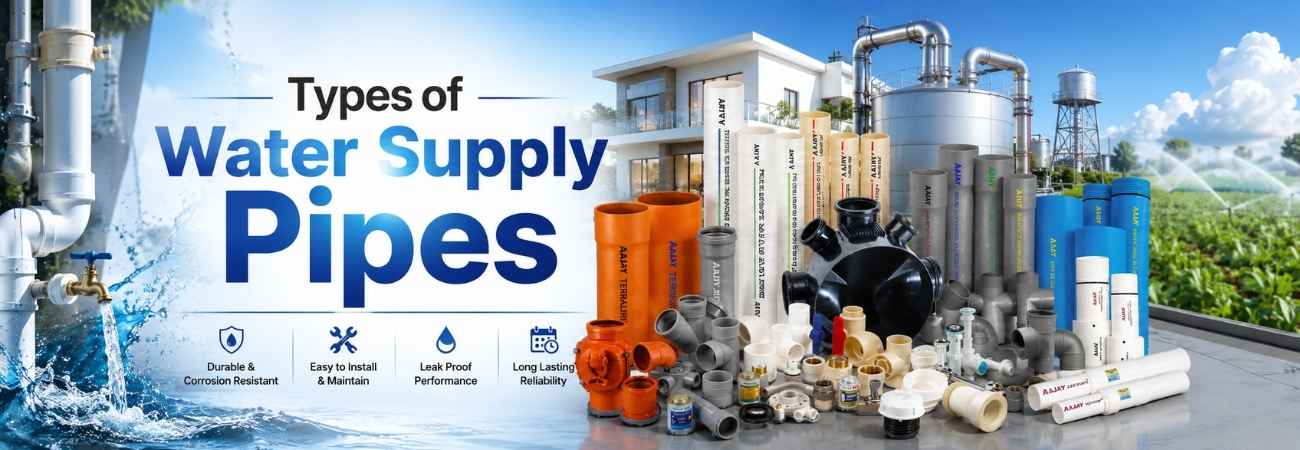
In this guide, we will explore the most popular types of water supply pipes, including PVC pipe, CPVC pipe, UPVC pipe, SWR pipe, column pipe, casing pipe, and agriculture pipe. We will also discuss their uses, benefits, and why they are widely preferred in modern infrastructure projects.
What Are Water Supply Pipes?
Water supply pipes are specially designed piping systems used to transport water from one location to another. These pipes are used in homes, commercial buildings, industries, borewells, irrigation systems, and drainage networks.
Modern piping solutions are manufactured using advanced polymer technology to offer high strength, corrosion resistance, lightweight installation, and long service life. Compared to traditional metal pipes, plastic pipes are more cost-effective and require less maintenance.
Different Types of Water Supply Pipes
1. PVC Pipe
PVC (Polyvinyl Chloride) pipes are among the most widely used PVC water pipes in India and around the world. These pipes are highly durable, lightweight, and suitable for various water transportation applications.
Features of PVC Pipes
- Corrosion-resistant material
- Smooth inner surface for better water flow
- Lightweight and easy to install
- Affordable and low maintenance
- Long-lasting performance
Applications of PVC Pipes
- Domestic water supply systems
- Agricultural irrigation
- Underground water transportation
- Industrial fluid movement
- Drainage systems
Benefits of PVC Water Pipes
PVC pipes are preferred because they do not rust or react with water. Their smooth internal surface minimizes friction loss, ensuring efficient water flow. Additionally, they are available in multiple sizes and pressure ratings for different applications.
2. CPVC Pipe
CPVC (Chlorinated Polyvinyl Chloride) pipes are specially designed for hot and cold water applications. These pipes have higher temperature resistance compared to standard PVC pipes.
Features of CPVC Pipes
- Suitable for hot and cold water
- Excellent chemical resistance
- High durability and strength
- Leak-proof joints
- Safe for drinking water
Applications of CPVC Pipes
- Residential plumbing
- Commercial water supply systems
- Industrial liquid handling
- Hot water distribution
Why Choose CPVC Pipe for Water Supply?
A CPVC pipe for water supply is ideal for modern plumbing systems because it can withstand high temperatures and pressure. These pipes are commonly used in kitchens, bathrooms, and industrial facilities where reliable hot water flow is required.
3. UPVC Pipe
UPVC (Unplasticized Polyvinyl Chloride) pipes are rigid pipes known for their strength and long lifespan. Unlike regular PVC, UPVC does not contain plasticizers, making it more durable and chemically resistant.
Features of UPVC Pipes
- Strong and rigid structure
- UV and chemical resistance
- Non-toxic and safe for water
- Leak-resistant joints
- Excellent weather resistance
Applications of UPVC Pipes
- Drinking water supply
- Plumbing systems
- Industrial piping
- Underground pipelines
Advantages of UPVC Pipes
UPVC pipes are ideal for clean water transportation because they maintain water quality and resist contamination. Their high tensile strength also makes them suitable for high-pressure applications.
4. SWR Pipe
SWR stands for Soil, Waste, and Rainwater pipes. These pipes are specially manufactured for drainage and wastewater management systems.
Features of SWR Pipes
- High impact strength
- Lightweight construction
- Corrosion-resistant material
- Easy installation
- Leak-proof performance
Applications of SWR Pipes
- Rainwater drainage
- Soil and waste disposal systems
- Ventilation pipelines
- Residential drainage systems
Importance of SWR Pipes
SWR pipes play a crucial role in maintaining hygiene and proper wastewater disposal in residential and commercial buildings. Their durability and smooth surface help prevent clogging and leakage issues.
5. Column Pipe
Column pipes are specially designed for submersible pump installations in borewells. These pipes help transport groundwater from deep underground sources to the surface.
Features of Column Pipes
- High load-bearing capacity
- Rust and corrosion resistance
- Lightweight and easy handling
- Suitable for deep borewells
- Long operational life
Applications of Column Pipes
- Borewell systems
- Submersible pumps
- Agricultural water supply
- Industrial water extraction
Benefits of Column Pipes
Column pipes are highly preferred because they reduce installation stress on pumps and provide reliable water transportation even under high pressure conditions.
6. Casing Pipe
Casing pipes are used in borewell construction to prevent soil collapse and maintain the structural integrity of the well.
Features of Casing Pipes
- Strong outer protection
- Corrosion and chemical resistance
- Durable structure
- Easy installation
- Suitable for deep drilling applications
Applications of Casing Pipes
- Borewell construction
- Groundwater extraction systems
- Industrial drilling
- Agricultural wells
Advantages of Casing Pipes
Casing pipes ensure safe and stable borewell operations by protecting the bore structure from collapsing. They also improve water quality by preventing contamination from surrounding soil.
7. Agriculture Pipe
Agriculture pipes are specifically designed for irrigation and farming applications. These pipes help transport water efficiently across fields and crops.
Features of Agriculture Pipes
- Lightweight and flexible
- Weather-resistant material
- Durable construction
- Easy installation and maintenance
- Cost-effective irrigation solution
Applications of Agriculture Pipes
- Drip irrigation systems
- Sprinkler irrigation
- Farm water transportation
- Tube well connections
Importance of Agriculture Pipes
Agriculture pipes improve water management efficiency in farming operations. They help reduce water wastage and ensure proper irrigation for healthy crop growth.
Factors to Consider When Choosing Water Supply Pipes
Selecting the right pipe depends on several important factors:
1. Water Pressure
Choose pipes that can withstand the required pressure without leakage or damage.
2. Temperature Resistance
For hot water applications, CPVC pipes are a better option compared to regular PVC pipes.
3. Durability
Pipes should resist corrosion, rust, and environmental damage for long-term performance.
4. Installation Requirements
Lightweight pipes reduce installation time and labor costs.
5. Application Type
Different applications require specific pipe types, such as SWR pipes for drainage and column pipes for borewells.
Benefits of Modern Water Supply Pipes
Modern piping solutions offer multiple advantages over traditional metal pipes:
- Corrosion resistance
- Longer service life
- Reduced maintenance costs
- Smooth water flow
- Lightweight handling
- Easy installation
- Cost-effective performance
These benefits make polymer-based pipes highly preferred for residential, commercial, industrial, and agricultural use.
Conclusion
Understanding the different water supply pipe types is essential for choosing the right piping system for your project. Whether you need PVC water pipes for irrigation, a CPVC pipe for water supply in homes, or specialized solutions like casing pipes and column pipes, each pipe serves a unique purpose.
Modern piping systems provide reliable water transportation, long-lasting durability, and efficient performance for multiple applications. Investing in high-quality pipes ensures safe water supply, reduced maintenance, and better operational efficiency for years to come.
FAQ:-
1. Which pipe is best for home water supply?
CPVC and UPVC pipes are commonly used for home water supply because they are durable, corrosion-resistant, and safe for drinking water.
2. What is the difference between PVC and CPVC pipes?
PVC pipes are mainly used for cold water applications, while CPVC pipes can handle both hot and cold water due to higher temperature resistance.
3. Are PVC water pipes safe for drinking water?
Yes, high-quality PVC water pipes manufactured according to industry standards are safe for drinking water applications.
4. What are SWR pipes used for?
SWR pipes are used for soil, waste, and rainwater drainage systems in residential and commercial buildings.
5. Why are column pipes used in borewells?
Column pipes are used to connect submersible pumps and transport groundwater efficiently from deep borewells to the surface.
For any queries, contact the plumbing experts at Ajay pipes on the Toll Free No. : 1800-11-4050 or via email at our email address info@ajaypipes.com