UPVC Pipes vs CPVC Pipes: Which is Better for Your Plumbing Needs?
Introduction
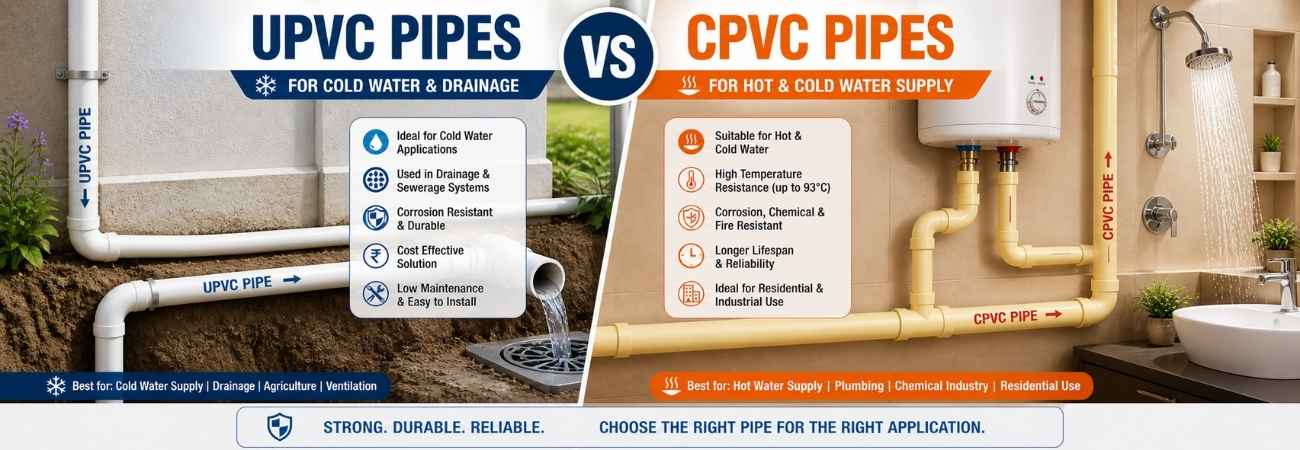
Choosing the right piping material is essential for any construction or plumbing project. Among the most popular options in India are UPVC (Unplasticized Polyvinyl Chloride) and CPVC (Chlorinated Polyvinyl Chloride) pipes. While both are widely used in residential, commercial, and industrial applications, they differ in terms of composition, performance, cost, and applications.
In this detailed guide, we’ll compare UPVC pipes vs CPVC pipes, explore their features, benefits, and help you decide which is best for your needs.
What are UPVC Pipes?
UPVC pipes are made from rigid PVC material without the addition of plasticizers. This makes them strong, durable, and resistant to corrosion.
Key Features of UPVC Pipes:
- High strength and rigidity
- Excellent resistance to chemicals
- Non-reactive to water
- Lightweight and easy to install
- Cost-effective
Common Applications:
- Cold water supply systems
- Drainage and sewage systems
- Agricultural irrigation
- Ventilation systems
UPVC pipes are widely used where low temperature water flow is required.
What are CPVC Pipes?
CPVC pipes are produced by chlorinating PVC resin, which increases their temperature resistance and flexibility. This makes them suitable for both hot and cold water systems.
Key Features of CPVC Pipes:
- High temperature resistance (up to 93°C)
- Superior durability
- Corrosion-resistant
- Fire-retardant properties
- Long lifespan
CPVC Pipe Uses:
- Hot and cold water plumbing
- Industrial liquid handling
- Residential water supply systems
- Chemical transportation
CPVC pipes are ideal for applications requiring high heat resistance and reliability.
UPVC Pipes vs CPVC Pipes: Key Differences
Understanding the differences between these two materials will help you choose the right one.
1. Material Composition
- UPVC: Rigid, non-plasticized PVC
- CPVC: Chlorinated PVC with enhanced properties
CPVC undergoes an additional chlorination process, making it more heat-resistant.
2. Temperature Resistance
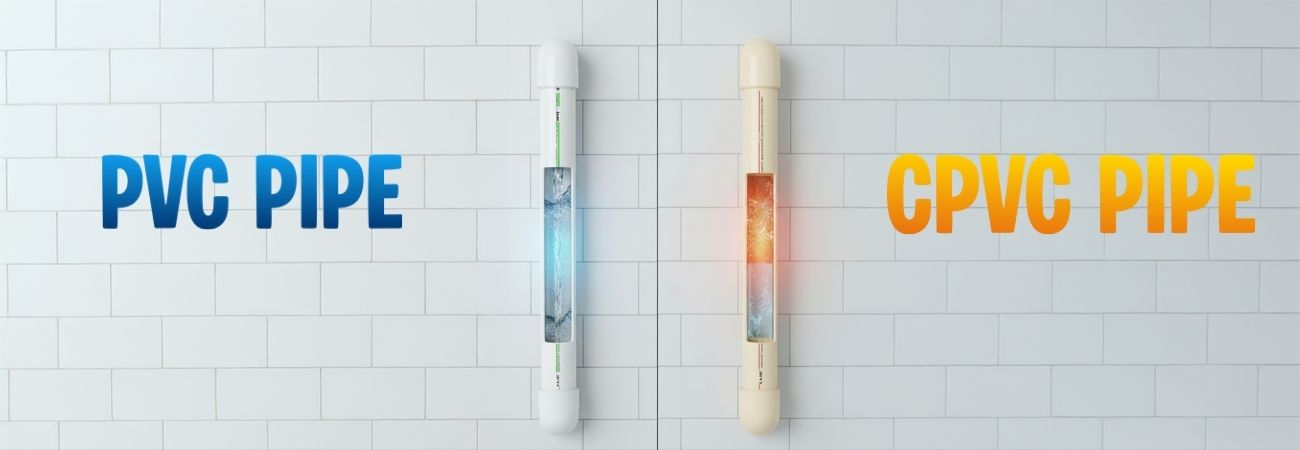
- UPVC: Suitable for temperatures up to 60°C
- CPVC: Can handle temperatures up to 93°C
If you need pipes for hot water, CPVC is the clear winner.
3. Strength and Durability
- UPVC: Strong but less flexible
- CPVC: More flexible and durable under stress
CPVC performs better in high-pressure environments.
4. Applications
- UPVC: Best for cold water and drainage
- CPVC: Suitable for both hot and cold water systems
5. Installation Process
- UPVC: Easy to install with solvent cement
- CPVC: Similar installation but requires special solvent
Both are easy to handle, but CPVC may require slightly more care.
6. Chemical Resistance
- Both materials offer excellent resistance, but CPVC performs better in industrial environments due to its enhanced chemical stability.
7. CPVC vs UPVC Price Difference
One of the most important factors is cost.
- UPVC Pipes: More affordable
- CPVC Pipes: Slightly expensive due to advanced processing
However, CPVC offers better long-term value for hot water applications.
Advantages of UPVC Pipes
- Budget-friendly solution
- Long-lasting with minimal maintenance
- Resistant to rust and scaling
- Lightweight and easy to transport
- Ideal for outdoor and underground use
Advantages of CPVC Pipes
- Handles high temperatures efficiently
- Suitable for drinking water systems
- Resistant to bacteria and corrosion
- Fire-resistant properties
- Longer lifespan compared to traditional materials
Disadvantages of UPVC Pipes
- Not suitable for hot water systems
- Can become brittle under extreme heat
- Limited industrial use
Disadvantages of CPVC Pipes
- Higher initial cost
- Slightly complex installation compared to UPVC
- Sensitive to UV exposure if not protected
UPVC vs CPVC: Which One Should You Choose?
Your choice depends on the application:
Choose UPVC Pipes if:
- You need a cost-effective solution
- The application involves cold water
- It’s for drainage or irrigation
Choose CPVC Pipes if:
- You require hot water supply
- You want long-term durability
- It’s for residential or industrial plumbing
Comparing Plumbing Pipe Materials
When comparing plumbing pipe materials, UPVC and CPVC stand out due to their durability and affordability compared to traditional options like metal pipes.
| Material | Temperature Resistance | Cost | Durability | Usage |
|---|---|---|---|---|
| UPVC | Low | Low | High | Cold water, drainage |
| CPVC | High | Medium | Very High | Hot & cold water |
| Metal Pipes | Very High | High | Medium | Industrial |
CPVC and UPVC are preferred because they are corrosion-free and easy to install.
Environmental Impact
Both UPVC and CPVC pipes are recyclable and environmentally friendly compared to metal pipes that require energy-intensive production processes. However, proper disposal and recycling practices are essential.
Maintenance and Lifespan
- UPVC Pipes: Last up to 50 years under proper conditions
- CPVC Pipes: Can last 50+ years even in high-temperature environments
Both require minimal maintenance compared to traditional piping systems.
Conclusion
The debate between UPVC pipes vs CPVC pipes ultimately depends on your specific requirements. UPVC pipes are a cost-effective and reliable solution for cold water and drainage systems, while CPVC pipes are the best choice for hot water and high-performance applications.
If budget is your priority, UPVC is suitable. But if you need durability and heat resistance, CPVC is worth the investment.
FAQ:-
1. What is the main difference between UPVC and CPVC pipes?
The main difference lies in temperature resistance. UPVC is suitable for cold water, while CPVC can handle both hot and cold water.
2. Where are CPVC pipes commonly used?
CPVC pipe uses include hot water systems, industrial fluid handling, and residential plumbing due to their high heat resistance.
3. What is the CPVC vs UPVC price difference?
CPVC pipes are generally more expensive than UPVC pipes due to their enhanced properties and manufacturing process.
4. Which is better for home plumbing?
For home plumbing, CPVC is better for hot water lines, while UPVC works well for cold water and drainage systems.
5. Are UPVC and CPVC pipes safe for drinking water?
Yes, both UPVC and CPVC pipes are safe for potable water when manufactured according to quality standards.
For any queries, contact the plumbing experts at Ajay pipes on the Toll Free No. : 1800-11-4050 or via email at our email address info@ajaypipes.com