Difference Between CPVC and UPVC Pipes: A Complete Guide for Homeowners and Builders
Introduction
Choosing the right piping system is essential for ensuring long-term performance, durability, and safety in residential, commercial, and industrial projects. Among the most widely used plastic piping materials are CPVC (Chlorinated Polyvinyl Chloride) and UPVC (Unplasticized Polyvinyl Chloride). While both are derived from PVC resin, they differ significantly in composition, temperature resistance, applications, and performance characteristics.
Understanding the difference between CPVC and UPVC pipes can help homeowners, contractors, architects, and engineers make informed decisions for plumbing and water distribution systems.
In this guide, we will explore the key distinctions, benefits, applications, and factors to consider when selecting between CPVC and UPVC pipes.
What Are CPVC Pipes?
CPVC (Chlorinated Polyvinyl Chloride) pipes are manufactured by chlorinating PVC resin, which increases the chlorine content and enhances the material’s heat resistance and durability.
CPVC pipes are specifically designed to handle both hot and cold water applications. Their superior temperature tolerance makes them ideal for residential plumbing systems, industrial fluid transportation, and commercial water distribution networks.
Key Features of CPVC Pipes
- High temperature resistance
- Corrosion and chemical resistance
- Long service life
- Lightweight and easy installation
- Suitable for hot and cold water systems
- Smooth internal surface for better flow efficiency
What Are UPVC Pipes?
UPVC (Unplasticized Polyvinyl Chloride) pipes are rigid PVC pipe manufactured without adding plasticizers. This gives them excellent strength, durability, and resistance to environmental factors.
UPVC pipes are commonly used for cold water transportation, drainage systems, agricultural irrigation, sewerage networks, and construction applications.
Key Features of UPVC Pipes
- High rigidity and strength
- Excellent resistance to corrosion
- Low maintenance requirements
- Cost-effective solution
- Suitable for cold water applications
- Lightweight and easy to transport
Difference Between CPVC and UPVC Pipes
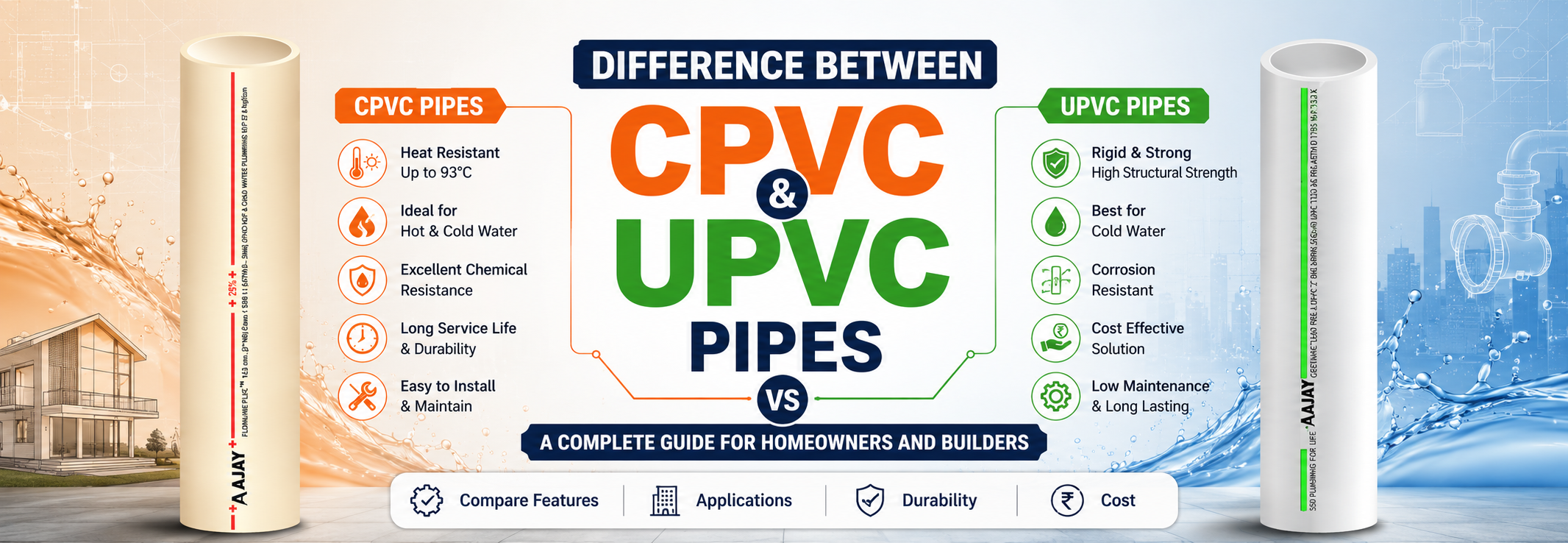
The primary difference between UPVC and CPVC pipes lies in their temperature handling capabilities and intended applications. Below is a detailed comparison.
| Feature | CPVC Pipes | UPVC Pipes |
|---|---|---|
| Material Composition | Chlorinated PVC | Unplasticized PVC |
| Temperature Resistance | Up to 93°C | Up to 60°C |
| Hot Water Application | Yes | No |
| Cold Water Application | Yes | Yes |
| Flexibility | Slightly More Flexible | More Rigid |
| Chemical Resistance | Excellent | Excellent |
| Cost | Higher | Lower |
| Installation | Solvent Cement Joints | Solvent Cement Joints |
| Industrial Use | High | Moderate |
| Drinking Water Safety | Safe | Safe |
This comparison clearly highlights the difference between CPVC pipe and UPVC pipe for various plumbing and infrastructure projects.
Composition and Manufacturing Differences
One of the most important aspects when evaluating the difference between PVC CPVC and UPVC pipes is understanding their composition.
PVC Pipes
Standard PVC pipes are widely used for drainage and low-pressure applications. They are economical but have limited temperature resistance.
UPVC Pipes
UPVC pipes are produced without plasticizers, making them rigid and durable. They are ideal for cold water systems and structural applications.
CPVC Pipes
CPVC pipes undergo an additional chlorination process that increases their chlorine content. This modification improves heat resistance, pressure handling capability, and overall performance.
Temperature Resistance Comparison
Temperature tolerance is often the deciding factor when selecting a piping system.
CPVC Temperature Resistance
CPVC pipes can withstand temperatures up to approximately 93°C, making them suitable for:
- Hot water supply lines
- Residential plumbing
- Industrial hot fluid transportation
- Solar water heating systems
UPVC Temperature Resistance
UPVC pipes perform effectively in temperatures up to around 60°C. They are best suited for:
- Cold water distribution
- Irrigation systems
- Drainage networks
- Rainwater harvesting systems
This temperature capability is one of the biggest points in understanding the difference between CPVC and UPVC pipes.
Strength and Durability
Both CPVC and UPVC pipes offer exceptional durability, but their strengths vary depending on the application.
CPVC Durability
CPVC pipes are designed to handle:
- High temperatures
- Pressure fluctuations
- Chemical exposure
- Long-term water transportation
UPVC Durability
UPVC pipes excel in:
- Structural strength
- Outdoor applications
- Impact resistance
- Long service life under normal operating conditions
Both piping systems can last over 50 years when properly installed and maintained.
Chemical Resistance
Another notable difference between CPVC pipe and UPVC pipe is their resistance to chemicals.
CPVC
CPVC demonstrates excellent resistance to:
- Acids
- Alkalis
- Salts
- Industrial chemicals
This makes it suitable for industrial fluid handling systems.
UPVC
UPVC also provides strong chemical resistance and is commonly used in:
- Water treatment plants
- Drainage systems
- Agricultural applications
- Chemical processing units
Applications of CPVC Pipes
CPVC pipes are preferred where high temperatures and pressure resistance are required.
Common Applications
Residential Plumbing
CPVC pipes are widely used for hot and cold water supply systems in homes.
Commercial Buildings
Hotels, hospitals, schools, and office complexes rely on CPVC piping for efficient water distribution.
Industrial Facilities
Many industries use CPVC pipes to transport hot liquids and chemicals safely.
Fire Sprinkler Systems
CPVC is commonly used in fire protection systems due to its heat resistance and reliability.
Applications of UPVC Pipes
UPVC pipes are extensively used in infrastructure and utility projects.
Common Applications
Cold Water Distribution
UPVC is highly effective for transporting drinking water and municipal water supplies.
Agricultural Irrigation
Farmers use UPVC pipes for irrigation systems due to their durability and affordability.
Drainage Systems
UPVC pipes are ideal for sewerage, drainage, and waste disposal systems.
Construction Projects
UPVC pipes are commonly installed in buildings for drainage and rainwater harvesting networks.
Cost Comparison
Cost is another factor influencing purchasing decisions.
CPVC Pipes
CPVC pipes generally cost more because:
- Additional chlorination process
- Enhanced temperature resistance
- Improved performance capabilities
UPVC Pipes
UPVC pipes are more affordable and offer excellent value for:
- Cold water systems
- Irrigation networks
- Drainage projects
If hot water transportation is not required, UPVC often provides a more economical solution.
Installation and Maintenance
Both CPVC and UPVC pipes are lightweight and easy to install.
CPVC Installation
CPVC pipes use specialized solvent cement designed for high-temperature applications. Proper curing ensures leak-proof joints and long-lasting performance.
UPVC Installation
UPVC pipes also use solvent cement joints and require minimal maintenance after installation.
Maintenance Benefits
Both pipe types offer:
- Corrosion resistance
- Scale-free interiors
- Low maintenance costs
- Long operational life
Environmental Benefits
Modern CPVC and UPVC pipes contribute to sustainable construction practices.
Benefits Include
- Long lifespan reducing replacement frequency
- Lower energy consumption during transportation
- Recyclable material options
- Reduced water leakage due to strong joints
These advantages make both materials suitable for environmentally conscious infrastructure projects.
Which Pipe Should You Choose?
The choice depends primarily on your project requirements.
Choose CPVC Pipes If:
- You need hot and cold water distribution.
- High-temperature resistance is essential.
- Industrial fluid transportation is involved.
- Long-term performance under heat exposure is required.
Choose UPVC Pipes If:
- You need cold water transportation.
- Budget is a major consideration.
- Irrigation or drainage systems are being installed.
- Structural rigidity is preferred.
Understanding the difference between UPVC and CPVC pipes helps ensure the right investment for your plumbing or infrastructure project.
Conclusion
The difference between CPVC and UPVC pipes primarily comes down to temperature resistance, application suitability, and performance requirements. CPVC pipes are the preferred choice for hot and cold water systems due to their superior heat resistance, while UPVC pipes offer an economical and durable solution for cold water supply, drainage, and irrigation applications.
When evaluating the difference between CPVC pipe and UPVC pipe, consider factors such as operating temperature, budget, pressure requirements, and project type. Additionally, understanding the difference between PVC CPVC and UPVC pipes allows builders and homeowners to select the most appropriate piping solution for long-lasting performance and reliability.
FAQ:-
1. What is the main difference between CPVC and UPVC pipes?
The main difference is that CPVC pipes can handle hot and cold water, while UPVC pipes are primarily designed for cold water applications.
2. Which is better for home plumbing, CPVC or UPVC?
CPVC is generally better for home plumbing because it can safely transport both hot and cold water throughout the building.
3. Are CPVC pipes more expensive than UPVC pipes?
Yes, CPVC pipes usually cost more due to their enhanced temperature resistance and additional manufacturing process.
4. Can UPVC pipes be used for hot water supply?
UPVC pipes are not recommended for hot water systems because prolonged exposure to high temperatures can affect their performance and durability.
5. What is the difference between PVC, CPVC, and UPVC pipes?
PVC is the standard material used mainly for drainage applications, UPVC is a rigid version suitable for cold water systems, and CPVC is chlorinated PVC designed for hot and cold water applications with higher temperature resistance.
For any queries, contact the plumbing experts at Ajay pipes on the Toll Free No. : 1800-11-4050 or via email at our email address info@ajaypipes.com