
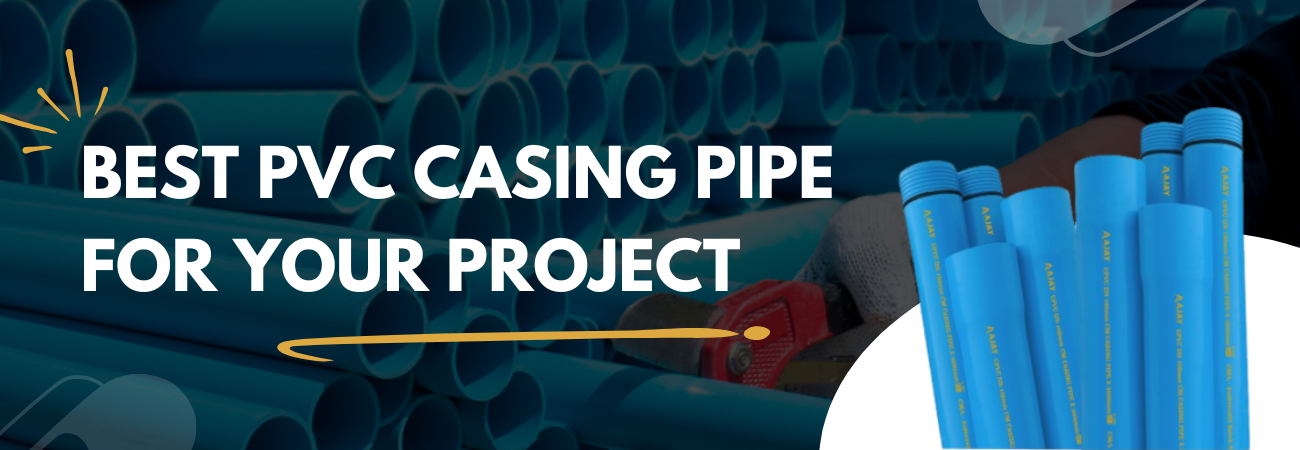
Best PVC Casing Pipe For Your Project
Introduction
Introduction
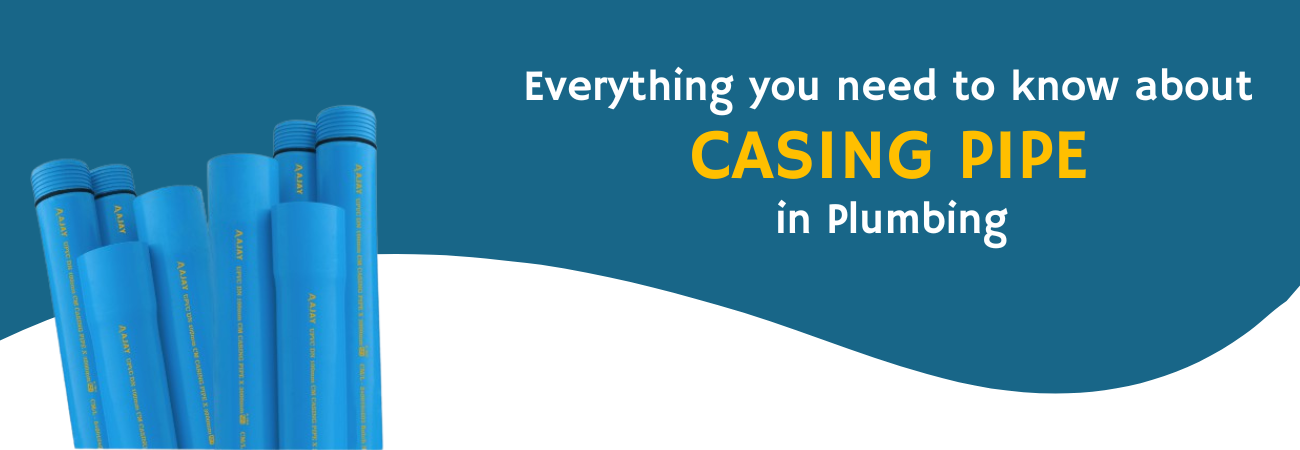
PVC casing pipes are an essential component in borewell and submersible pump installations. Known for their durability, corrosion resistance, and lightweight structure, these pipes act as a protective lining for borewells, safeguarding water sources from soil, debris, and external contaminants.
Whether you are a contractor, builder, farmer, or homeowner planning a water supply system, understanding the uses and advantages of PVC casing pipes is crucial. This guide explores their types, benefits, applications, and selection tips while incorporating important plumbing components such as PVC profile, CPVC end cap, and best coupling solutions.
What Are PVC Casing Pipes?
PVC casing pipes are specially designed pipes installed inside borewells to prevent the collapse of surrounding soil and maintain a clean, uninterrupted water supply. These pipes provide structural support to the borewell while protecting groundwater from contamination.
Due to their excellent strength-to-weight ratio and resistance to corrosion, PVC casing pipes have become a preferred alternative to traditional metal casing pipes.
Types of PVC Casing Pipes and Their Applications
1. Shallow Well Casing Pipes
Suitable for: Borewell depths up to 80 meters
Features:
- Lightweight construction
- Easy manual installation
- Cost-effective solution
Applications:
- Rural water supply systems
- Agricultural irrigation projects
- Small residential borewells
2. Medium Well Casing Pipes
Suitable for: Borewell depths between 80–250 meters
Features:
- Enhanced wall thickness
- Higher strength and durability
- Better pressure resistance
Applications:
- Residential complexes
- Commercial buildings
- Medium-capacity water extraction systems
3. Deep Well Casing Pipes
Suitable for: Borewell depths above 250 meters
Features:
- Heavy-duty construction
- Superior load-bearing capability
- Designed for deep groundwater extraction
Applications:
- Housing colonies
- Industrial facilities
- Municipal and government water projects
Advantages of Using PVC Casing Pipes
1. Excellent Corrosion and Chemical Resistance
Unlike steel or cast iron pipes, PVC casing pipes do not rust or corrode. They can withstand exposure to chemicals and saline groundwater, ensuring a longer service life and reduced maintenance costs.
2. Easy and Cost-Effective Installation
PVC casing pipes are lightweight, making transportation and installation simpler. Their threaded joint design allows for quick assembly, especially when used with the best coupling solutions that ensure leak-proof and secure connections.
3. Environment-Friendly Solution
PVC pipes are recyclable and generally have a lower environmental impact than metal alternatives. Their long lifespan also reduces replacement frequency, contributing to sustainable water infrastructure.
4. Smooth Internal Surface for Better Flow
The smooth inner surface and uniform PVC profile minimize friction losses and help maintain efficient water flow throughout the system.
5. Compatibility with Various Plumbing Components
PVC casing pipes integrate seamlessly with several accessories, including:
- PVC profile systems for structured installations
- CPVC end cap fittings for secure pipe-end closure
- Best coupling joints for reliable and durable connections
How to Choose the Right PVC Casing Pipe
Selecting the correct casing pipe ensures efficient borewell performance and long-term reliability.
1. Determine Borewell Depth
| Borewell Depth | Recommended Pipe Type |
|---|---|
| 0–80 meters | Shallow Well Casing Pipe |
| 80–250 meters | Medium Well Casing Pipe |
| Above 250 meters | Deep Well Casing Pipe |
2. Check Pipe Diameter and Pressure Rating
Consider the following factors:
- Match the pipe diameter with the submersible pump size.
- Select pipes with appropriate pressure ratings.
- Prefer ISI-marked products that comply with BIS standards.
3. Evaluate Material Quality
Before purchasing:
- Check for uniform wall thickness.
- Ensure a smooth and consistent PVC profile.
- Inspect for manufacturing defects and surface irregularities.
High-quality pipes provide better durability and operational efficiency.
4. Ensure Compatibility with Fittings
A reliable borewell system requires compatible accessories, such as:
- Best coupling solutions for secure joints
- CPVC end cap fittings for pipe sealing
- Threaded connectors and adaptors for efficient installation
Top Applications of PVC Casing Pipes in India
PVC casing pipes are widely used across multiple sectors due to their versatility and durability.
Agriculture
- Tubewells
- Irrigation systems
- Farm water supply networks
Residential Buildings
- Borewell installations
- Domestic water supply systems
- Overhead tank connections
Commercial Establishments
- Office complexes
- Shopping centers
- Hospitality projects
Industrial Facilities
- Groundwater extraction
- Process water systems
- Industrial utility applications
Government and Infrastructure Projects
- Rural water supply schemes
- Community borewell projects
- Municipal water distribution systems
Maintenance Tips for PVC Casing Pipes
Proper maintenance can significantly extend the service life of PVC casing pipes.
Regular Cleaning
- Clean the pipe interior every 6–12 months.
- Remove sediment buildup to maintain water flow.
Avoid Excessive Tightening
- Do not over-tighten threaded joints.
- Excessive force may cause cracks or joint damage.
Use Protective End Caps
- Install a PVC end cap when the borewell is not in use.
- Prevents debris, insects, and contaminants from entering the system.
Inspect Couplings Periodically
- Check the best coupling joints for wear and damage.
- Replace defective fittings promptly to prevent leakage.
Conclusion
Choosing the right PVC casing pipe is essential for ensuring long-term durability, efficient groundwater extraction, and reliable water supply. With benefits such as corrosion resistance, lightweight installation, environmental sustainability, and compatibility with components like PVC profile, CPVC end cap, and best coupling solutions, PVC casing pipes have become the preferred choice for modern borewell systems.
For optimal performance, always select high-quality, ISI-certified PVC casing pipes and pair them with compatible fittings and accessories to build a dependable and maintenance-friendly water infrastructure.
FAQ:-
A PVC casing pipe is used to protect the borewell and submersible pump system from soil, sand, and contaminants. It ensures clean water supply and structural integrity of the well.
PVC casing pipes are thicker, more pressure-resistant, and designed for underground and borewell use. Standard PVC pipes are typically used for above-ground water transport.
Yes, in many setups, CPVC end caps and fittings are used for sealing and terminating PVC casing pipes, depending on compatibility and design.
Threaded or compression-type couplings made from high-quality plastic or brass are considered the best coupling options for PVC casing systems due to their leak-proof performance.
For any queries, contact the plumbing experts at Ajay pipes on the Toll Free No. : 1800-11-4050 or via email at our email address info@ajaypipes.com




One Comment