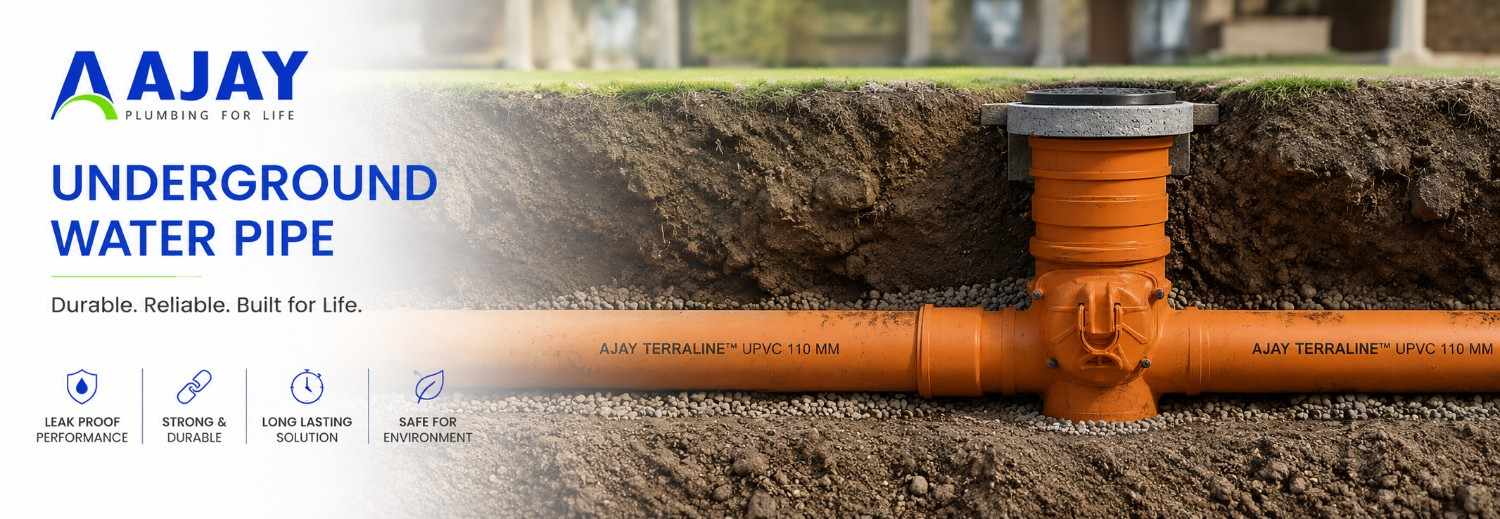
Why Your Underground Water Pipe Choice Decides How Long Your Plumbing Actually Lasts
Introduction
Most people never think about the pipe running under their lawn until water starts pooling where it shouldn’t. By then, you’re not just fixing a leak. You’re digging up a driveway, a flower bed, or a slab of concrete to find out what went wrong. An underground water pipe works harder than almost anything else in a plumbing system. It sits below the surface, absorbs soil pressure day after day, deals with shifting ground and temperature swings, and is expected to quietly deliver clean water for decades without a single complaint.
That’s exactly why the pipe you choose before it goes into the ground matters more than almost any other decision in the plumbing process. Once it’s buried, you’re not making small fixes. You’re committing to whatever is down there for years, sometimes decades. So it’s worth slowing down and understanding what actually makes a pipe fit for underground use, and why so many homeowners and contractors across India are now moving toward PVC-based systems from trusted manufacturers like Ajay Pipes.
What Makes Underground Conditions So Demanding
Pipes above ground deal with a fairly predictable environment. Pipes below ground don’t get that luxury. Once buried, a water supply pipe has to handle:
- Constant soil load – Earth is heavier than it looks, and it never stops pressing down.
- Ground movement – Seasonal shifts, moisture changes, and settling can flex or stress a buried line.
- Moisture exposure – Any pipe with weak joints or poor material resistance risks slow corrosion or seepage.
- Root interference – Tree and plant roots are notorious for exploiting weak seams in older piping materials.
- Temperature variation – Even underground, seasonal heat and cold cause expansion and contraction over time.
A pipe that can’t handle these stresses doesn’t fail dramatically. It fails quietly. A hairline crack today becomes a soggy yard two years from now, and by the time it’s noticed, the damage (and the excavation bill) is already done.
Underground PVC Pipe: Why It Has Become the Default Choice
If you look at what most plumbers and civil contractors are specifying today for underground water lines, one material keeps coming up: PVC. Underground PVC pipe has become the practical standard for residential and light commercial water supply, and it’s not just because it’s affordable, although that certainly helps.
Here’s what makes it work so well below the surface:
- It doesn’t corrode, Unlike metal pipes, PVC has no rust or scale build-up to worry about. That alone eliminates one of the biggest causes of underground pipe failure.
- It’s genuinely lightweight. This isn’t just a convenience for the installer. Lighter pipe means less stress on joints during backfilling and settling, and it makes handling long runs in a trench far more manageable.
- It resists chemical reaction with soil. Different soil types carry different mineral and chemical compositions. PVC is largely inert, so it doesn’t react or degrade the way older materials sometimes do.
- It has a long service life. Properly installed PVC water lines are routinely rated for decades of use with minimal maintenance, provided the initial installation follows correct depth and bedding practices.
- It’s cost-efficient without cutting corners on performance. For homeowners balancing a budget against long-term reliability, PVC pipe hits a sweet spot that few other materials manage.
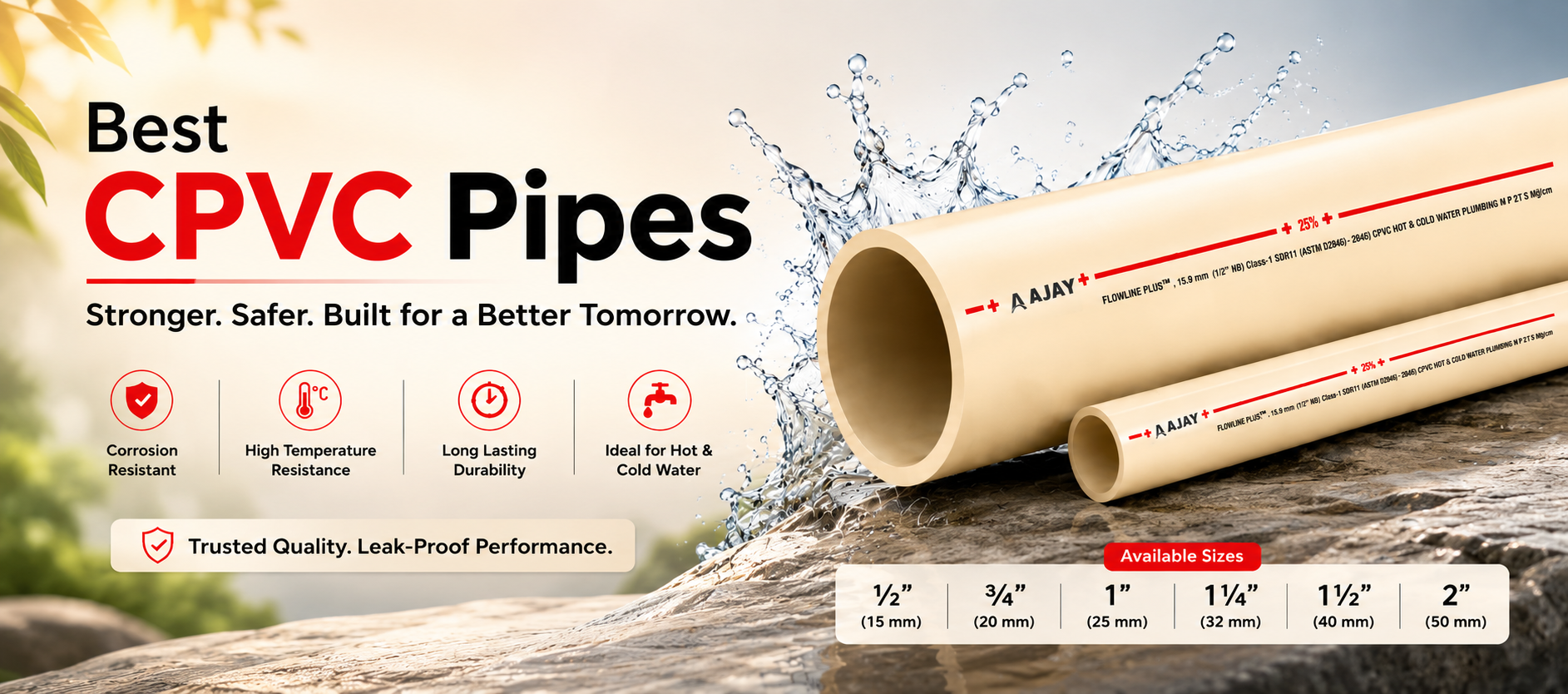
Of course, PVC isn’t the only option. CPVC pipe, for instance, is often recommended where hot water resistance or added durability is a priority, and for many underground water supply applications, it’s genuinely considered one of the stronger performers available today. If you’re weighing that comparison directly, this detailed guide on the best pipe for underground water supply walks through the CPVC-versus-PVC decision in depth, including where each material makes the most sense.
What to Actually Look For in a Water Supply Pipe
Whether you’re building a new home, replacing an aging line, or planning a larger project, not every water supply pipe on the market is built the same way. A few things separate a pipe that lasts from one that becomes next year’s repair job:
- ISI or equivalent certification – Certification isn’t just a formality; it confirms the pipe has been tested against real pressure and quality benchmarks.
- Consistent wall thickness – Uneven thickness is one of the most common causes of premature weak points.
- Joint and fitting compatibility – A pipe is only as reliable as the fittings connecting it. Mismatched systems are a common, avoidable failure point.
- UV stability before installation – Pipes stored or handled above ground before burial need resistance to sun exposure so they don’t weaken before they’re even in the trench.
- Manufacturer track record – A company like Ajay Pipes, which has been supplying pipes across residential and industrial projects for years, tends to have quality control processes that a newer, untested brand simply hasn’t built yet.
Installation Habits That Protect Your Investment
Even the best pipe underperforms if it’s installed carelessly. A few practices consistently separate long-lasting underground systems from ones that fail early:
- Dig to the right depth. Too shallow, and the pipe is exposed to surface pressure and temperature swings it wasn’t designed for.
- Use proper bedding material. Fine sand or graded soil around the pipe prevents sharp stones from creating slow-forming stress points.
- Avoid sharp bends. Wherever possible, use manufactured fittings instead of forcing a pipe into an unnatural angle.
- Pressure test before backfilling. It’s far easier to catch a weak joint before the trench is closed than after.
- Follow the manufacturer’s installation guidelines exactly. These aren’t generic suggestions; they’re based on how that specific pipe material behaves under real ground conditions.
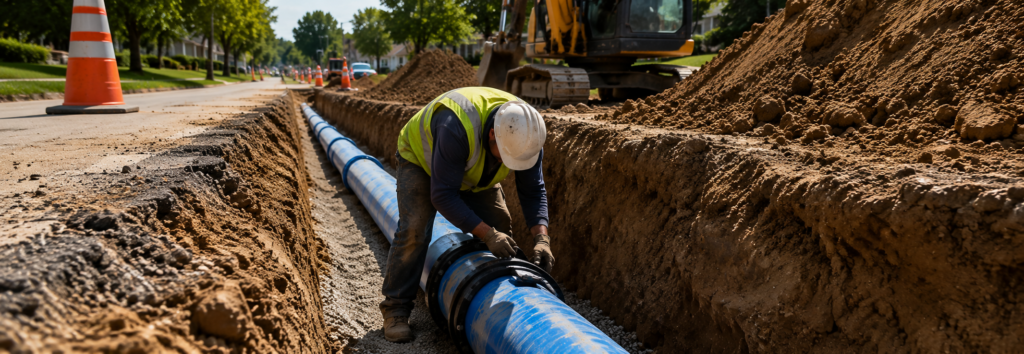
Why This Decision Deserves More Attention Than It Usually Gets
It’s easy to treat pipe selection as a small line item in a much bigger construction or renovation project. But an underground water pipe isn’t a part you swap out easily later. It’s a decision that gets buried, literally, and lives with the property for years. A slightly higher upfront cost for the right material is almost always cheaper than the excavation, repair, and water damage that comes from choosing based on price alone.
Ajay Pipes has spent years manufacturing PVC, CPVC, and UPVC piping systems built specifically to handle the demands of underground water supply, from consistent wall thickness to certified joint systems designed for long-term, leak-free performance. Whether you’re planning a single-home water line or a larger residential project, choosing a pipe system built for what’s actually happening underground, not just what looks good on a spec sheet, is what determines whether you’re dealing with this decision again in five years or not thinking about it for the next fifty.
Conclusion
An underground water pipe rarely gets the attention it deserves until something goes wrong, but by then the cost is measured in dug-up yards, disrupted water supply, and repairs that could easily have been avoided. The material you choose, the certification behind it, and the way it’s installed all quietly decide whether that pipe becomes a decades-long asset or a recurring headache. Underground PVC pipe has earned its place as a dependable, cost-effective choice for most residential water supply pipe needs, and pairing the right material with correct installation practices is really the whole game. With manufacturers like Ajay Pipes building systems specifically engineered for these underground demands, giving this decision the attention it deserves now means it’s one you won’t have to think about again for a very long time.
FAQ:-
1. How deep should an underground water pipe be buried?
Depth requirements vary by region and local plumbing codes, but most residential water supply lines are buried below the frost line and deep enough to avoid surface loads and temperature fluctuation, typically specified by a local plumbing authority or the pipe manufacturer’s installation guide.
2. Is underground PVC pipe safe for drinking water?
Yes, when the PVC pipe is manufactured to potable water standards and properly certified, it is considered safe for carrying drinking water and is widely used in residential water supply systems.
3. How long does a properly installed underground PVC pipe last?
With correct installation and bedding practices, PVC water pipes are generally expected to perform reliably for several decades with minimal maintenance.
4. Can tree roots damage an underground water supply pipe?
Roots are more likely to exploit existing weak joints or cracks than to damage a solid, well-installed pipe. Choosing corrosion-resistant material with strong joint systems significantly reduces this risk.
5. What's the difference between PVC and CPVC for underground use?
PVC is typically used for cold water supply lines and is valued for its affordability and corrosion resistance, while CPVC handles higher temperatures and is often chosen where added durability is a priority. The right choice depends on the specific application and water temperature requirements.
For any queries, contact the plumbing experts at Ajay pipes on the Toll Free No. : 1800-11-4050 or via email at our email address info@ajaypipes.com