
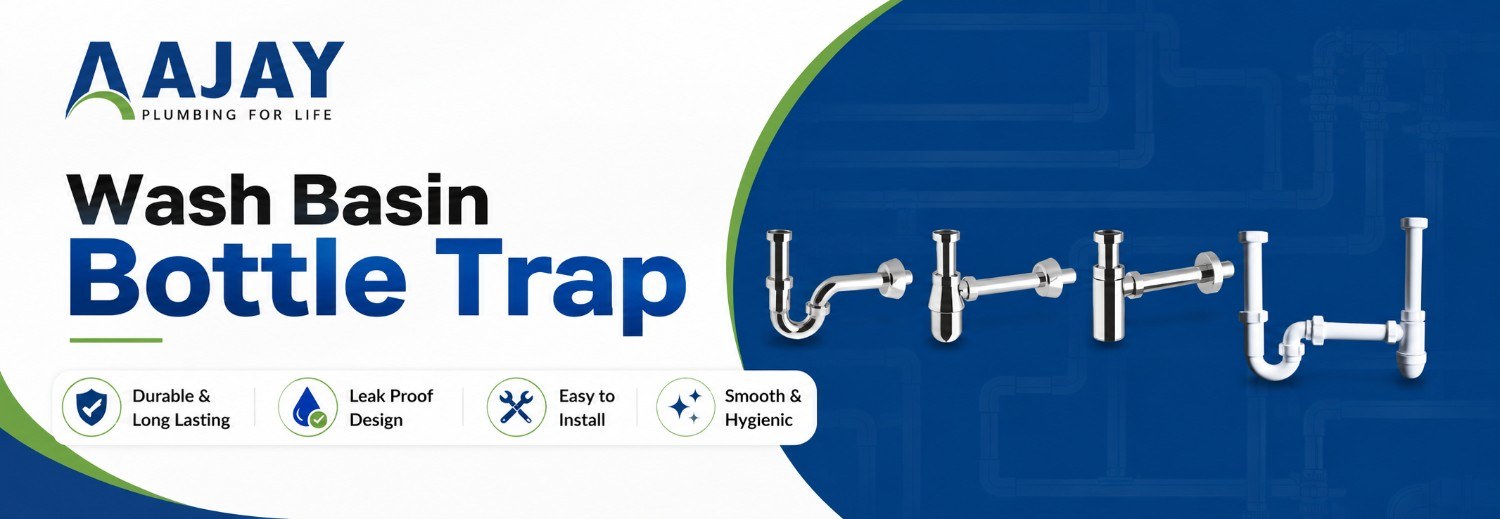
Wash Basin Bottle Trap: What Nobody Tells You Before You Buy One
Introduction
Most people only learn what a wash basin bottle trap is on the day their bathroom starts smelling like the drain. Until then, it is a fitting that sits under the basin, out of sight, doing a job nobody thinks about. Then one day the smell shows up, or water starts pooling under the cabinet. Suddenly everyone becomes an expert on bottle traps in about ten minutes flat.
This guide is written for that ten minutes. It covers what a bottle trap for wash basin actually does. It explains why a PVC bottle trap for wash basin has become the default choice over older metal designs. And it shows how to tell a properly made fitting from one that will crack within a year. The full Ajay Pipes range sits on the wash basin traps page if you want to compare options directly.
The Job a Bottle Trap Actually Does
Strip away the plumbing jargon and a wash basin bottle trap does one thing: it keeps a small column of water sitting in a chamber below your basin at all times. That water is a physical barrier. Sewer gas cannot pass through it, so it cannot travel back up the pipe and into your bathroom.
The “bottle” name comes from the shape. Instead of a curved pipe like older P-traps, the chamber is a wide vertical cylinder, similar to a jar, threaded onto a base that connects to the drain line. Every time you drain the basin, water passes through and refills that chamber before the excess continues down the pipe.
That is the entire mechanism. There is no valve, no moving part, nothing to wear out under normal use. That’s exactly why failures usually trace back to one of three causes: a cheaply made trap, a bad installation, or a water seal that dried out from disuse.
Why the Water Seal Fails More Often Than the Trap Itself
Here is something most buying guides skip: a bottle trap rarely “breaks” the way a tap or a valve breaks. What actually happens is usually one of these:
- The bathroom sits unused for weeks a guest bathroom, a basin in an unoccupied flat, a washroom in a shut-down office floor. The water in the trap slowly evaporates, the seal disappears, and gas gets a clear path up through the drain.
- The drain line has poor venting. Without proper venting, draining water can siphon the trap’s water seal out along with it, even in a bathroom people use every day.
- The trap left the factory with a hairline crack in the plastic. This stays invisible at installation and shows up weeks later as a slow leak under the cabinet, not a sudden flood.
Knowing this changes what you should actually check before buying. Look past the price and the finish. Check the plastic quality and thread precision instead these two things determine whether the trap survives daily tightening, cleaning, and the occasional accidental knock from a mop bucket.
PVC Bottle Trap for Wash Basin vs the Old P-Trap
If you are replacing an old fitting, you have probably seen a P-trap: a curved section of pipe shaped like the letter that names it. It does the same water-seal job but needs real space behind the basin to accommodate the curve.
A PVC bottle trap for wash basin solves a specific problem the P-trap creates. Pedestal basins and basins mounted close to a wall simply do not have room for that curve. The bottle design runs vertically instead. It tucks under a pedestal or a narrow vanity without forcing the basin to sit further from the wall than it should.
There is also a material difference worth knowing. Installers often fitted older P-traps in metal. Metal corrodes with constant water exposure, especially in humid Indian bathrooms. Once it starts rusting from the inside, you usually only discover the leak after water has already damaged the cabinet or flooring beneath it. PVC does not have that failure mode. It does not rust, does not react with cleaning chemicals, and does not need any anti-corrosion treatment over its lifetime.
What Actually Separates Good Brands from Bad Ones
Every search for the best bottle trap brands in India returns a long list, and most of them look identical in a product photo. The differences that matter are the ones you cannot see in a listing image:
- Wall thickness of the chamber. Thin-walled traps flex under the pressure of a wrench during installation, and that flex often creates the hairline crack that fails months later.
- Thread precision on the joints. A trap that doesn’t screw together smoothly, or needs excessive force to seat, will almost always develop a slow leak at that joint within the first year.
- Material grade. Recycled PVC compound costs less, but it becomes brittle faster than virgin PVC, particularly with repeated exposure to hot water discharge from geysers.
- Dealer reach. If a trap fails and you need a replacement chamber or washer, a brand with limited distribution can leave you searching for weeks. A wide dealer network isn’t a marketing line it’s a practical convenience when a part needs replacing.
Ajay Pipes builds its wash basin bottle traps around these specific points. With distribution through over 500 dealers and 11 warehouses across India, a replacement part is rarely more than a short drive away. Full specifications are on the wash basin bottle trap product page.
A Practical Way to Choose One
Skip the spec-sheet comparison and ask four questions instead:
- What outlet size does my basin need? Most residential basins in India use a 32mm outlet, but older fittings sometimes differ. Measure before ordering rather than assuming.
- Is the chamber removable without tools? A trap that needs a wrench every time you clean it will get cleaned far less often than it should.
- Does the finish matter for this bathroom? Exposed traps under open vanities come in chrome-finished PVC, which looks intentional rather than purely functional.
- Can I actually get a replacement part locally? This is the question buyers skip, and regret skipping, two years later.
Keeping It Working After Installation
- Seal every threaded joint with PTFE tape before tightening. Skipping this is the single most common reason a slow leak appears weeks after installation.
- Hand-tighten, then use a wrench for a final small turn only. PVC threads crack under the kind of force that metal fittings tolerate easily.
- Unscrew and clean the lower chamber every couple of months, more often in hard water areas where mineral buildup collects faster.
- If a bathroom will sit unused for an extended period, pour a cup of water down the drain occasionally to keep the seal intact.
- If odour returns after cleaning, check the vent stack on the drain line before assuming the trap itself has failed replacing a working trap won’t fix a venting problem.
Conclusion
A wash basin bottle trap earns no attention when it works and causes a genuine headache when it doesn’t. The difference between the two usually comes down to plastic quality, thread precision, and whether the water seal gets a chance to stay intact. A well-made PVC bottle trap for wash basin, from a manufacturer with real dealer support behind it, is a one-time decision that saves repeat plumbing visits for years. Ajay Pipes builds its range specifically around that reliability, with nationwide availability if you ever need a replacement.
FAQs
1. Why does my bathroom smell even though I just cleaned the trap?
Cleaning removes debris, but it does not fix a dried-out water seal or a poorly vented drain line. If the smell persists after cleaning, check whether the basin has been unused for a while, or have the drain venting inspected.
2. Is a bottle trap better than a P-trap for a pedestal basin?
Yes, in almost every case. A bottle trap’s vertical design fits the limited space under a pedestal, while a P-trap needs horizontal clearance that pedestal basins rarely have.
3. How do I know if a PVC bottle trap is good quality before buying?
Check the wall thickness by feel, look for smooth, precise threading on the joints, and buy from a manufacturer with visible dealer presence, since that usually correlates with consistent material sourcing.
4. Can a PVC bottle trap handle water from a geyser?
Standard PVC traps handle typical warm wash basin water without issue. For basins connected directly to high-temperature geyser discharge, ask the manufacturer whether a CPVC-rated trap is recommended instead.
5. How often does a wash basin bottle trap actually need replacing?
A well-made PVC trap with proper installation can last many years without replacement. Most early failures come from installation errors or poor material quality, not normal wear.
To know the air admittance valve prices, contact the expert team of Ajay Pipes by calling on the Toll Free No.: 1800-11-4050 or via email at our email address info@ajaypipes.com




One Comment