Underground Drainage

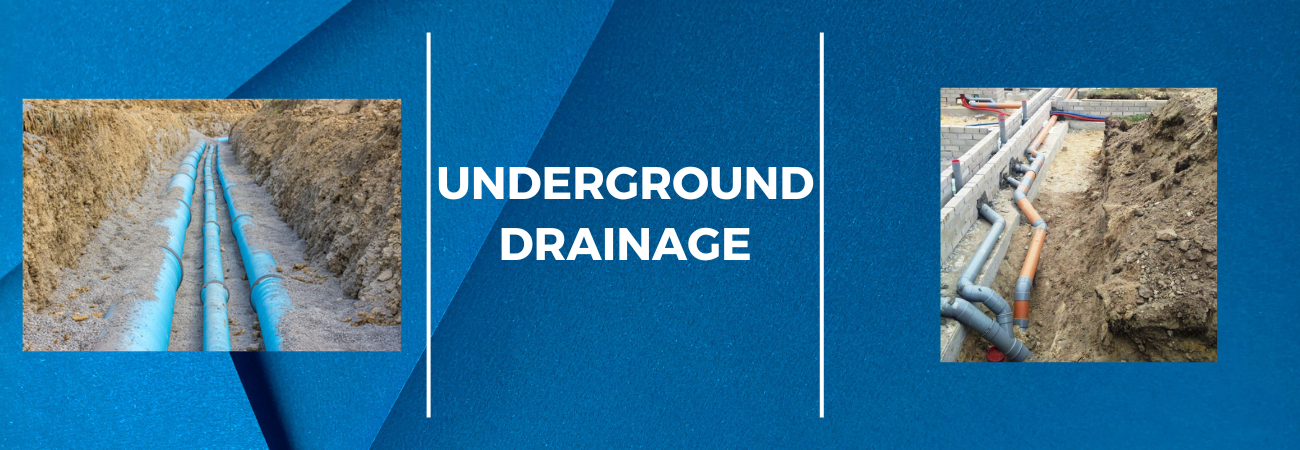
Since builders intend these pipes for below-ground application, they must offer high reliability and durability. As such, they must have the following features:
- High stiffness to resist soil load
- Flexibility to absorb earth movements
- Resistant to attack by rodents
- Leak proof
- Corrosion and scaling resistant
- Easy to install
- Larger diameters than normal water supply pipes.
- Higher impact strength
- These pipes carry heavy flow.
Types of Underground drainage pipes
- Cement concrete pipes
- Ceramic pipes
- Iron pipes
- Plastic pipes
- Solid Wall
- Foam core pipes
- Dual Wall corrugated pipes
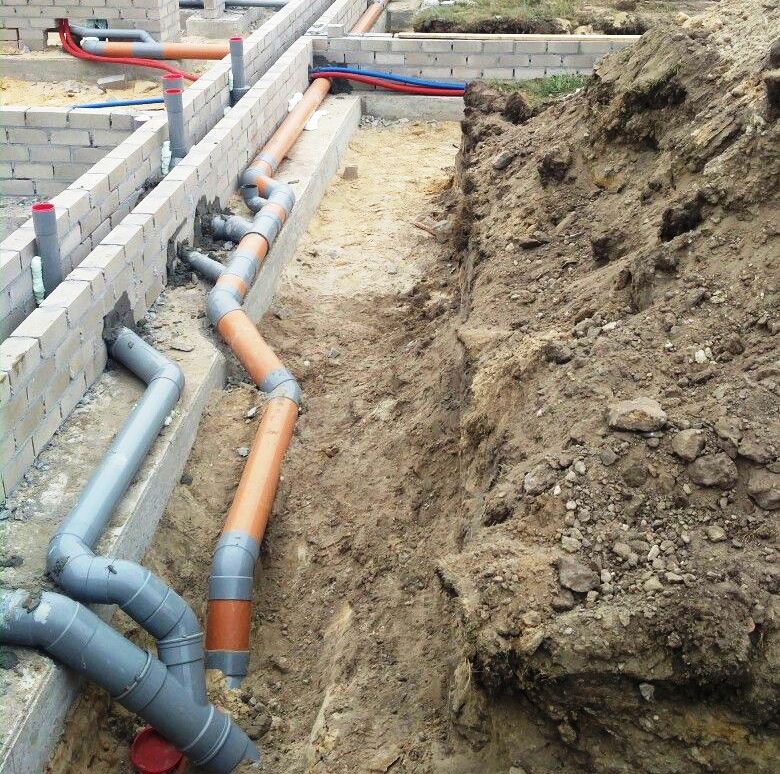
Cement Concrete underground drainage pipes:
Builders have traditionally used these pipes, which manufacturers make from cement. They are heavy and difficult to handle, so installation requires machinery. Because they come in short lengths, installers need more joints, which substantially increases installation costs. Over time, they get choked and also get corroded.
Ceramic underground pipes:
These are also based on old technology and very heavy to handle. They also come in short lengths and require more number of joints. In case they get damaged, they are difficult to replace.
Plastic Pipes
Plastic pipes have become very popular
Iron pipes:
Manufacturers make these from iron, either CI or MS. Builders use them less and less in modern times due to high cost, difficulty in installation, and issues with corrosion.
Plastic underground drainage pipes
Plastic pipes have become the material of choice for modern underground pipelines. Indeed, these are the modern replacement of old concrete pipes as they perform better in every way, be it strength, impact resistance, pressure resistance, durability, maintenance, installation etc.
These have several advantages:
- Light weight and easy to install
- Cost effective
- Less labor requirement
- Long life
- Resistant to corrosion and scaling
SOLID WALL PVC UNDERGROUND PIPES
PVC is a very popular material for underground drainage pipes. They have all advantages offered by plastics pipes and come in upto 6 mtr lengths in both solvent cement type jointing as well as rubber ring type jointing. Overall, both types of joints are fast, easy and reliable. Another advantage is all kinds of fittings and valves are easily available.
FOAM CORE PVC PIPES
This is the latest technology in underground drainage PVCpipes which offer high rigidity with considerable material savings. This technology involves a 3 layer pipe with internal and external layers being solid and middle layer being PVC rigid foam which offer extra stiffness for increased load resistance. Consequently, these are light weight and very easy to handle and come in both ring fit and solvent fit type jointing. Additionally, plumbers can join these with regular PVC fittings.
SOLID WALL HDPE UNDERGROUND PIPES
These are also durable pipes with smaller sizes available in coils and larger sizes as straight lengths. However, they require welding machines at site to do jointing, which is relatively cumbersome compared to PVC pipes.
DOUBLE WALL CORRUGATED HDPE UNDERGROUND PIPES
These offer the latest technology in HDPE pipes and have a corruagted wall on the outside and smooth wall on inside giving them required stiffness with much less material. As a result, they are easy to install and do not require welding at site.
Underground drainage pipe price :
Prices of underground drainage pipe vary from material to material and are subject to raw material fluctuations. From an installed cost perspective, plastic pipes are much more economical than conventional cement or ceramic pipes.
For latest underground drainage pipe prices, call us now.
Why Ajay Pipes?
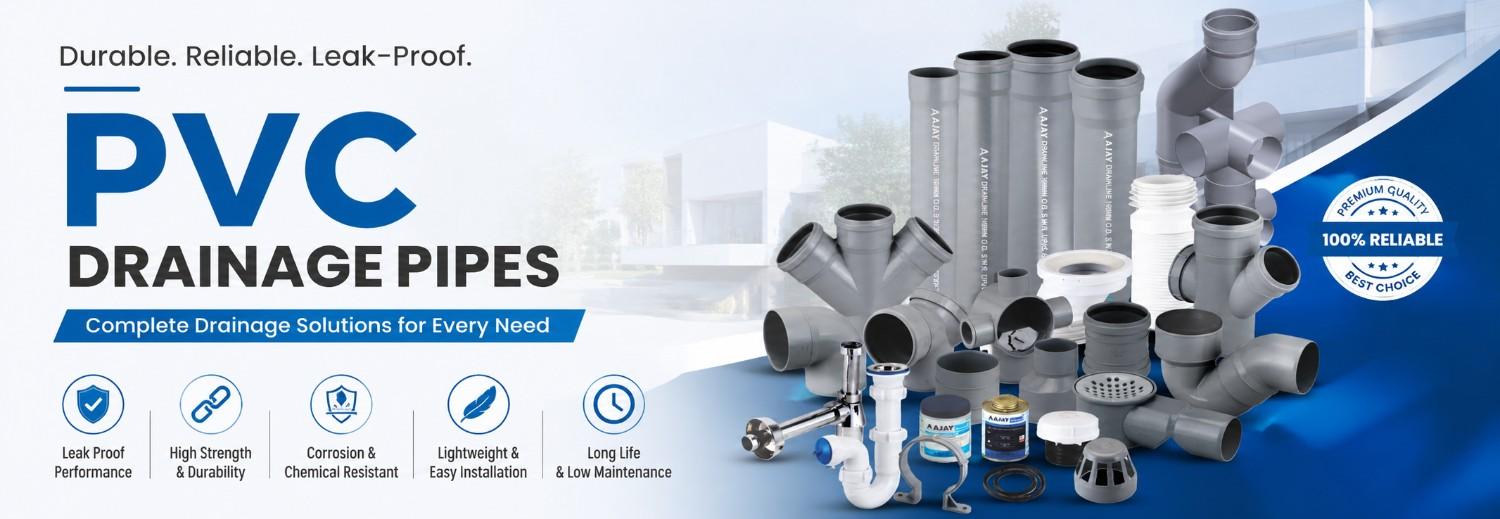
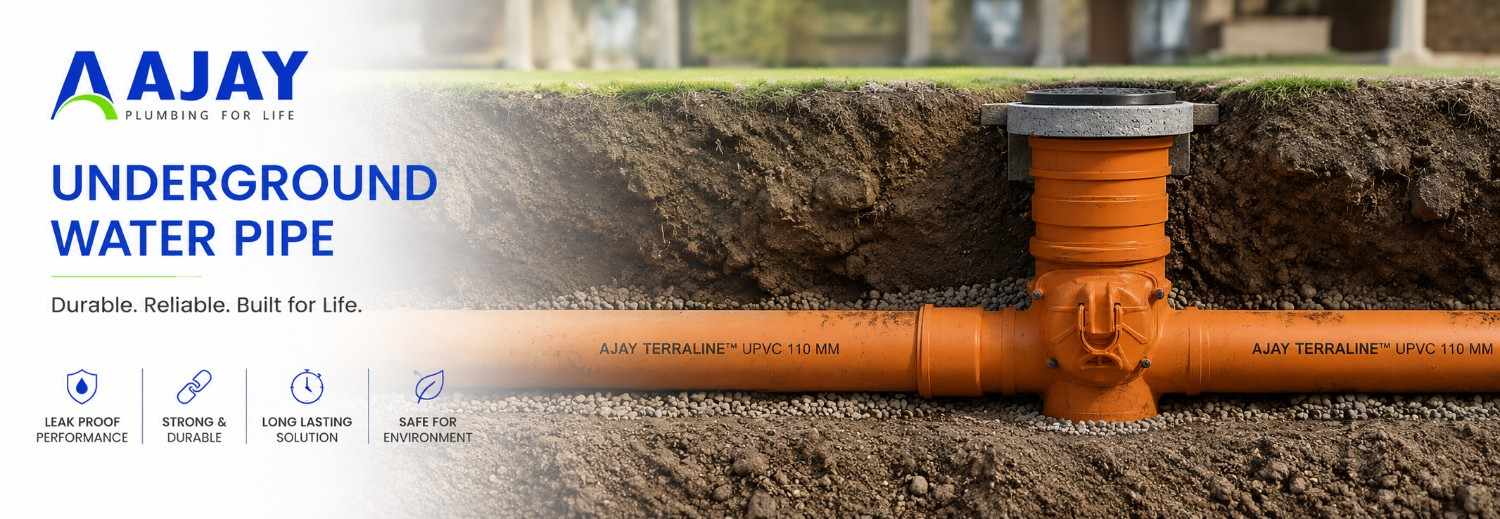
Ajay pipes has the widest collection of all kinds of PVC underground drainage pipes under the name Ajay Terraline.
Ajay Terraline has some features and benefits that are written below :
- Zero percent leakage
- Very long life
- Anti-rodent
- Resistance to chemicals
- Light in weight, promote easy transportation and installation
- Good flexibility to accommodate ground movement
- Use of molded DM-seal
- Abrasion resistant
- Resistance to high temperatures of upto 60 degrees.
- High Stiffness
- Complete range of pipes and Fittings.
All your underground plumbing leads have one solution, and that is Ajay Terraline. Notably, the products of Ajay Terraline are pocket friendly as well. Overall, they are a one-time investment as they have very low lifetime ownership costs.