Plumbing PVC Pipe Fittings: Complete Guide for Homes & Commercial Projects
Introduction
Plumbing PVC pipe fittings play a vital role in modern water supply and drainage systems. Whether it is a residential building, commercial complex, or industrial project, choosing the right PVC plumbing fittings ensures durability, leak-proof connections, and long-term performance.
PVC (Polyvinyl Chloride) has become one of the most widely used materials in plumbing because of its lightweight structure, corrosion resistance, affordability, and easy installation. In this comprehensive guide, we explore everything you need to know about plumbing pipe fittings, their types, uses, advantages, installation tips, and maintenance practices.
What Are Plumbing PVC Pipe Fittings?
Plumbing PVC pipe fittings connect PVC pipes together in water supply and drainage systems. Specifically, these fittings help change pipe direction, connect different pipe sizes, regulate flow, and terminate pipe ends.
Manufacturers design PVC water pipe fittings to provide secure and leak-proof joints, ensuring smooth water distribution throughout the system.
Plumbers commonly use PVC fittings in:
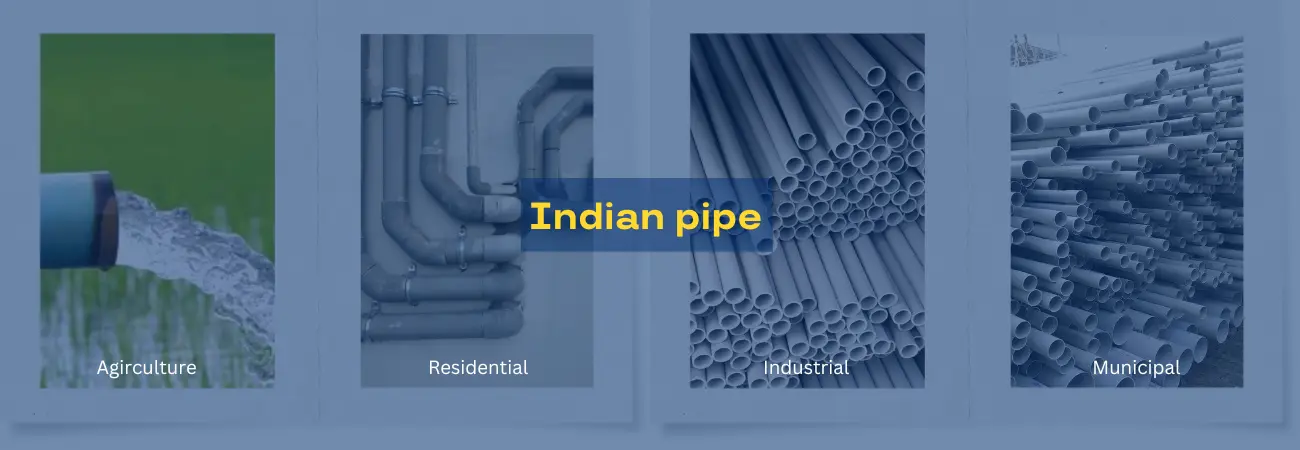
- Residential plumbing systems
- Commercial buildings
- Agricultural irrigation systems
- Industrial water supply
- Drainage and sewage systems
Why Choose PVC Plumbing Fittings?
PVC plumbing fittings offer multiple benefits compared to traditional metal fittings. Here’s why they’re preferred:
- Corrosion Resistant — Unlike metal fittings, PVC water pipe fittings do not rust or corrode when exposed to water or chemicals.
- Lightweight & Easy Installation — PVC plumbing fittings are lightweight, making transportation and installation simple and cost-effective.
- Cost-Effective — PVC plumbing pipe fittings cost less than copper or steel fittings, which reduces overall plumbing costs.
- Long Service Life — High-quality PVC fittings can last for decades with minimal maintenance.
- Chemical Resistance — PVC fittings resist most chemicals, making them suitable for industrial and wastewater systems.
Types of Plumbing PVC Pipe Fittings
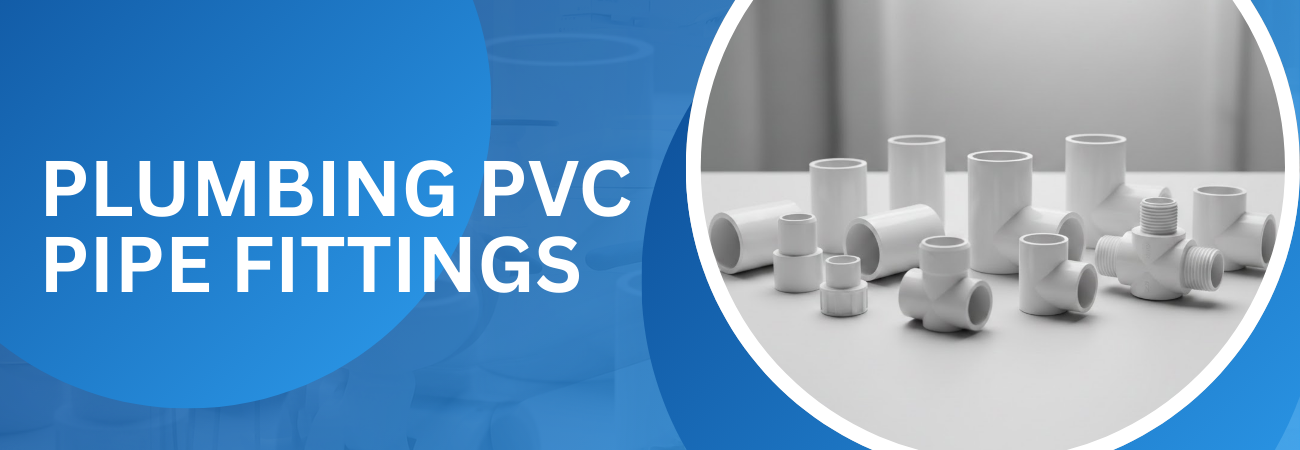
Several types of plumbing pipe fittings serve different needs across plumbing systems, and each fitting serves a specific purpose.
- PVC Elbow — Installers use this fitting to change the direction of the pipe. It’s available as a 90-degree elbow or a 45-degree elbow, and plumbers commonly use both in water supply and drainage systems.
- Tee Fitting — This fitting allows a pipe to split into two directions. Residential plumbing networks widely rely on it.
- Coupling — This fitting helps extend pipe length or repair broken sections.
- Reducer — Reducers connect pipes of different sizes and ensure a smooth transition between different pipe diameters.
- Union — Unions allow easy disconnection of pipes for maintenance or repair.
- End Cap — End caps close the pipe ends securely.
- Cross Fitting — This fitting connects four pipes in a cross formation.
Applications of PVC Water Pipe Fittings
Various sectors widely use PVC water pipe fittings because of their versatility and reliability. For instance:
Commercial Buildings Hotels, malls, offices, and hospitals rely on plumbing pipe fittings for efficient water distribution.
Industrial Use Industries use PVC plumbing fittings for chemical transport and wastewater systems.
How to Select the Right Plumbing Pipe Fittings
Choosing the correct PVC plumbing fittings ensures long-term performance. Consider the following factors:
- Pressure Rating — Select PVC water pipe fittings based on the water pressure requirement of your system.
- Application Type — Choose fittings according to whether the system is for hot water, cold water, or drainage.
- Quality Standards — Ensure the fittings meet ISI or other quality certifications for safety and durability.
Installation Process of PVC Plumbing Fittings
Proper installation is crucial for leak-proof plumbing systems.
Step 1: Measure and Cut Measure the pipe length accurately and cut it using a pipe cutter.
Step 2: Clean the Surface Next, remove dirt and burrs from the pipe and fitting surface.
Step 3: Apply PVC Solvent Cement Then apply solvent cement evenly to both the pipe and fitting.
Step 4: Join and Hold Insert the pipe into the fitting and hold firmly for a few seconds.
Step 5: Allow to Dry Finally, let the joint cure properly before turning on the water supply.
Advantages of Using PVC Water Pipe Fittings in Modern Plumbing
Modern plumbing systems demand efficiency, reliability, and durability, and PVC plumbing fittings meet these expectations effectively:
- Low maintenance requirements
- Leak-proof joints
- Smooth internal surface for better water flow
- Resistance to scaling and blockage
- Environment-friendly material
Additionally, PVC plumbing pipe fittings reduce overall plumbing labor costs because of their easy installation.
Maintenance Tips for PVC Plumbing Fittings
Even though PVC water pipe fittings require minimal maintenance, following these tips can extend their lifespan:
- Regularly inspect for leaks or cracks
- Avoid exposure to extreme heat
- Ensure proper pipe support
- Replace damaged fittings immediately
- Use quality solvent cement during installation
Common Problems and Solutions
Leakage at Joints Cause: Improper solvent application. Solution: Reapply solvent cement and ensure proper curing time.
Cracks in Fittings Cause: Excessive pressure or physical damage. Solution: Replace damaged PVC plumbing fittings immediately.
Loose Connections Cause: Incorrect size fitting. Solution: Always match pipe and fitting size accurately.
PVC vs CPVC Plumbing Pipe Fittings
Many people confuse PVC with CPVC fittings. However, while both are plastic materials, they serve different applications.
Feature | PVC | CPVC |
|---|---|---|
Temperature Resistance | Suitable for cold water | Suitable for hot & cold water |
Cost | More affordable | Slightly expensive |
Common Use | Moderate | Hot water supply |
Overall, for standard water supply and drainage, PVC water pipe fittings are an ideal and economical choice.
Future of PVC Plumbing Fittings
With growing urbanization and infrastructure development, the demand for plumbing pipe fittings is increasing rapidly. Meanwhile, advanced manufacturing techniques are improving the strength, pressure tolerance, and sustainability of PVC plumbing fittings.
Furthermore, eco-friendly PVC materials and improved joint technologies are making these fittings even more reliable for modern plumbing systems.
Conclusion
Plumbing PVC pipe fittings are essential components of modern plumbing systems. Their durability, affordability, corrosion resistance, and easy installation make them a preferred choice for residential, commercial, and industrial applications.
Whether you are constructing a new building or upgrading an existing plumbing system, selecting high-quality PVC plumbing fittings ensures a long-lasting and leak-proof water supply system. Ultimately, by choosing the right plumbing pipe fittings and following proper installation practices, you can ensure efficient performance for years to come.
FAQ:-
1. What are Plumbing PVC Pipe Fittings used for?
Plumbing PVC Pipe Fittings are used to connect, redirect, and control the flow of water in plumbing systems for residential, commercial, and industrial applications.
2. Are PVC plumbing fittings suitable for hot water?
Standard PVC plumbing fittings are mainly used for cold water systems. For hot water supply, CPVC fittings are recommended.
3. How long do PVC water pipe fittings last?
High-quality PVC water pipe fittings can last 25–50 years depending on installation quality and usage conditions.
4. Can PVC plumbing fittings be reused?
Generally, once solvent cement is applied and the fitting is fixed, it cannot be reused. It is recommended to use new fittings during repairs.
5. How do I prevent leakage in plumbing pipe fittings?
Ensure proper cleaning, correct solvent application, accurate pipe measurement, and adequate curing time during installation to prevent leakage.
For any queries, contact the plumbing experts at Ajay pipes on the Toll Free No. : 1800-11-4050 or via email at our email address info@ajaypipes.com