PVC Pipe Fittings Chart: Complete Guide to Sizes, Types & Uses
Introduction
PVC pipe fittings are an essential part of modern plumbing, irrigation, drainage, and industrial piping systems. They help connect pipes, change flow direction, control water movement, and ensure leak-proof performance. Whether you are a homeowner, plumber, contractor, or engineer, understanding a PVC Pipe Fittings Chart can save time, reduce errors, and improve installation quality.
In this guide, we’ll explain PVC fittings, common sizes, applications, and how to use a proper chart for selecting the right fitting.
What is a PVC Pipe Fittings Chart?
A PVC Pipe Fittings Chart is a reference table that shows different types of PVC fittings along with their dimensions, sizes, pressure ratings, and uses. It helps users choose the right fitting according to pipe diameter, connection type, and project requirement.
Using a chart makes it easier to compare fittings and avoid mismatched pipe connections.
Why PVC Pipe Fittings Are Popular
PVC (Polyvinyl Chloride) fittings are widely used because they offer:
- Lightweight design
- Easy installation
- Corrosion resistance
- Affordable pricing
- Long service life
- Smooth water flow
- Low maintenance requirements
These benefits make PVC fittings ideal for homes, agriculture, industries, and commercial buildings.
Common Types of PVC Pipe Fittings
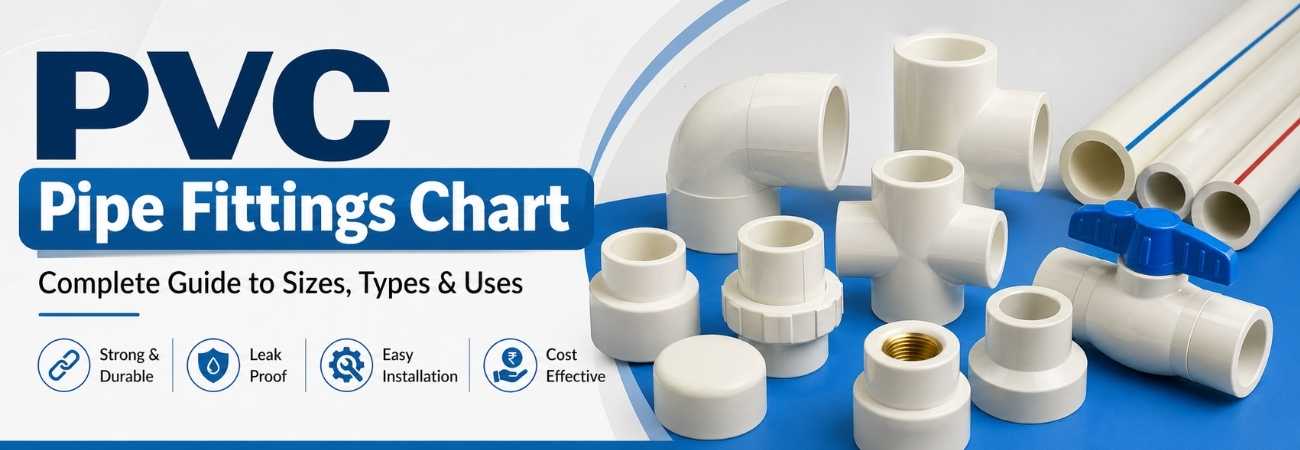
Below are some commonly used fittings shown in most PVC fittings chart references:
1. Elbow Fittings
Used to change pipe direction at 45° or 90° angles.
2. Tee Fittings
Used to split water flow into two directions.
3. Couplers
Used to join two straight pipe sections.
4. Reducers
Connect pipes of different diameters.
5. Union Fittings
Allow easy disconnection for maintenance.
6. End Caps
Seal the end of a pipe line.
7. Cross Fittings
Provide four-way pipe connection.
8. Ball Valve Fittings
Used to control water flow in pipelines.
PVC Pipe Fittings Sizes Chart
Choosing the right size is important for proper water pressure and fitting strength. Below is a general PVC pipe fittings sizes reference chart.
| Nominal Pipe Size | Outer Diameter (Approx.) | Common Uses |
|---|---|---|
| 1/2 inch | 21.3 mm | Home plumbing |
| 3/4 inch | 26.7 mm | Bathroom lines |
| 1 inch | 33.4 mm | Water supply |
| 1.5 inch | 48.3 mm | Drainage systems |
| 2 inch | 60.3 mm | Industrial flow |
| 3 inch | 88.9 mm | Sewage systems |
| 4 inch | 114.3 mm | Large drainage |
Always verify dimensions based on ASTM, SCH40, SCH80, or local standards.
Plumbing Pipe Fittings Chart for Residential Use
For household plumbing systems, the following fittings are commonly used:
| Area | Recommended Fitting | Typical Size |
|---|---|---|
| Kitchen Sink | Elbow + Tee | 1/2 inch |
| Bathroom Shower | Coupler + Elbow | 1/2 inch |
| Main Water Line | Tee + Valve | 1 inch |
| Garden Irrigation | Coupler + Reducer | 3/4 inch |
| Drainage Line | Tee + Bend | 2 inch |
This Plumbing pipe fittings chart helps in selecting the right combination for common home installations.
How to Read a PVC Fittings Chart
When reading a chart, check these details:
1. Pipe Diameter
Match fitting size with the pipe size.
2. Socket or Threaded Type
Determine if the fitting is solvent weld or threaded.
3. Pressure Rating
Ensure fitting can handle required water pressure.
4. Temperature Range
PVC is best for cold and moderate water systems.
5. Application Use
Choose according to irrigation, drainage, or pressure lines.
Applications of PVC Pipe Fittings
PVC fittings are used across multiple sectors:
Residential Plumbing
For bathrooms, kitchens, tanks, and drainage.
Agriculture
Used in irrigation systems, sprinklers, and borewell lines.
Commercial Buildings
Installed in water supply and waste disposal systems.
Industrial Plants
Suitable for chemical-resistant fluid movement.
Municipal Projects
Used in underground drainage and water supply systems.
Benefits of Using Correct PVC Fittings Sizes
Using the proper fitting size offers several benefits:
- Better water flow efficiency
- Lower leakage risk
- Stronger pipe joints
- Easier maintenance
- Longer pipeline life
- Reduced installation cost
Improper sizing can lead to leakage, pressure loss, and frequent repairs.
Tips for Choosing the Right PVC Pipe Fitting
Measure Pipe Correctly
Use calipers or measuring tape to check outer diameter.
Check Standards
Buy fittings matching ISI, ASTM, or BIS standards.
Consider Pressure Needs
Use pressure-rated fittings for water supply systems.
Buy Quality Brands
Reliable manufacturers provide durable fittings.
Use Correct Adhesive
Use PVC solvent cement for socket joints.
Installation Best Practices
- Clean pipe ends before joining
- Apply primer if required
- Use proper cement evenly
- Hold fitting firmly for a few seconds
- Allow curing time before water use
- Test joints for leakage after installation
Common Mistakes to Avoid
- Using wrong fitting sizes
- Mixing incompatible pipe standards
- Over-tightening threaded joints
- Ignoring pressure ratings
- Poor alignment during installation
- Buying low-grade fittings
Future of PVC Fittings in Plumbing Industry
The plumbing industry continues to grow with smart homes, water-saving systems, and modern infrastructure. PVC fittings remain a top choice because they are cost-effective, durable, and easy to install. New manufacturing technologies also improve strength and environmental performance.
Conclusion
A PVC Pipe Fittings Chart is a valuable tool for selecting the right fittings for any plumbing or piping project. From elbows and tees to reducers and couplers, understanding fitting types and sizes ensures efficient installation and long-term reliability.
Whether you are planning a home renovation, farm irrigation system, or industrial pipeline, using the right PVC pipe fittings sizes, reviewing a PVC fittings chart, and following a Plumbing pipe fittings chart can help you make the best decision.
FAQ:-
1. What is the purpose of a PVC Pipe Fittings Chart?
It helps users identify fitting types, dimensions, and suitable applications for proper pipe connections.
2. Which PVC fitting is used to change pipe direction?
Elbow fittings are commonly used to turn pipelines at 45° or 90° angles.
3. How do I know the right PVC fitting size?
Measure the pipe diameter and match it with the fitting size chart.
4. Are PVC fittings suitable for home plumbing?
Yes, PVC fittings are widely used in household water supply and drainage systems.
5. What is the most common PVC pipe size for homes?
1/2 inch and 3/4 inch sizes are commonly used for residential plumbing.
For any queries, contact the plumbing experts at Ajay pipes on the Toll Free No. : 1800-11-4050 or via email at our email address info@ajaypipes.com