Plumbing CPVC Pipe: The Smart Choice for Modern Plumbing Systems
Introduction
In today’s construction and plumbing industry, choosing the right piping material is crucial for durability, safety, and long-term performance. Among various options available, Plumbing CPVC Pipe has emerged as one of the most reliable and widely used solutions for residential, commercial, and industrial plumbing.
Known for its heat resistance, strength, and longevity, CPVC has transformed modern plumbing practices. This guide explores everything you need to know about Plumbing CPVC Pipe, including its features, benefits, applications, installation process, and importance in an efficient CPVC plumbing system.
What Is a Plumbing CPVC Pipe?
CPVC stands for Chlorinated Polyvinyl Chloride. It is an advanced form of PVC that undergoes a chlorination process to enhance its heat resistance and mechanical strength.
Plumbing CPVC Pipe is specifically designed to handle both hot and cold water supply, making it ideal for modern plumbing applications.
Unlike metal pipes that can corrode over time, CPVC plumbing pipes are resistant to corrosion and many common chemicals, helping maintain reliable water flow throughout their service life.
Why Plumbing CPVC Pipe Is Gaining Popularity
The increasing demand for CPVC plumbing pipes is driven by their performance advantages compared with traditional piping materials such as GI, copper, and standard PVC.
Key Reasons for Its Popularity
- Excellent resistance to high temperatures
- Long service life
- Low maintenance requirements
- Easy installation
- Lightweight construction
- Cost-effective compared with many metal piping systems
These advantages make CPVC a preferred choice for plumbers, builders, contractors, and homeowners.
Key Features of Plumbing CPVC Pipe
1. High Temperature Resistance
Plumbing CPVC Pipe can handle elevated water temperatures, making it suitable for hot-water applications in homes, hotels, hospitals, and commercial buildings. Actual temperature ratings depend on the specific pipe, pressure, and manufacturer specifications.
2. Corrosion & Chemical Resistance
Unlike metal pipes, CPVC plumbing pipes do not rust or corrode. They also provide good resistance to many chemicals commonly encountered in water supply systems.
3. Strong & Durable
CPVC pipes provide good mechanical strength and can deliver reliable performance when correctly selected for the required pressure and temperature conditions.
4. Smooth Inner Surface
The smooth internal surface of CPVC pipes helps reduce friction losses and supports efficient water flow while minimizing the potential for deposits and clogging.
5. Fire Safety
CPVC has favorable fire-performance characteristics and does not readily support combustion, although its exact fire rating depends on the specific product and installation.
CPVC Pipe Fittings: Essential Components of a CPVC Plumbing System
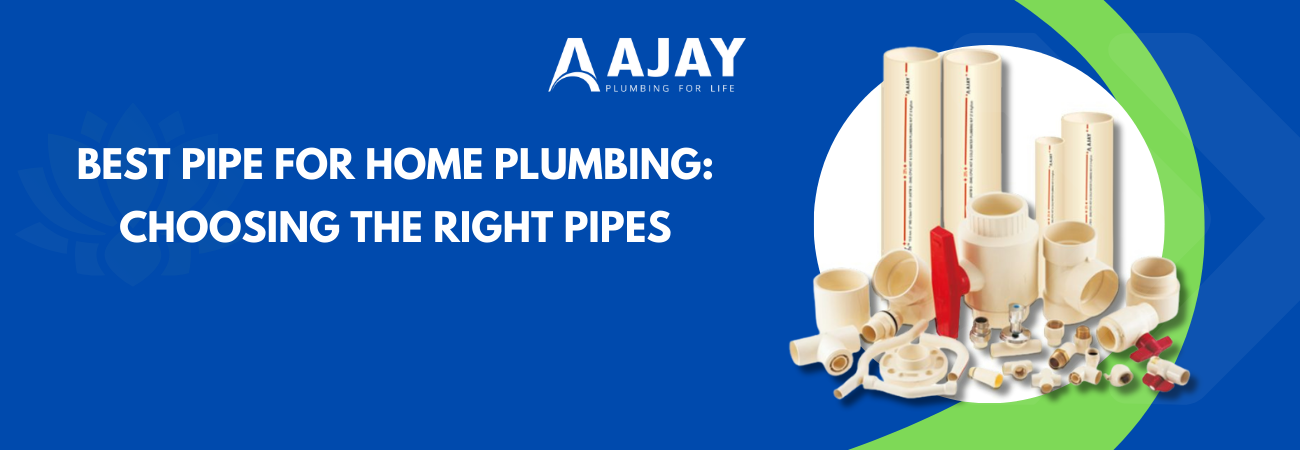
A plumbing system is incomplete without reliable fittings. CPVC pipe fittings are designed to create secure connections and provide smooth directional flow throughout the system.
Common CPVC Pipe Fittings Include
- Elbows (90° & 45°)
- Tees
- Couplers
- Reducers
- Unions
- End caps
- Brass threaded inserts
These fittings are generally joined using the recommended CPVC solvent cement and installation procedure, creating strong and reliable connections.
Advantages of Using a CPVC Plumbing System
A complete CPVC plumbing system offers multiple benefits beyond the piping itself.
1. Hygienic Water Supply
CPVC is suitable for potable water applications when the specific product is certified and approved for such use. It does not rust like metal piping, helping maintain clean water delivery.
2. Energy Efficiency
CPVC has lower thermal conductivity than many metal pipes, which can help reduce heat loss in hot-water distribution systems.
3. Quick & Easy Installation
Lightweight CPVC plumbing pipes are easy to handle, cut, and install, helping reduce installation time and labor requirements.
4. Cost-Effective Over Time
CPVC can offer a favorable lifecycle cost because of its durability, low maintenance requirements, and relatively simple installation.
5. Reliable Performance
When pipes and fittings are properly selected and installed, CPVC systems can provide dependable, leak-resistant performance over the long term.
Applications of Plumbing CPVC Pipe
Plumbing CPVC Pipe is versatile and suitable for a wide range of applications, including:
- Residential hot and cold water supply
- Commercial buildings and offices
- Hotels and hospitals
- Educational institutions
- Industrial water lines
- Fire sprinkler systems where specifically approved
- Water treatment applications where compatible
Its versatility makes CPVC a popular solution for modern water distribution systems.
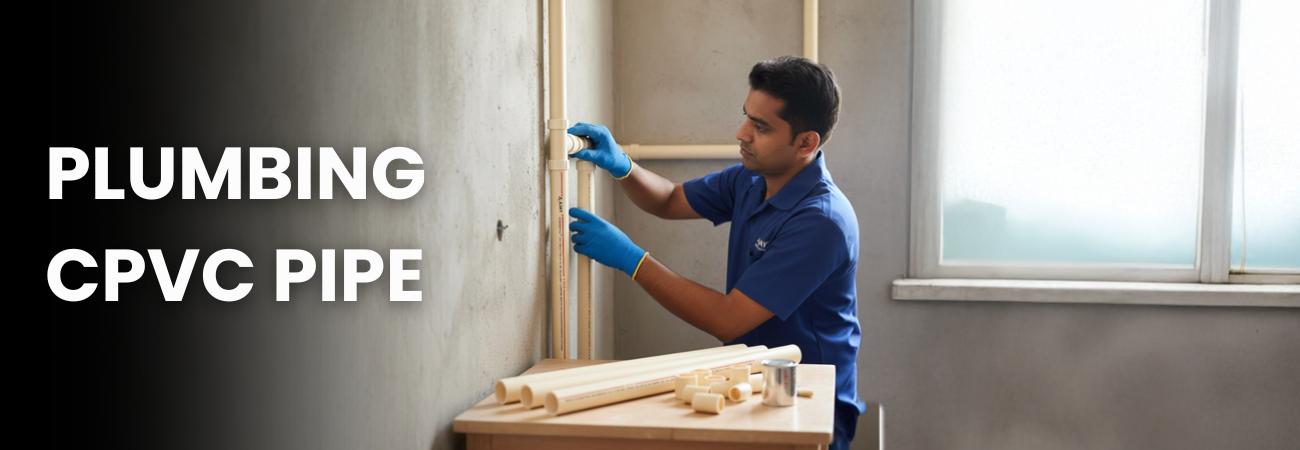
Installation Process of CPVC Plumbing Pipes
Installing a CPVC plumbing system is straightforward when the manufacturer’s recommended procedures are followed.
Basic Installation Steps
- Measure and cut the CPVC pipe accurately.
- Deburr and clean the pipe ends.
- Apply the recommended CPVC solvent cement to the pipe and fitting.
- Insert the pipe fully into the fitting and rotate slightly if specified by the manufacturer.
- Hold the joint securely for the recommended time.
- Allow the required curing time before pressurizing the system.
- Conduct appropriate testing before putting the system into service.
Correct installation is essential for achieving long-lasting, leak-resistant performance.
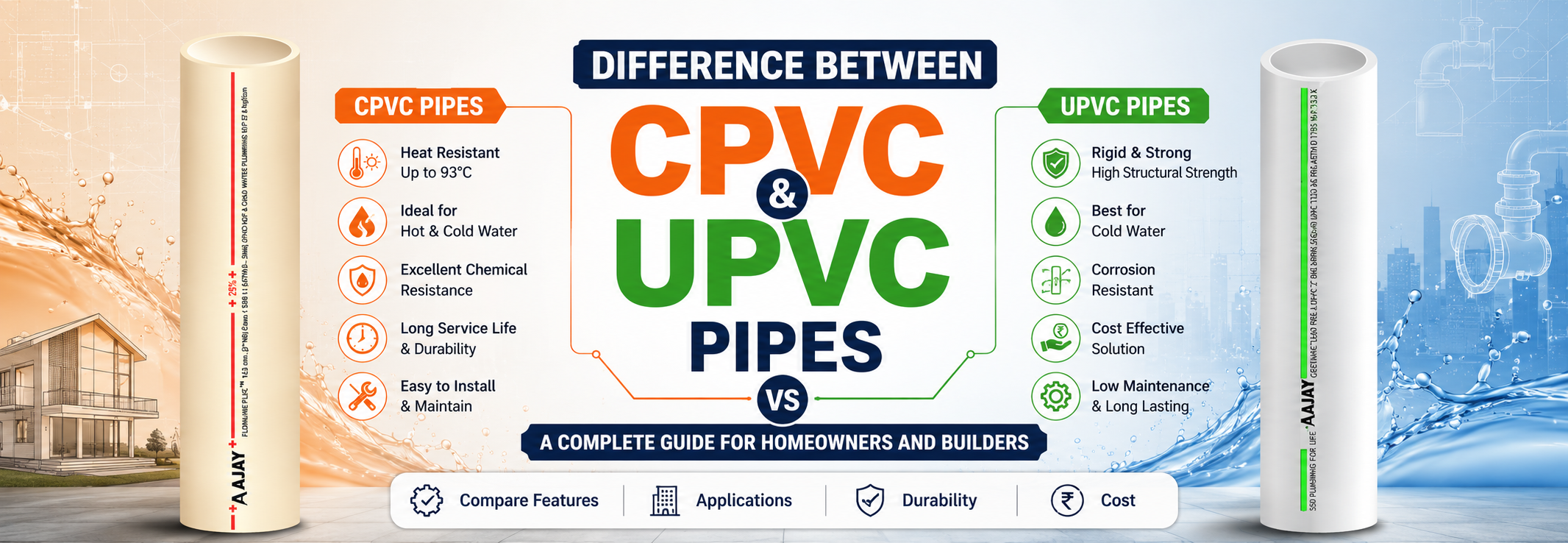
CPVC vs Other Plumbing Materials
| Feature | CPVC | PVC | GI Pipes | Copper |
|---|---|---|---|---|
| Hot Water Use | Yes | Limited | Limited | Yes |
| Corrosion Resistance | High | High | Low | Medium–High |
| Lifespan | Long | Long | Moderate | Long |
| Installation | Easy | Easy | Difficult | Difficult |
| Cost | Moderate | Low | High | Very High |
This comparison shows why CPVC is widely considered a practical choice for hot- and cold-water plumbing applications.
Maintenance Tips for CPVC Plumbing System
CPVC requires relatively little maintenance, but a few precautions can help maximize system life:
- Avoid prolonged direct UV exposure for outdoor pipes.
- Use only the recommended CPVC solvent cement.
- Prevent mechanical impact or crushing damage.
- Conduct periodic visual inspections.
- Follow the manufacturer’s pressure and temperature guidelines.
- Repair damaged sections promptly.
When properly installed and maintained, CPVC plumbing systems can provide reliable performance for many years.
Environmental Benefits of CPVC Plumbing Pipes
CPVC can contribute to more sustainable plumbing systems through:
- Long service life, which can reduce replacement frequency
- Reduced water loss from properly installed systems
- Lower heat loss in hot-water applications compared with highly conductive metals
- Potential recyclability depending on local recycling infrastructure
Using durable plumbing materials can support more resource-efficient construction practices.
Future of Plumbing CPVC Pipe in India
With increasing urbanization, infrastructure development, residential construction, and demand for efficient water distribution systems, the use of CPVC plumbing pipes in India is expected to remain strong.
Builders, contractors, and homeowners increasingly consider CPVC because of its combination of durability, corrosion resistance, ease of installation, and suitability for hot- and cold-water applications.
As plumbing requirements evolve, CPVC continues to play an important role in modern water distribution systems.
Conclusion
Choosing the right Plumbing CPVC Pipe is an important decision for achieving a durable, efficient, and reliable plumbing system. With suitable CPVC plumbing pipes, quality CPVC pipe fittings, and proper installation practices, residential, commercial, and industrial projects can benefit from dependable hot- and cold-water distribution.
Before selecting a CPVC system, always consider the required pressure, temperature, application, local plumbing codes, and manufacturer’s specifications.
FAQ:-
1. What makes Plumbing CPVC Pipe better than PVC?
Plumbing CPVC Pipe can handle hot water and higher pressure, unlike PVC which is suitable only for cold water applications.
2. Are CPVC plumbing pipes safe for drinking water?
Yes, CPVC plumbing pipes are non-toxic and approved for potable water supply.
3. How long does a CPVC plumbing system last?
A properly installed CPVC plumbing system can last over 50 years with minimal maintenance.
4. Can CPVC pipe fittings handle high pressure?
Yes, CPVC pipe fittings are designed to withstand high pressure and temperature without leakage.
5. Is CPVC suitable for residential and commercial plumbing?
Absolutely. CPVC plumbing pipes are widely used in both residential and commercial buildings due to their versatility.
For any queries, contact the plumbing experts at Ajay pipes on the Toll Free No. : 1800-11-4050 or via email at our email address info@ajaypipes.com