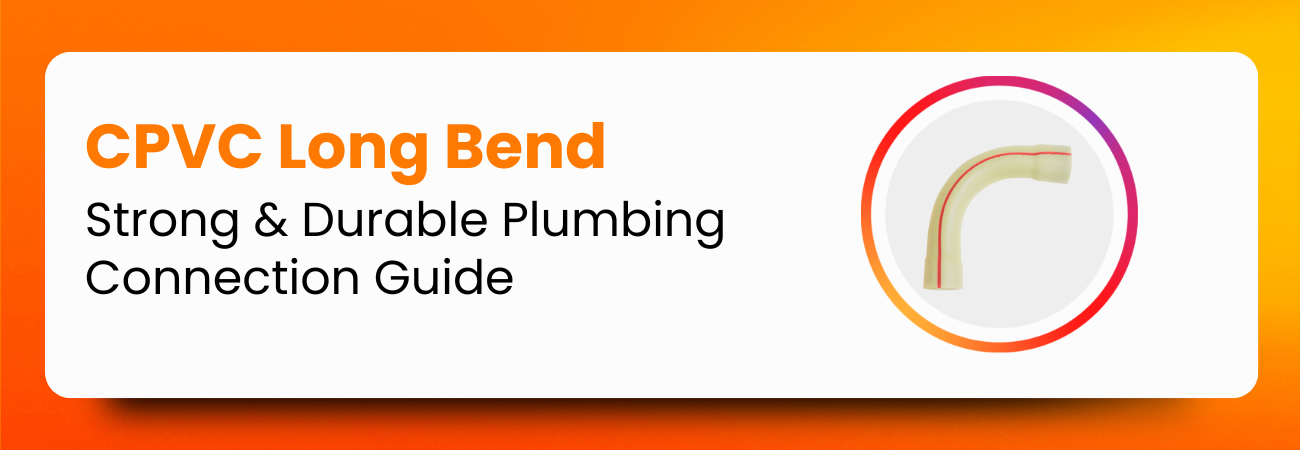
CPVC Long Bend: Strong & Durable Plumbing Connection Guide
Introduction
In modern plumbing systems, the CPVC long bend is an important fitting that helps ensure smooth water flow around corners without putting excessive stress on the pipeline. Whether you are working on a residential water supply system or an industrial plumbing installation, this small but essential component can contribute to better performance and durability.
In this comprehensive guide, you will learn everything about CPVC long bends, including their function, features, advantages, applications, installation process, and how they compare with fittings such as cross bend CPVC and end cap CPVC.
What Is a CPVC Long Bend?
A CPVC long bend is a pipe fitting manufactured from Chlorinated Polyvinyl Chloride (CPVC). It is designed to change the direction of a pipeline, typically at a 90-degree angle, using a longer and more gradual radius than a standard short bend.
The extended curve allows water to move more smoothly through the fitting, helping reduce turbulence, friction, and pressure loss within the plumbing system.
Key Features of CPVC Long Bends
- Long turning radius for smoother water flow
- Good resistance to heat and many chemicals
- Suitable for hot and cold water applications
- Lightweight and easy to handle
- Corrosion-resistant construction
- Compatible with standard CPVC plumbing systems
- Easy installation using suitable CPVC solvent cement
Why Choose CPVC Long Bend Fittings?
CPVC long bends offer several benefits that make them useful in residential, commercial, and industrial plumbing installations.
Smooth Water Flow
The gradual curve of a long bend helps reduce turbulence inside the pipeline. This can support consistent water flow and minimize unnecessary pressure loss.
Minimizes Joint Stress
Sharp changes in direction can place additional stress on pipes and joints. A long bend provides a smoother transition, helping reduce mechanical stress on the connected pipeline.
Easy Installation
CPVC long bends are relatively lightweight and can be installed using appropriate CPVC solvent cement. Their simple design makes them convenient for professional plumbing installations.
Suitable for Long-Term Plumbing Systems
CPVC is resistant to corrosion and is designed for use in plumbing applications involving hot and cold water. With correct installation and suitable operating conditions, CPVC fittings can provide reliable long-term service.
Where Are CPVC Long Bends Used?
CPVC long bends can be used in a variety of plumbing and piping applications.
Common applications include:
- Residential water supply lines
- Hot water circulation systems
- Bathroom and kitchen plumbing
- Commercial plumbing systems
- Industrial pipelines
- Selected chemical-handling applications, where CPVC compatibility is confirmed
Difference Between CPVC Long Bend and CPVC Cross Bend
| Feature | CPVC Long Bend | CPVC Cross Bend |
|---|---|---|
| Shape | 90° smooth curve | Four-way pipe connection |
| Function | Changes the direction of a pipeline | Connects four pipe sections |
| Best Use | Corners and direction changes | Complex branch pipe networks |
| Flow Impact | Generally supports smoother flow through a gradual turn | Flow distribution depends on system design |
| Connection Points | Usually two | Usually four |
A CPVC long bend is primarily used when a pipeline needs to change direction, while a cross bend CPVC fitting is used when multiple pipelines need to connect at a common point.
How to Install a CPVC Long Bend Correctly
Proper installation is essential for creating a secure and leak-resistant CPVC connection.
Tools You’ll Need
- CPVC pipes and long bend fitting
- Pipe cutter or suitable hacksaw
- CPVC solvent tube
- Sandpaper or deburring tool
- Measuring tape
- Marker
Installation Steps
1. Measure and Cut the Pipe
Measure the required pipe length and mark the cutting point. Use a pipe cutter or suitable cutting tool to make a clean, square cut.
2. Deburr the Edges
Remove burrs and rough edges from the cut pipe. A smooth edge helps create a proper connection with the fitting.
3. Dry Fit the Components
Insert the pipe into the CPVC long bend without adhesive to check the alignment and ensure the components fit correctly.
4. Apply CPVC Solvent Cement
Apply the recommended CPVC solvent cement evenly to the appropriate mating surfaces according to the product manufacturer’s instructions.
5. Join the Pipe and Fitting
Insert the pipe fully into the fitting while maintaining proper alignment. Hold the connection firmly for the time recommended by the solvent cement manufacturer.
6. Allow Proper Curing
Allow the joint to cure for the manufacturer’s specified time before pressurizing or testing the plumbing system. Cure time can vary depending on pipe size, temperature, humidity, and the solvent cement product.
How the End Cap CPVC Complements CPVC Long Bends
An end cap CPVC fitting is used to close or seal the end of a CPVC pipeline. While a long bend changes the direction of a pipe, an end cap is generally used when a pipe needs to be terminated or temporarily closed.
Common Uses of End Cap CPVC
- Temporary system shut-offs
- Closing unused pipe ends
- Pressure-testing sections of a pipeline
- Preparing a pipeline for future extension
- Maintenance and modification work
Using suitable end caps alongside CPVC long bends and other fittings can provide greater flexibility when designing and maintaining a plumbing system.
Key Advantages of Using CPVC Long Bends in Plumbing Installations
Reduces Unnecessary Joint Stress
The gradual curve provides a smoother directional change and can help reduce stress around pipe connections.
Supports Efficient Water Flow
A properly designed long-radius bend can help minimize unnecessary turbulence and friction compared with sharper directional changes.
Helps Improve System Longevity
CPVC fittings offer corrosion resistance and can provide dependable performance when correctly selected, installed, and operated within their specified conditions.
Easy to Handle
CPVC is lightweight compared with many traditional metallic piping materials, making transportation and installation more convenient.
Broad Compatibility
CPVC long bends can be incorporated into CPVC plumbing systems along with compatible fittings such as cross bend CPVC and end cap CPVC.
CPVC Long Bend vs Other Plumbing Fittings
Choosing the correct fitting depends on the required pipe layout and purpose.
- CPVC Long Bend: Used primarily for smooth directional changes.
- CPVC Cross Bend: Used to connect four pipe sections or create a four-way branch.
- End Cap CPVC: Used to close the end of a pipe.
- CPVC Elbow: Used for directional changes where a more compact fitting is required.
Selecting the correct fitting helps create an organized and functional plumbing network.
Conclusion
A CPVC long bend is a useful plumbing fitting for creating smooth directional changes while helping maintain efficient water flow and reducing unnecessary stress on pipe connections. Its lightweight, corrosion-resistant construction and suitability for hot and cold water applications make it a practical choice for many CPVC plumbing systems.
When combined with compatible fittings such as cross bend CPVC and end cap CPVC, long bends can help create flexible and well-organized plumbing installations.
For reliable performance, always select fittings according to the required application and follow the manufacturer’s specifications for installation, solvent cement, pressure, temperature, and curing time.
Frequently Asked Questions
1. What is the difference between a CPVC long bend and a short bend?
A CPVC long bend has a larger turning radius and provides a more gradual change in direction. A short bend has a tighter radius and is useful where installation space is limited.
2. How is a CPVC long bend different from a cross bend CPVC?
A CPVC long bend is designed to change the direction of a pipeline, generally through a 90-degree turn. A cross bend CPVC is designed to connect four pipe sections at a common junction.
3. Can CPVC long bends be used for hot water lines?
Yes, CPVC long bends can be used in hot water plumbing systems when the fitting is specifically rated for the application’s temperature and pressure requirements. Always follow the manufacturer’s specifications.
4. What tools are needed to install a CPVC long bend?
Common tools include a pipe cutter, measuring tape, marker, deburring tool or sandpaper, and suitable CPVC solvent cement. Always follow the fitting and solvent manufacturer’s installation instructions.
5. What is the purpose of an end cap CPVC?
An end cap CPVC is used to close the end of a CPVC pipe. It can be useful for terminating a pipeline, closing unused outlets, pressure testing, or preparing a system for future extension.
For any queries, contact the plumbing experts at Ajay pipes on the Toll Free No. : 1800-11-4050 or via email at our email address info@ajaypipes.com