Introduction
Water is the backbone of every home, farm, and industry in India, and borewells play a vital role in ensuring a continuous supply. However, the performance and lifespan of a borewell depend greatly on one crucial component the casing pipe. Choosing the best casing pipe for borewell is not just a technical decision; it is an investment in long-term water security.
In this detailed guide, we will explain everything you need to know about borewell casing pipes, their benefits, materials, installation, and how to choose the right PVC casing pipe for your water source.
What Is a Borewell Casing Pipe?
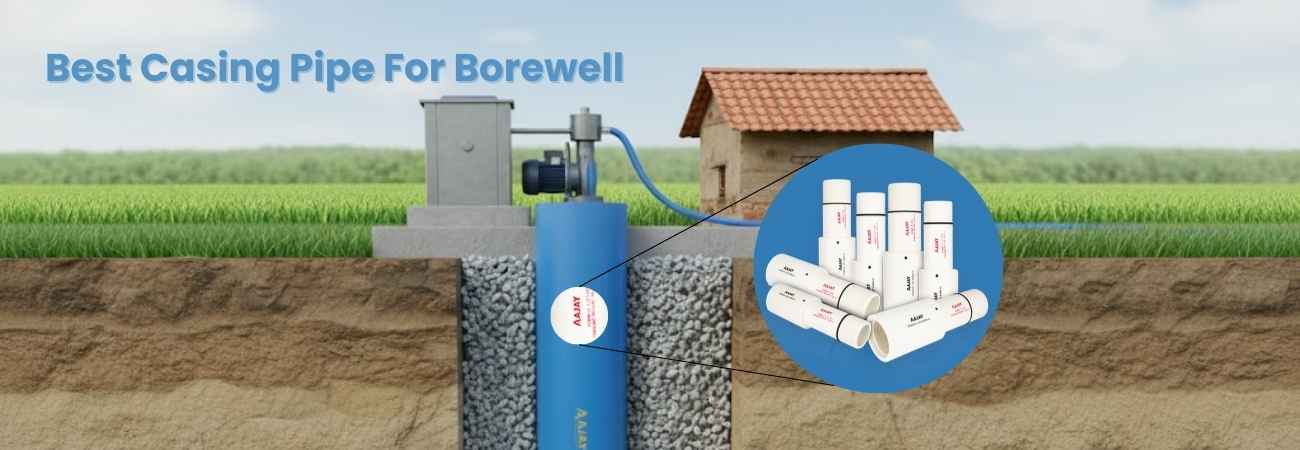
A borewell casing pipe is a tubular structure installed inside a drilled bore to support the borewell walls. It prevents soil collapse, stops sand from entering the water, and protects the borewell from surface contamination. Without a strong water well casing pipe, the borewell can collapse, reducing water flow and contaminating groundwater.
Casing pipes are especially important in loose soil, sandy layers, and rocky underground formations. They ensure the borewell remains structurally stable and functions efficiently for years.
Why Choosing the Best Casing Pipe for Borewell Matters
Many borewell failures happen not because water is unavailable, but because the wrong casing pipe was used. A low-quality or weak casing pipe can crack, deform, or collapse under pressure. This leads to costly repairs, reduced water yield, or even complete borewell failure.
The best casing pipe for borewell offers:
- High load-bearing strength
- Resistance to soil and groundwater pressure
- Long operational life
- Protection from contamination
- Smooth inner surface for better water flow
This is why modern borewell installations rely heavily on PVC casing pipe instead of traditional metal pipes.
PVC Casing Pipe: The Modern Standard for Borewells
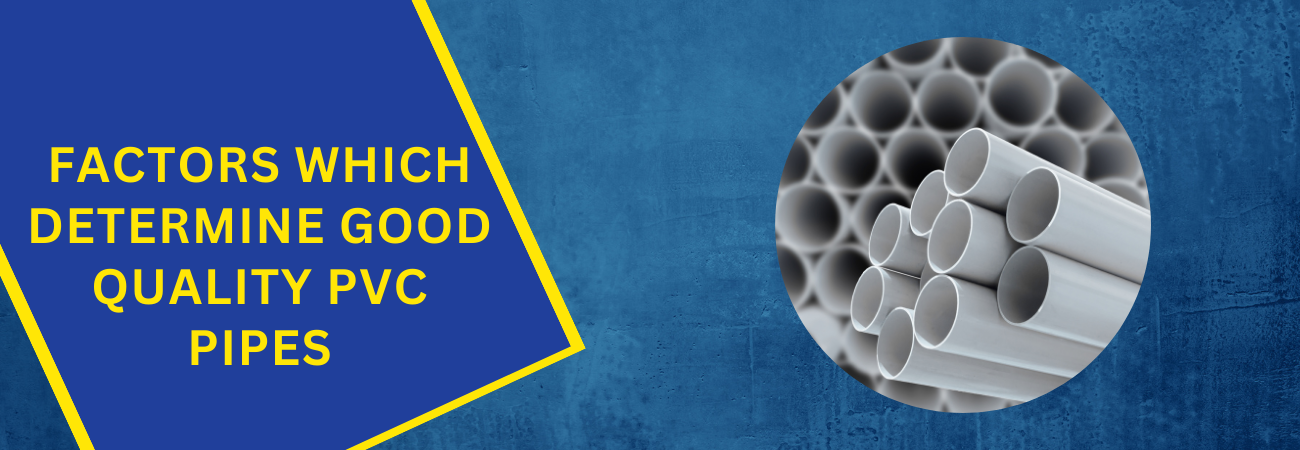
A PVC casing pipe is widely considered the most reliable and cost-effective option for borewells. It is made from high-grade unplasticized polyvinyl chloride (UPVC), designed specifically for underground water systems.
Key Benefits of PVC Casing Pipe
- Corrosion Resistance
Unlike iron or steel, PVC does not rust or corrode when exposed to groundwater minerals. - Lightweight and Easy to Install
PVC pipes are easy to transport and install, reducing labor and handling costs. - Long Life Span
High-quality water well casing pipe made from PVC can last 30–50 years. - Smooth Internal Surface
Reduces friction and allows better water flow. - Non-Toxic and Safe
Does not contaminate drinking water.
Types of Borewell Casing Pipes
There are different types of borewell casing pipes based on their structure and usage:
1. Plain Casing Pipes
Used to support the borewell walls and prevent soil collapse.
2. Slotted Casing Pipes
These have narrow slots that allow water to enter while blocking sand and gravel.
3. Ribbed Casing Pipes
Designed for deeper borewells where extra strength is required.
Choosing the correct combination of plain and slotted water well casing pipe ensures maximum water yield and borewell stability.
How to Choose the Best Casing Pipe for Borewell
Selecting the right casing pipe depends on several factors:
Borewell Depth
Deeper borewells require thicker and stronger PVC casing pipes.
Soil Type
Loose, sandy, or clay soil needs high-impact-resistant casing pipes.
Water Quality
In saline or chemically active groundwater, PVC is the safest option.
Pipe Diameter
Larger diameter casing allows higher water flow and easier pump installation.
Always choose a reputed manufacturer that follows IS standards and uses high-grade raw materials.
Why Ajay Pipes Is a Trusted Name in Borewell Casing Pipes
When it comes to choosing the best casing pipe for borewell, quality and reliability are non-negotiable. Ajay Pipes is one of India’s most trusted manufacturers of borewell casing pipes and PVC casing pipes, known for their strength, precision, and durability.
Ajay Pipes offers casing pipes that are:
- Manufactured with high-grade PVC
- Tested for impact, pressure, and load-bearing strength
- Designed for Indian soil and water conditions
- Available in multiple sizes and thicknesses
If you want long-lasting and trouble-free borewell performance, Ajay Pipes is the right choice.
Installation Tips for Water Well Casing Pipe
- Ensure the borewell is drilled to the correct diameter
- Use slotted pipes only in water-bearing zones
- Keep joints tight and properly aligned
- Use gravel packing around slotted pipes
- Avoid forcing or bending pipes during installation
A well-installed PVC casing pipe can prevent sand entry and improve water yield significantly.
Maintenance and Life of Borewell Casing Pipes
High-quality borewell casing pipes need very little maintenance. However, it is important to:
- Avoid excessive pump vibration
- Use correct pump size
- Periodically clean the borewell
- Check water quality
With proper use, a premium water well casing pipe can serve reliably for decades.
Why Investing in the Best Casing Pipe Saves Money
Choosing cheap or low-quality casing pipes may save money initially, but leads to:
- Frequent repairs
- Reduced water output
- Borewell collapse
- Pump damage
Investing in the best casing pipe for borewell from a trusted brand like Ajay Pipes ensures peace of mind and long-term savings.
Conclusion
Choosing the best casing pipe for borewell is one of the most important decisions in creating a reliable and long-lasting water source. A high-quality PVC casing pipe not only strengthens the borewell structure but also protects your water from contamination, prevents soil collapse, and ensures smooth, uninterrupted water flow. Whether you are installing a new borewell or maintaining an existing one, investing in premium borewell casing pipes and a durable water well casing pipe will save you from costly repairs and performance issues in the future. For trusted quality, long life, and proven performance, Ajay Pipes stands out as a reliable choice.
FAQ:-
1. What does a pipe manufacturing company do?
A pipe manufacturing company designs, produces, and tests pipes used for water supply, drainage, and plumbing systems.
2. Why are PVC pipes so popular?
PVC pipes are lightweight, corrosion-resistant, affordable, and easy to install, making them ideal for drainage and cold-water supply.
3. What makes CPVC pipes different from PVC?
CPVC pipes can handle higher temperatures, making them suitable for hot and cold water plumbing.
4. Are water supply pipes safe for drinking water?
Yes, when manufactured by a certified pipe manufacturing company, water supply pipes are hygienic and safe for potable water.
5. How long do PVC and CPVC pipes last?
High-quality PVC and CPVC pipes can last more than 50 years when properly installed and maintained.
When choosing a manufacturer, it is important to look beyond price. Check for product certifications, manufacturing standards, and customer feedback. A company that uses advanced technology, maintains strict quality control, and provides reliable customer support is more likely to deliver long-lasting products.
A strong reputation in the market is also a good indicator of trust and performance.
For any queries, contact the plumbing experts at Ajay pipes on the Toll Free No. : 1800-11-4050 or via email at our email address info@ajaypipes.com