
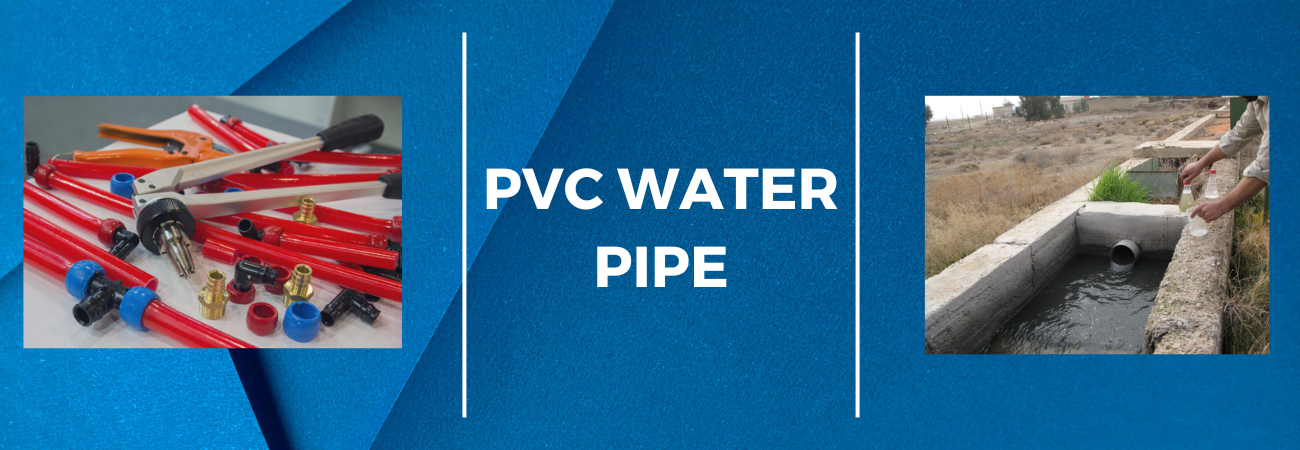
PVC Water Pipe

Types of Water Supply Pipes
Plumbers use pipes to transport drinking water. Water distribution networks use them too, where treatment plants treat and chlorinate the water before distribution to prevent contamination.
- PVC plastic plumbing pipe: PVC water pipes are relatively economical and serve cold water only. The advantages of PVC water pipes are that they do not corrode or scale and last long. Further, they are easy to install and handle.
- CPVC plastic plumbing pipe: In India, plumbers use CPVC Pipes most extensively for hot and cold water plumbing. These pipes can withstand hot water upto 93 Deg C, do not corrode or scale, are easy to install, and are suitable for potable water applications. Installers join them using CPVC solvent cements, and the process is fast, easy and leak-free. Due to these reasons, these pipes have become plumbers’ and home owners’ number one choice.
- PPR plastic plumbing pipe: Plumbers also use PPR for hot and cold water applications. PPR jointing uses the heat welding method and requires power and welding machines on site. Due to this reason, its use has steadily waned over time, and most manufacturers of PPR have switched to offering CPVC and UPVC based plumbing systems.
- PEX plastic plumbing pipe: Polyethylene cross linked pipes are the latest entrants in India for plumbing. They use the crimp or compression technology for making joints. Currently, their use remains limited to a few residential projects across India.
- PERT plastic plumbing pipe: Polyethylene Raised Temperature pipes are the latest entrants in India for plumbing. They also use the crimp or compression technology for making joints. Plumbers rarely use this kind of pipe in India; however, its use is likely to grow for plumbing applications in future.
- Rigid copper plumbing pipes are another type of water supply pipes used within the home. Traditionally, when plastic solutions were not available, plumbers considered copper a superior choice.
- GI plumbing pipe: Traditionally, plumbers used GI pipes for this application; however, over the last two decades, polymer piping has fast and almost completely replaced them. GI pipes are prone to corrosion and scaling.

Types of Home Pipes
Homes broadly use two categories of pipes: one for water piping and the other for drainage piping.
WATER PIPING OR PLUMBING PIPES:
These pipes supply water throughout the house. They are all pressure class piping, and material selection depends on their use for cold water only or for hot and cold water.
PVC WATER PIPE:
PVC water pipes are relatively economical and serve cold water only. The advantages of PVC water pipes are that they do not corrode or scale and last long. Further, they are easy to install and handle.
In some places, plumbers combine PVC water pipes for cold water and CPVC pipes for hot water. Although such combinations help reduce plumbing cost for end users, plumbers installing such systems must take utmost care not to make mistakes which might cause issues later.
CPVC WATER PIPE:
In India, plumbers use CPVC Pipes most extensively for hot and cold water plumbing. These pipes can withstand hot water upto 93 Deg C, do not corrode or scale, are easy to install, and are suitable for potable water applications. Installers join them using CPVC solvent cements, and the process is fast, easy and leak-free. Due to these reasons, these pipes have become plumbers’ and home owners’ number one choice.
GI PIPE:
Traditionally, plumbers used GI pipes for this application; however, over the last two decades, polymer piping has fast and almost completely replaced them. GI pipes are prone to corrosion and scaling.
PPR WATER PIPES
Plumbers also use PPR for hot and cold water applications. PPR jointing uses the heat welding method and requires power and welding machines on site.
Due to this reason, its use has steadily waned over time, and most manufacturers of PPR have switched to offering CPVC and UPVC based plumbing systems.
PEX WATAER PIPES
PEX pipes are the latest entrants in India for plumbing. They use the crimp or compression technology for making joints. Currently, their use remains limited to a few residential projects across India.
DRAINAGE PIPES
Homes use these pipes for soil, rain water and waste disposal purposes throughout homes. Depending on preferences, many types of drainage pipes are available:
PVC SWR PIPES
PVC pipes are light weight, easy to install and last long. Additionally, these are available in solvent jointing type and rubber ring jointing types.
CAST IRON PIPES
Traditionally, builders used these for drainage; however, their use has become substantially reduced, and they are now limited to very few construction projects across India.
LOW NOISE DRAINAGE
Low noise drainage pipes are the latest entrants in India and feature low noise transmittance for relatively silent spaces inside buildings.




3 Comments