Which Plumbing Pipes Are Best for Commercial Buildings?
The best plumbing pipes for commercial buildings depend on the job. CPVC suits hot and cold water supply, UPVC suits cold water lines, SWR handles internal soil and waste, and UDS pipes carry drainage underground. This guide shows how to match each type to your project. It also explains the standards to check before you place an order.
Why Pipe Selection Matters in Commercial Buildings
A leak in a home is an annoyance. A leak in a hospital, hotel or mall halts operations. Repairs mean opening ceilings, closing floors and paying for downtime. For that reason, engineers should finalise plumbing pipes for commercial buildings at the design stage, not at the purchase stage.
Higher load and usage compared with homes
Commercial buildings have long pipe runs and hundreds of users. Peak demand arrives at fixed hours, such as office start times or hotel mornings. Hot water lines often run all day. As a result, pipes face more pressure cycles and heat stress than residential lines do.
Safety and compliance requirements
Hospitals and hotels face strict fire, hygiene and safety audits. Pipes should carry the correct BIS (IS) marking and suit drinking water use. For example, Ajay Greenline UPVC lists a UL-94 V-0 self-extinguishing rating, and Flowline Plus CPVC lists NSF/ANSI 61 certification. Always request current test reports for the batch you buy.
Main Types of Plumbing Pipes Used in Commercial Buildings
Each pipe type has a clear role. Use this table as a quick reference, then read the details below.
| Pipe Type | Best Use | Key Limit |
|---|---|---|
| CPVC | Hot and cold water supply | Needs correct solvent cement jointing |
| UPVC | Cold water mains, tanks, pools | Not for hot water (max 60°C) |
| SWR | Soil, waste, vent and rainwater inside the building | Non-pressure lines only |
| UDS | External sewers and storm drains | Needs proper bedding and cover |
CPVC pipes for hot and cold water supply
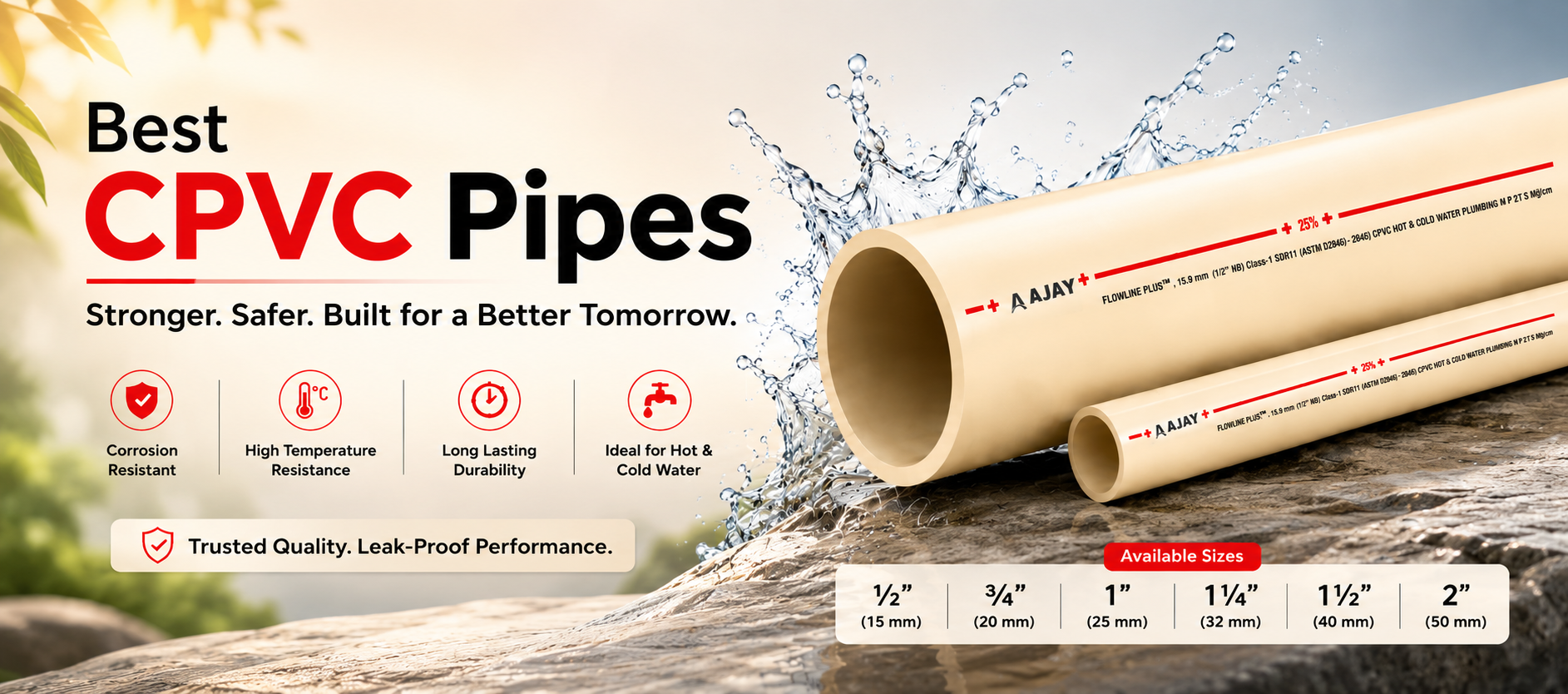
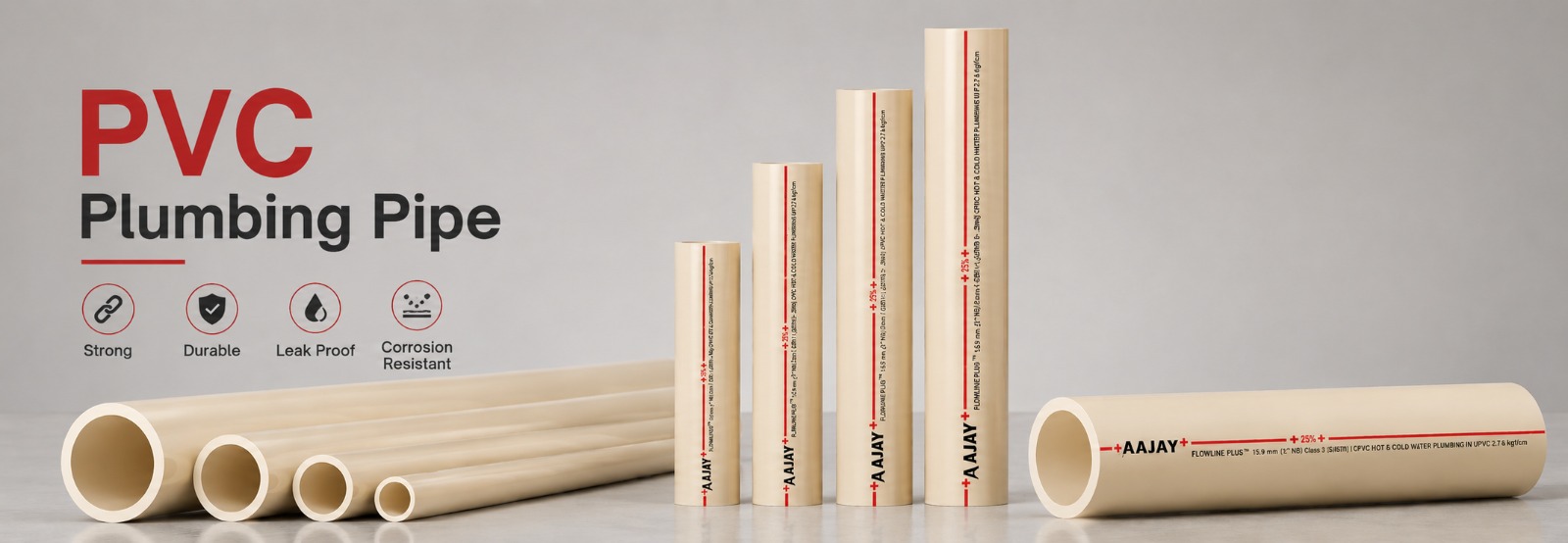
CPVC is the usual choice for hot water. Ajay Flowline Plus handles hot water up to 93 C, according to its catalogue. Pipes follow IS 15778 and ASTM D 2846 in SDR 11 and SDR 13.5, from 1/2 inch to 2 inch. Larger SCH 40 and SCH 80 pipes go up to 8 inch for risers and mains. The smooth wall resists scale, and installers join pipes with solvent cement. Remember that pressure ratings fall as temperature rises.
UPVC pipes for cold water and cold-line applications
UPVC works well for cold water mains, tank connections, swimming pools and RO or DM plants. Ajay Greenline comes in SCH 40 and SCH 80, from 1/2 inch to 8 inch, under ASTM D 1785. Its maximum service temperature is 60 C. Do not use UPVC for hot water supply, compressed air or gases.
SWR pipes for soil, waste and rainwater
SWR pipes carry soil, waste and vent flows inside the building, such as toilet blocks and stacks. Ajay Drainline comes in 75, 90, 110 and 160 mm, with Type A and Type B wall options. Pipes follow IS 13592 and fittings follow IS 14735. Ring-fit joints absorb movement, so leave a 10 mm expansion gap. Solvent-fit joints suit rigid runs.
Underground drainage (UDS) pipes
UDS pipes serve external sewers and storm drains. Ajay Terraline follows IS 16098 (Part 1) in SN2, SN4 and SN8 stiffness classes, from 110 to 200 mm. A higher SN class carries heavier soil and traffic loads. Check bedding, cover depth and inspection chamber depth with your site engineer. For example, the 315 mm Terraline chamber has a 0.6 m maximum depth, and the 450 mm chamber reaches 0.9 m.
How to Choose the Right Pipe for Your Project
Follow three checks in order: operating conditions, hydraulic sizing and certification.
Pressure, temperature and water quality
Start with the hottest water and the highest pressure the line will see. Then apply the temperature derating. Ajay’s Flowline Plus table, for instance, shows a factor of 0.57 at 60 C and 0.31 at 82 C. Water quality also matters, because hard water builds scale inside pipes over time. CPVC resists scaling, which helps in hotels and hospitals.
Pipe sizing and flow for multi-storey buildings
Sizing depends on fixture units, peak demand and flow velocity. Tall buildings also need pressure zones and separate risers. Soil stacks usually begin at 110 mm for water closets. Leave final calculations to your MEP consultant, and share the manufacturer’s friction data with them.
Standards and certifications to check
Ask for these documents before you approve any supplier:
- BIS licence and IS marking, such as IS 15778 for CPVC, IS 13592 for SWR pipes and IS 16098 for UDS
- Batch test reports and third-party certificates
- Written manufacturer warranty terms
Confirm each licence on the BIS website before you sign.
Fittings, Joints and Installation Best Practices
Fittings and joints fail before pipes do, so fitting quality decides system life. Buy fittings from the same system as the pipe. Use the solvent cement or lubricant the manufacturer specifies.
Solvent cement, ring-fit and threaded joints
Solvent cement gives a permanent bond, but only on clean, chamfered pipe ends. Ajay advises primer for sizes above 2 inch in its Greenline range. Ring-fit joints need lubricant and an expansion gap. Threaded joints need care, because over-tightening cracks plastic threads. Common mistakes include skipping the chamfer, rushing cure time and using the wrong cement.
Testing and commissioning
Pressure test every supply line before closing walls, typically at 1.5 times working pressure. Hold the pressure for the period your specification states. Then flush the system and disinfect potable lines. Record all results, because the owner needs the test certificate and as-built drawings at handover.
Comparing Leading Brands
Ajay, Astral, Finolex, Ashirvad and Prince are established Indian pipe manufacturers. Rather than rank them, compare each one on what affects your project:
- Range: Does one supplier cover CPVC, UPVC, SWR, UDS and fittings?
- Availability: Can dealers deliver near your site on schedule?
- Pricing approach: Compare the installed cost, including fittings, not the price per metre.
- Support: Does the brand offer site training and technical help?
- Warranty: Is the warranty written, specific and clear on what it covers?
Cost and Lifecycle Value
Pipes form a small share of building cost, yet leaks create outsized losses. A cheaper pipe with weak fittings can cost far more in repairs. Compare lifecycle cost instead: material, labour, testing, maintenance and replacement risk. Plastic systems also avoid the rust staining that older metal lines develop.
Why Choose Ajay Pipes for Commercial Projects
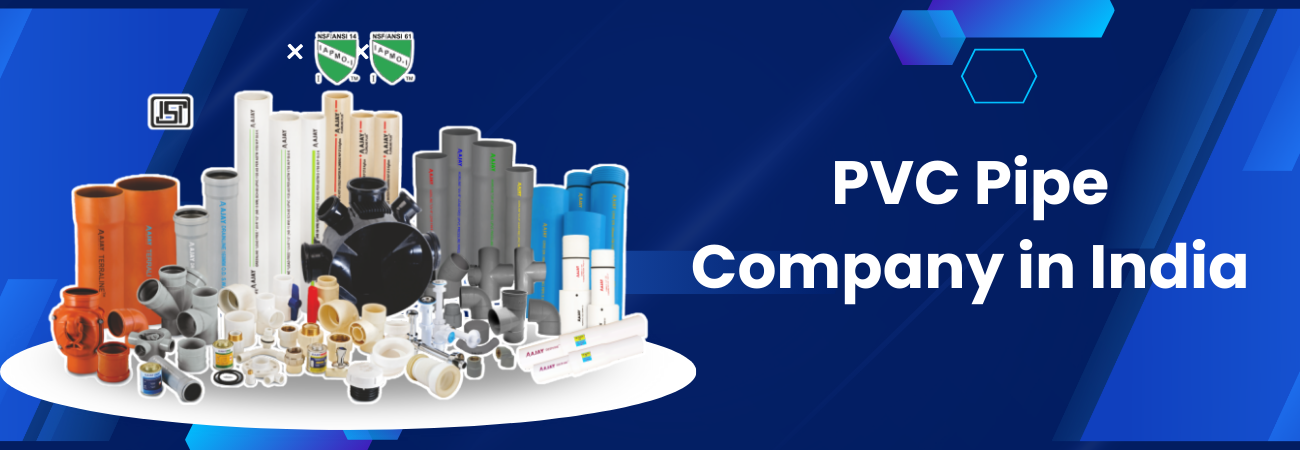
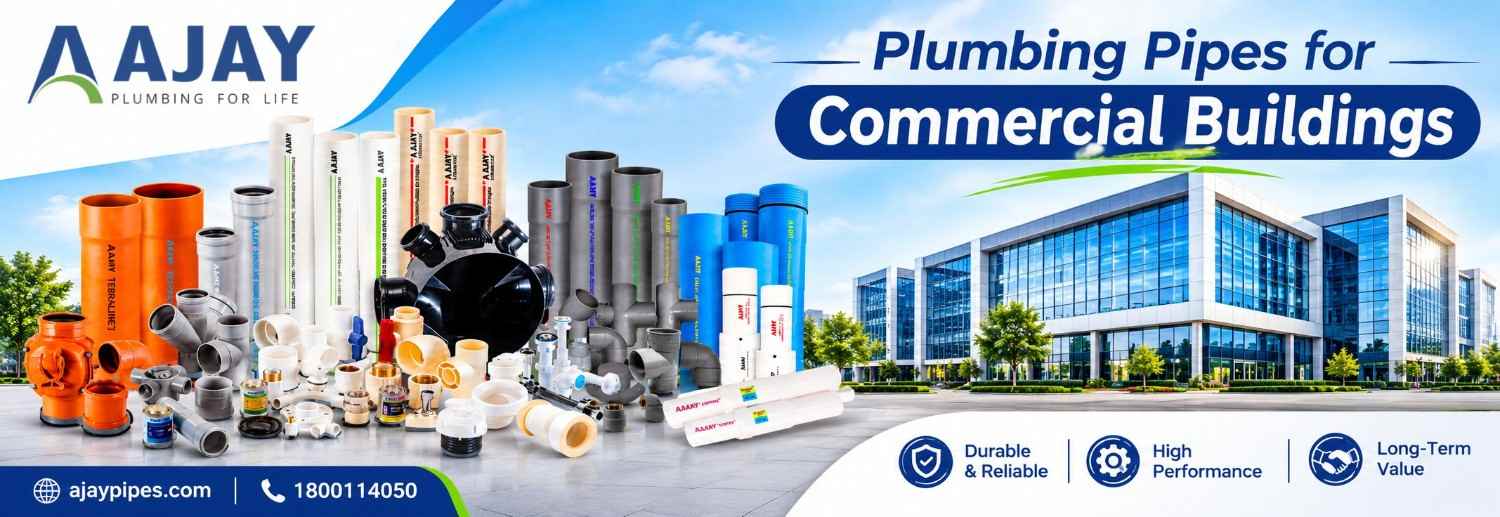
Ajay Pipes belongs to an organisation with more than 50 years in the industry. Its range covers Flowline Plus CPVC, Greenline UPVC, Drainline SWR, Terraline UDS and matching fittings. For campus landscaping, Agriline pipes follow IS 4985 for irrigation. The company holds ISO 9001 certification, and its catalogue lists BIS licences for key products. A network of over 500 dealers and distributors supports bulk supply, and the technical team offers plumber training and project guidance.
Conclusion
Choosing plumbing pipes for commercial buildings comes down to a short checklist. Match the pipe to temperature and pressure, size it with your consultant, verify BIS marks, and insist on quality fittings. Then test everything before handover.
Planning a commercial project? Download the Ajay Pipes catalogue or get a project quote for bulk supply and technical consultation from our team.
For any queries, contact the plumbing experts at Ajay pipes on the Toll Free No. : 1800-11-4050 or via email at our email address enquiry@ajaypipes.com
FAQs
CPVC is the usual choice because it handles hot water and resists scaling.
No. UPVC suits cold water lines with a maximum service temperature of 60 C, so use CPVC for hot lines.
SWR pipes serve internal soil and waste lines, and UDS pipes serve underground lines.
With correct installation and operating conditions, they are designed for decades of service. Check the manufacturer’s warranty terms.
Look for the relevant BIS (IS) marking, batch test reports and the manufacturer’s warranty terms.