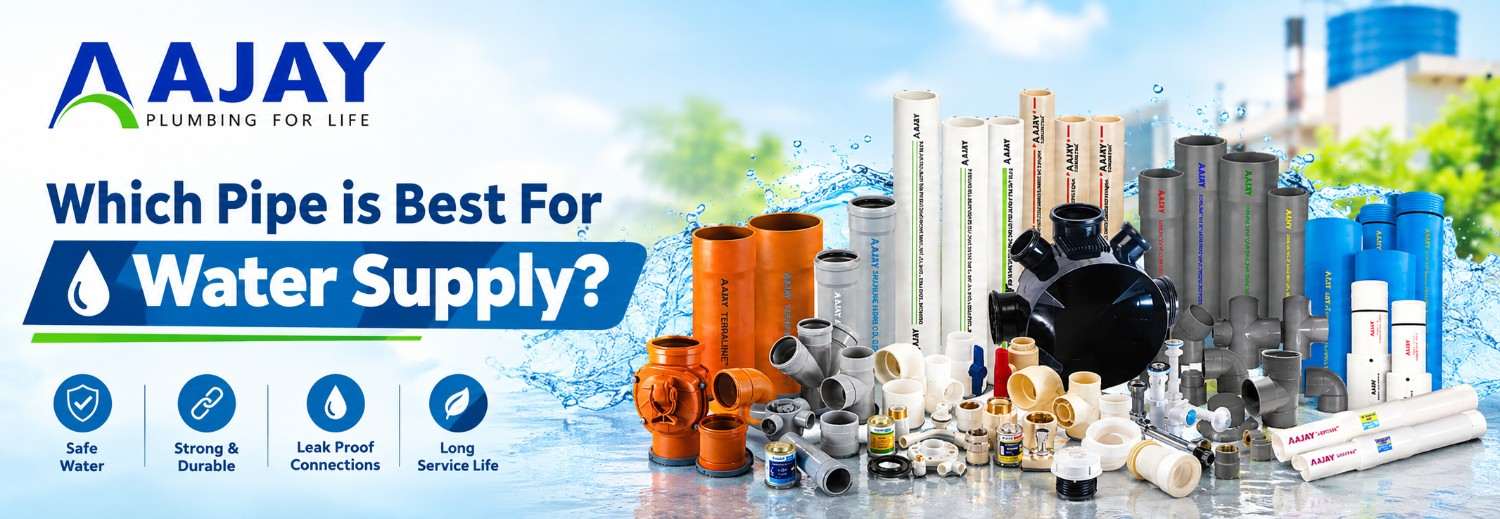
Which Pipe is Best For Water Supply? A Complete Guide for Homes
Introduction
Choosing the right pipe for your home’s water supply may seem like a simple decision, but it can have a lasting impact on water quality, plumbing performance, maintenance, and the overall life of your plumbing system. With so many options available today, homeowners often ask: Which Pipe is Best For Water Supply?
The answer depends on factors such as the type of water supply, installation location, pressure requirements, temperature, budget, and expected service life. For most modern residential plumbing applications, plastic piping options such as PVC, CPVC, and uPVC are widely considered because they are lightweight, corrosion-resistant, and relatively easy to install.
If you are searching for the best pipes for water supply, it is important to look beyond price alone. A good pipe should be suitable for the application, compatible with the fittings and joining method, durable enough for the expected pressure, and manufactured according to relevant quality standards.
Which Pipe is Best For Water Supply?
There is no single pipe that is automatically the best for every water-supply application. Different pipes are designed for different conditions.
For cold-water plumbing, PVC and uPVC pipes are commonly used in residential and building applications. For hot and cold-water distribution, CPVC is another popular option because it is designed to handle higher temperatures than standard PVC systems.
The right choice should therefore be based on where the pipe will be installed and what type of water it will carry.
For example:
- PVC pipes can be suitable for several cold-water and plumbing applications.
- uPVC pipes are commonly used for cold-water distribution and building plumbing.
- CPVC pipes are widely used for hot- and cold-water plumbing.
- Specialized piping systems may be appropriate for specific industrial or infrastructure applications.
Before buying, always check the manufacturer’s specifications, applicable standards, pressure rating, and recommended usage.
What Should You Look for in a Water Supply Pipe?
When selecting a water supply pipe, consider more than just the diameter or purchase price. Several factors determine whether a pipe will work well in your plumbing system.
1. Material Quality
The material has a direct effect on the pipe’s durability and performance. Quality pipes are manufactured with controlled formulations and production processes designed for their intended application.
Look for pipes from established manufacturers and check whether the product complies with applicable Indian standards and specifications.
2. Pressure Handling
Water pressure varies between homes and installations. A pipe must be capable of handling the expected working pressure without compromising performance.
Before installation, check the pipe’s pressure rating and compare it with the requirements of your plumbing system.
3. Resistance to Corrosion
Metal pipes can be affected by corrosion over time, depending on the material and water conditions. Plastic plumbing pipes such as PVC, uPVC, and CPVC offer an important advantage because they do not rust like conventional metal pipes.
This can make them a practical choice for many residential plumbing installations.
4. Temperature Requirements
Temperature is especially important when choosing between PVC, uPVC, and CPVC.
If the plumbing system carries only cold water, a suitable PVC or uPVC system may meet the application’s requirements. For hot-water applications, CPVC is generally designed specifically for higher operating temperatures.
Using a pipe outside its recommended temperature range can affect its long-term performance.
5. Installation Method
A reliable plumbing system depends not only on the pipe but also on correct installation.
Check the manufacturer’s recommendations for:
- Cutting
- Cleaning
- Solvent cement or joining method
- Fittings
- Support spacing
- Pressure testing
- Installation conditions
Poor installation can lead to leaks even when high-quality pipes are used.
What Are the Best Pipes for Water Supply in a Home?
For residential plumbing, the most suitable option depends on the particular application.
PVC Pipes
PVC is widely used in plumbing, drainage, and water-related applications. It is lightweight, easy to handle, and resistant to rust and corrosion.
PVC can be a practical option for appropriate cold-water applications, provided the product is designed and rated for the intended use.
uPVC Pipes
uPVC stands for unplasticized polyvinyl chloride. These pipes are rigid and commonly used in cold-water supply systems.
One of the major advantages of uPVC is its resistance to corrosion. The lightweight construction can also make transportation and installation easier compared with many traditional metal piping systems.
For homeowners looking for the best pipe for home plumbing, uPVC can be considered when its specifications match the requirements of the installation.
CPVC Pipes
CPVC, or chlorinated polyvinyl chloride, is commonly used in hot- and cold-water plumbing systems.
Its ability to handle higher temperatures than standard PVC makes it particularly useful for applications involving hot water.
For a house that uses geysers or hot-water distribution lines, a properly specified CPVC plumbing system can be an important option to consider.
Which Pipe is Best For Home Plumbing?
The best pipe for home plumbing depends on the type of plumbing system.
For a cold-water supply line, uPVC or an appropriately specified PVC system may be suitable. For hot-water distribution, CPVC is commonly considered because it is designed for higher-temperature applications.
However, choosing a pipe should never be based solely on the name of the material.
Consider:
Application + temperature + pressure + pipe size + installation method + product quality
This combination provides a much more reliable basis for selecting a plumbing pipe.
For example, selecting a pipe that is inexpensive but unsuitable for the application’s temperature or pressure can create problems later. On the other hand, selecting a properly specified product from a reliable manufacturer can help create a more dependable plumbing system.
Why Is Pipe Size Important for Water Supply?
Pipe size is another important part of water-supply planning.
A pipe that is too small may restrict water flow, particularly when several outlets are being used simultaneously. A pipe that is unnecessarily large can increase material requirements and may not provide a practical benefit for every installation.
The required size depends on factors such as:
- Number of water outlets
- Expected flow rate
- Water pressure
- Length of the plumbing line
- Building layout
- Type of application
For this reason, pipe sizing should be planned according to the requirements of the complete plumbing system rather than selected only by appearance or price.
Which Company Pipe is Best for Plumbing?
When people search for which company pipe is best for plumbing, they are usually looking for a manufacturer they can trust for consistent quality and dependable products.
Instead of judging a company only by brand popularity, check several practical factors:
- Product specifications
- Applicable quality standards
- Manufacturing consistency
- Range of pipe sizes
- Availability of matching fittings
- Technical support
- Installation guidance
- Product warranty and documentation
A plumbing system works as a complete network. The compatibility of pipes, fittings, joints, and installation practices matters just as much as the pipe itself.
Ajay Pipes offers plumbing and piping solutions designed for different applications. Homeowners, contractors, plumbers, architects, and builders can review the relevant product specifications before selecting a system for their project.
PVC vs uPVC vs CPVC: Which One Should You Choose?
The choice becomes easier when you understand the primary application of each material.
| Pipe Type | Common Application | Temperature Consideration | Key Consideration |
|---|---|---|---|
| PVC | Cold-water and other plumbing applications | Generally suited to lower temperatures | Check application and pressure rating |
| uPVC | Cold-water supply and plumbing | Primarily used for cold-water systems | Rigid, corrosion-resistant construction |
| CPVC | Hot- and cold-water plumbing | Designed for higher temperatures | Check temperature and pressure ratings |
The table is a general guide. Always follow the individual manufacturer’s technical specifications for the exact product you intend to install.
How Can You Make Your Water Supply System Last Longer?
Choosing a suitable pipe is only the first step. Proper installation and maintenance also influence the life of a plumbing system.
Use compatible fittings and joining materials recommended by the manufacturer. Make sure joints are prepared correctly and that the system is tested before it is put into regular service.
Avoid exposing pipes to conditions outside their specified operating range. During renovation or construction, protect pipes from unnecessary physical damage.
It is also useful to have plumbing work carried out by an experienced professional. Correct alignment, support, joining, and testing can reduce the possibility of leaks and installation-related problems.
Conclusion
So, Which Pipe is Best For Water Supply?
The answer depends on the specific plumbing application. For cold-water systems, suitable PVC or uPVC pipes can be considered, while CPVC is commonly used where hot-water distribution is required.
Rather than choosing a pipe only because it is inexpensive or widely advertised, compare its material, pressure rating, temperature suitability, size, quality standards, fittings, and installation requirements.
For homeowners and professionals, the most reliable approach is to select a pipe system that is fit for purpose, manufactured to appropriate standards, compatible with the plumbing design, and installed correctly.
If you are planning a new plumbing system or replacing an existing one, reviewing the technical specifications before purchasing can help you make a more informed choice.
Explore Reliable Plumbing Solutions with Ajay Pipes
Looking for dependable piping solutions for your plumbing project? Explore Ajay Pipes to learn more about available PVC, uPVC, CPVC, and related plumbing products.
Visit Ajay Pipes to explore product specifications, applications, and plumbing solutions suitable for different water-supply requirements.
Choose the right pipe based on your project’s actual needs and build a plumbing system designed for reliable long-term performance.
FAQs
The best pipe depends on the application. uPVC or suitable PVC pipes are commonly used for cold-water supply, while CPVC is commonly used for hot- and cold-water plumbing. Always check product specifications before installation.
PVC and CPVC serve different applications. PVC is commonly used for suitable cold-water applications, whereas CPVC is designed for hot- and cold-water plumbing and higher operating temperatures.
Use a pipe product specifically manufactured and certified for potable-water applications and follow the applicable standards and manufacturer’s recommendations.
Consider the pipe material, temperature, pressure rating, diameter, application, applicable standards, fittings, joining method, and installation conditions.
Rather than relying only on brand name, compare product specifications, quality standards, application suitability, fitting compatibility, technical support, and manufacturer documentation. Ajay Pipes offers a range of piping and plumbing solutions for different applications.
For any queries, contact the plumbing experts at Ajay pipes on the Toll Free No. : 1800-11-4050 or via email at our email address info@ajaypipes.com