PVC and CPVC Pipes: The Perfect Choice for Modern Plumbing & Water Supply Systems
Introduction
In today’s fast-growing residential, commercial, and industrial sectors, high-quality plumbing systems are essential for long-term reliability and performance. Whether it’s a home renovation, a new construction project, or an industrial application, choosing the right piping material is one of the most important decisions for ensuring smooth water flow and long-lasting durability.
Among the many piping materials available today, PVC and CPVC pipes have become popular choices for professionals, plumbers, and homeowners. Both materials offer durability, corrosion resistance, and cost-effectiveness, making them suitable for different plumbing and water supply applications.
In this blog, we will explore the benefits, differences, applications, and installation advantages of PVC and CPVC pipes to help you make an informed decision for your next project.
What Are PVC and CPVC Pipes?
1. PVC Pipes
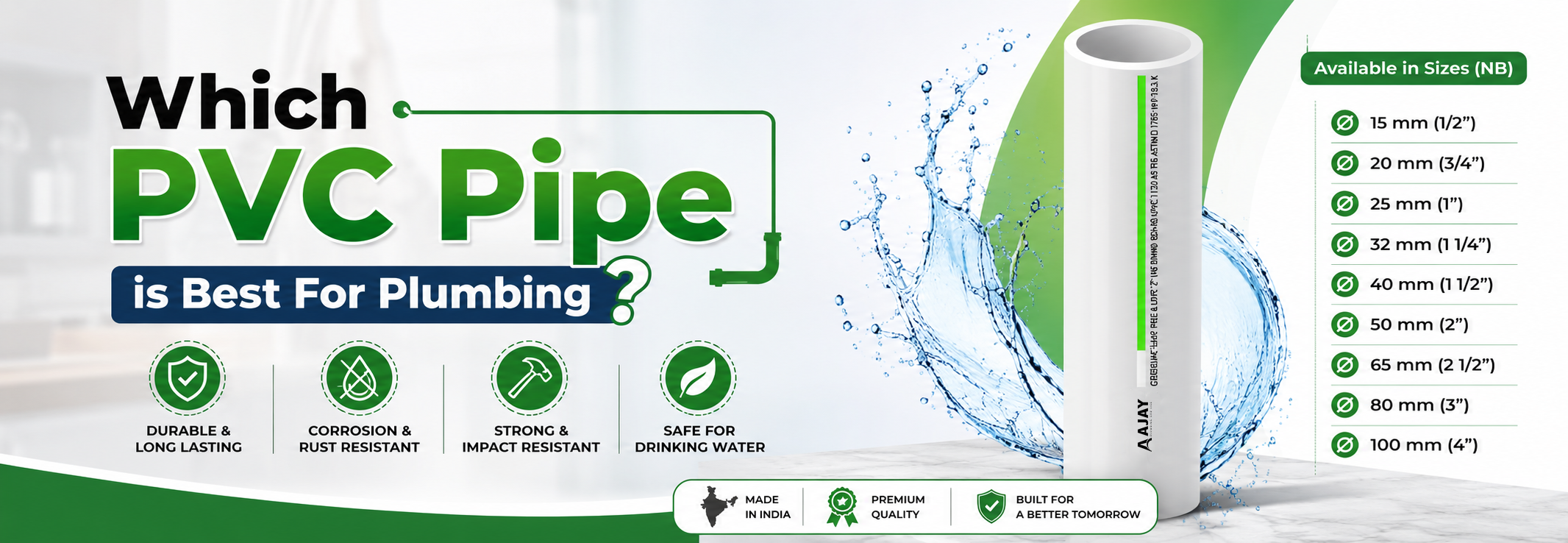
PVC stands for Polyvinyl Chloride. PVC pipes are widely used in plumbing and water distribution systems because they are lightweight, economical, durable, and easy to install.
They are primarily suitable for cold-water applications and are commonly used in residential plumbing, irrigation, drainage, rainwater harvesting, and other water management systems.
2. CPVC Pipes
CPVC stands for Chlorinated Polyvinyl Chloride. It is an enhanced form of PVC that undergoes an additional chlorination process, improving its temperature resistance and performance.
CPVC pipes are designed for hot and cold-water applications and are commonly used in bathrooms, kitchens, residential buildings, commercial properties, and industrial systems.
Difference Between PVC and CPVC Pipes
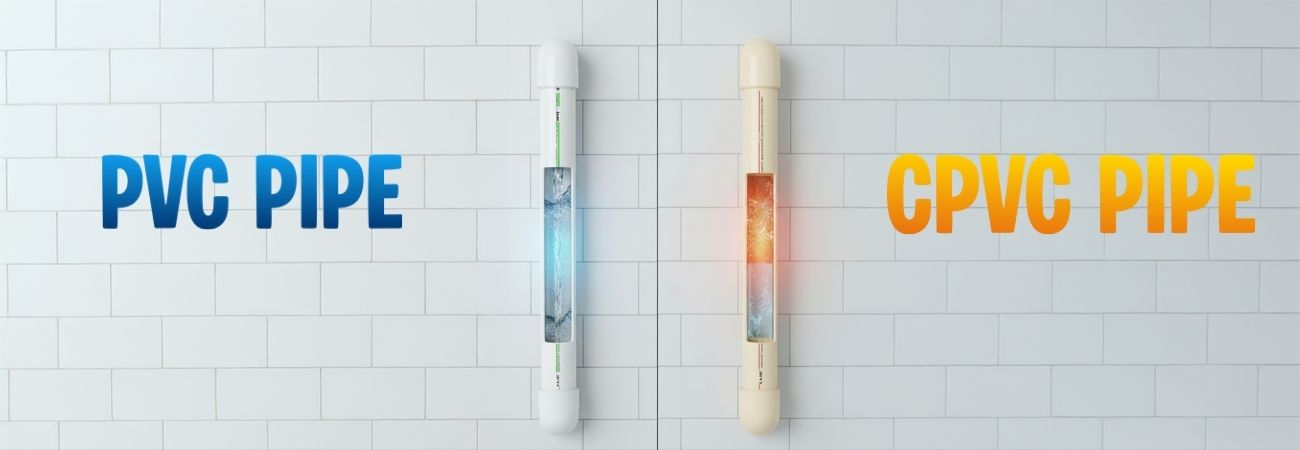
Although PVC and CPVC pipes have similar appearances, they differ in their temperature-handling capabilities, applications, and cost.
Temperature Resistance
CPVC pipes are specifically designed to handle hot-water applications and can withstand temperatures of up to approximately 93°C, depending on the product and applicable standards.
PVC pipes are generally preferred for cold-water applications and systems where high temperatures are not involved.
Applications
PVC pipes are commonly used for:
- Cold-water supply
- Irrigation systems
- Drainage
- Rainwater harvesting
- General plumbing applications
CPVC pipes are suitable for:
- Hot-water supply
- Cold-water plumbing
- Residential plumbing
- Commercial buildings
- Industrial fluid-handling applications
Chemical Resistance
Both PVC and CPVC provide good resistance to many chemicals. However, CPVC offers enhanced temperature and chemical resistance, making it suitable for certain demanding applications.
Cost
PVC pipes are generally more economical and are a practical choice for standard cold-water and drainage applications.
CPVC pipes can cost more than PVC because they are engineered to withstand higher temperatures and are suitable for hot-water plumbing systems.
Benefits of Using PVC Pipes
PVC pipes have become an important part of modern plumbing and water distribution systems because of their numerous advantages.
Lightweight and Easy to Install
PVC pipes are lightweight compared with many traditional piping materials. Their easy handling can help reduce installation effort and labour requirements.
Corrosion and Rust Free
PVC pipes do not rust or corrode like conventional metal pipes. This makes them suitable for long-term water supply and plumbing applications.
Leak-Resistant Performance
When installed correctly using suitable joining methods and fittings, PVC piping systems provide strong, reliable joints that help minimise the risk of leakage.
Low Maintenance
PVC pipes generally require minimal maintenance, helping reduce long-term maintenance requirements for suitable applications.
Long Service Life
PVC pipes are durable and can provide reliable performance for many years when properly selected, installed, and used within their recommended operating conditions.
Benefits of Using CPVC Pipes
CPVC pipes provide several advantages, particularly for hot and cold-water plumbing systems.
Excellent Temperature Resistance
CPVC is designed to handle higher water temperatures than standard PVC, making it suitable for hot-water supply systems.
Corrosion Resistance
CPVC does not rust like metal pipes and provides excellent resistance to corrosion in many plumbing environments.
Lightweight Construction
CPVC pipes are lightweight and easy to handle, helping simplify transportation and installation.
Smooth Internal Surface
The smooth inner surface of CPVC pipes helps support efficient water flow while reducing the potential for deposits and scaling in suitable applications.
Durable and Reliable
With proper installation and use within recommended conditions, CPVC piping systems can provide long-lasting performance for residential, commercial, and industrial plumbing.
Applications of PVC and CPVC Pipes
PVC and CPVC pipes are used in a wide range of applications depending on their performance characteristics.
1. Residential Plumbing
PVC pipes are commonly used for cold-water plumbing and drainage applications, while CPVC pipes are suitable for hot and cold-water outlets in kitchens, bathrooms, and other areas.
2. Commercial Buildings
Commercial buildings often require reliable water distribution systems. CPVC pipes can be used for hot-water supply, while PVC pipes are suitable for various cold-water and drainage applications.
3. Agriculture and Irrigation
PVC pipes are widely used in agricultural irrigation because of their lightweight construction, durability, corrosion resistance, and relatively low maintenance requirements.
4. Industrial Fluid Transport
Depending on chemical compatibility, temperature, pressure, and applicable standards, PVC and CPVC pipes can be used for industrial fluid-handling applications. CPVC is particularly useful where higher-temperature fluids are involved.
PVC vs CPVC Pipes: Which One Should You Choose?
Choosing between PVC and CPVC depends mainly on the application.
| Feature | PVC Pipes | CPVC Pipes |
|---|---|---|
| Material | Polyvinyl Chloride | Chlorinated Polyvinyl Chloride |
| Temperature | Primarily for cold water | Suitable for hot and cold water |
| Hot Water | Generally not preferred | Suitable |
| Corrosion Resistance | Excellent | Excellent |
| Weight | Lightweight | Lightweight |
| Cost | Generally more economical | Generally higher |
| Common Uses | Water supply, irrigation, drainage | Hot-water and cold-water plumbing |
For cold-water supply, irrigation, drainage, and general plumbing, PVC is often a practical choice. For hot-water plumbing, CPVC is generally the more suitable option.
Why Choose Ajay Pipes for PVC and CPVC Piping Systems?
Choosing a reliable manufacturer is just as important as selecting the right piping material. Ajay Pipes offers a range of piping solutions designed for residential, commercial, and industrial requirements.
Trusted Quality and Innovation
Ajay Pipes manufactures PVC and CPVC piping solutions with a focus on quality, performance, and consistent manufacturing standards.
High Durability and Safety
The products are designed to deliver dependable performance across suitable plumbing applications while supporting long-term system reliability.
Affordable and Value for Money
Ajay Pipes provides piping solutions designed to offer a balance of performance, durability, and cost-effectiveness.
Wide Range of Products
From PVC pipes for plumbing and water supply to CPVC pipes for hot-water applications, Ajay Pipes offers solutions for a variety of piping requirements.
Industry-Leading Support
Professional guidance and after-sales support can help customers select suitable piping solutions and use them effectively for their specific requirements.
Conclusion
PVC and CPVC pipes have become essential components of modern plumbing systems because of their durability, lightweight construction, corrosion resistance, and cost-effectiveness.
While PVC pipes are widely used for cold-water supply, irrigation, drainage, and general plumbing applications, CPVC pipes are better suited for hot-water systems and applications requiring higher temperature resistance.
Selecting the right pipe according to temperature, pressure, application, and installation requirements can help ensure a reliable and efficient plumbing system.
If you are looking for quality PVC and CPVC piping solutions for your residential, commercial, or industrial project, explore the range offered by Ajay Pipes.
Visit ajaypipes.com to explore PVC and CPVC pipes for different water supply and plumbing requirements.
Choose quality. Choose reliability. Choose Ajay Pipes.
FAQ:-
PVC pipes are primarily used for cold-water supply and drainage systems, while CPVC pipes are designed to handle both hot and cold water. CPVC also has higher temperature resistance and better durability for hot water plumbing.
Yes, CPVC pipes are specifically engineered for hot water systems. They can safely handle temperatures up to 93°C, making them ideal for residential, commercial, and industrial hot-water plumbing.
Yes, PVC and CPVC pipes can be used in the same project, but they cannot be joined directly using standard adhesives. A proper transition fitting or adapter must be used to connect both materials safely.
Yes, PVC and CPVC pipes can be used in the same project, but they cannot be joined directly using standard adhesives. A proper transition fitting or adapter must be used to connect both materials safely.
Both PVC and CPVC pipes are highly durable and corrosion-resistant. With proper installation, PVC pipes can last 50+ years, while CPVC pipes typically last 75+ years, especially in hot-water systems.
For any queries, contact the plumbing experts at Ajay pipes on the Toll Free No. : 1800-11-4050 or via email at our email address info@ajaypipes.com