Introduction
In today’s fast-growing residential, commercial, and industrial sectors, high-quality plumbing systems are essential for long-term reliability and performance. Whether it’s a home renovation, a new construction project, or an industrial application, choosing the right piping material is one of the most important decisions for ensuring smooth water flow and long-lasting durability. Among all the piping materials available today, PVC and CPVC pipes have become the top preference for professionals, plumbers, and homeowners.
Both these materials offer excellent resistance, durability, and cost-effectiveness, making them ideal for different plumbing and water supply applications. In this blog, we will explore the benefits, differences, applications, and installation advantages of PVC and CPVC pipes, helping you make an informed decision for your next project.
What Are PVC and CPVC Pipes?
1. PVC Pipes
PVC (Polyvinyl Chloride) pipes are widely used in the plumbing industry due to their affordability, lightweight structure, and long service life. PVC pipes are primarily suitable for cold water applications and are the most widely used PVC pipes for plumbing across homes, commercial places, and small industries.2. CPVC Pipes
CPVC (Chlorinated Polyvinyl Chloride) pipes are an advanced version of PVC with added chlorine content, making them ideal for hot water applications. CPVC pipes can easily handle high-temperature water flow, making them the best choice for bathrooms, kitchens, and industrial systems requiring hot water supply.Difference Between PVC and CPVC Pipes
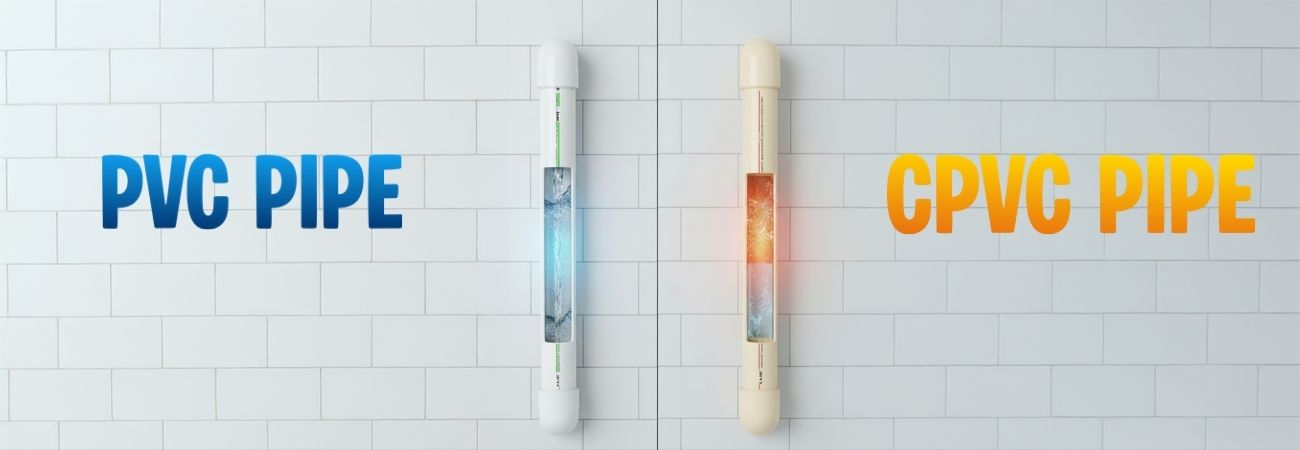
While both materials look similar, they differ significantly in terms of performance and usage:
Temperature Resistance
- CPVC Pipes: Specifically designed for hot water and can withstand temperatures up to 93°C.
Applications
- PVC Pipes: Best for water supply pipe, irrigation, drainage, rainwater harvesting, and basic plumbing.
Chemical Resistance
- Both materials offer excellent chemical-resistant properties, but CPVC provides enhanced protection due to chlorination.
Cost
- PVC pipes are more affordable.
- CPVC pipes are slightly costlier because of their high temperature-handling capabilities.
Benefits of Using PVC Pipes
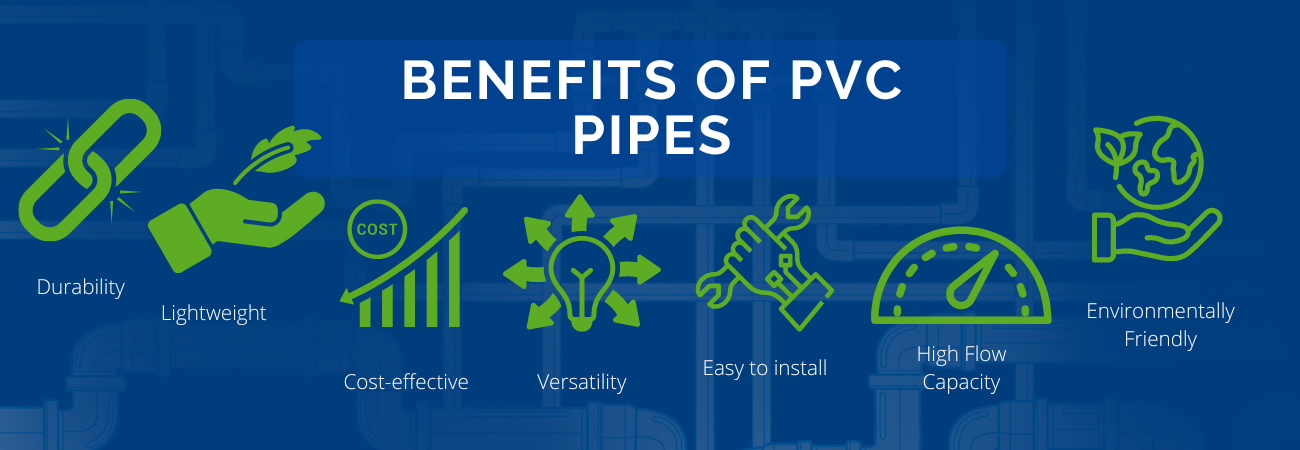
Lightweight & Easy to Install
PVC pipes reduce labour costs and reduce installation time significantly.Corrosion & Rust Free
They do not corrode or degrade, even after years of usage.Leak-Proof Performance
They offer excellent jointing strength, ensuring zero leakage.Applications of PVC and CPVC Pipes
Both PVC and CPVC pipes are used across a variety of applications, including:
1. Residential Plumbing
PVC pipes are widely used for cold water plumbing, while CPVC is ideal for hot water outlets in kitchens and bathrooms.
2. Commercial Buildings
Large commercial buildings use CPVC pipes for hot water supply, ensuring quality and durability.
3. Agriculture & Irrigation
Farmers rely on PVC pipes for irrigation due to their long life and low maintenance cost.
4. Industrial Fluid Transport
CPVC pipes handle hot and corrosive fluids, making them suitable for industrial operations.
Why Should You Choose Ajay Pipes for PVC & CPVC Piping Systems?
Trusted Quality & Innovation
Ajay Pipes manufactures premium-grade PVC and CPVC pipes that meet national and international standards.High Durability & Safety
The pipes are engineered to withstand extreme conditions, ensuring long-term reliability.Affordable & Value for Money
Ajay Pipes offers cost-effective piping solutions without compromising on quality.Wide Range of Products
From PVC pipes for plumbing to CPVC pipes for hot water, Ajay Pipes provides solutions for all residential, commercial, and industrial needs.Industry-Leading Support
Customers benefit from expert after-sales support and professional guidance.Conclusion
PVC and CPVC pipes have transformed modern plumbing systems with their durability, safety, and cost-effectiveness. While PVC is perfect for cold water supply and general plumbing applications, CPVC pipes excel in hot water systems and industrial environments.
If you want the best quality PVC and CPVC pipes for your home or commercial project, Ajay Pipes is your ideal choice.
Ready to upgrade your plumbing system with the best pipes?
Visit ajaypipes.com to explore premium PVC and CPVC pipes for all water supply needs.
Choose quality. Choose reliability. Choose Ajay Pipes.
FAQ:-
PVC pipes are primarily used for cold-water supply and drainage systems, while CPVC pipes are designed to handle both hot and cold water. CPVC also has higher temperature resistance and better durability for hot water plumbing.
Yes, CPVC pipes are specifically engineered for hot water systems. They can safely handle temperatures up to 93°C, making them ideal for residential, commercial, and industrial hot-water plumbing.
Yes, PVC and CPVC pipes can be used in the same project, but they cannot be joined directly using standard adhesives. A proper transition fitting or adapter must be used to connect both materials safely.
Yes, PVC and CPVC pipes can be used in the same project, but they cannot be joined directly using standard adhesives. A proper transition fitting or adapter must be used to connect both materials safely.
Both PVC and CPVC pipes are highly durable and corrosion-resistant. With proper installation, PVC pipes can last 50+ years, while CPVC pipes typically last 75+ years, especially in hot-water systems.
For any queries, contact the plumbing experts at Ajay pipes on the Toll Free No. : 1800-11-4050 or via email at our email address info@ajaypipes.com