What Is the Difference Between Borewell Casing and Column Pipes?
Many buyers walk into a store and ask for “borewell pipe.” The dealer then has to guess which pipe they mean. That guess often leads to a wrong purchase and a delayed installation.
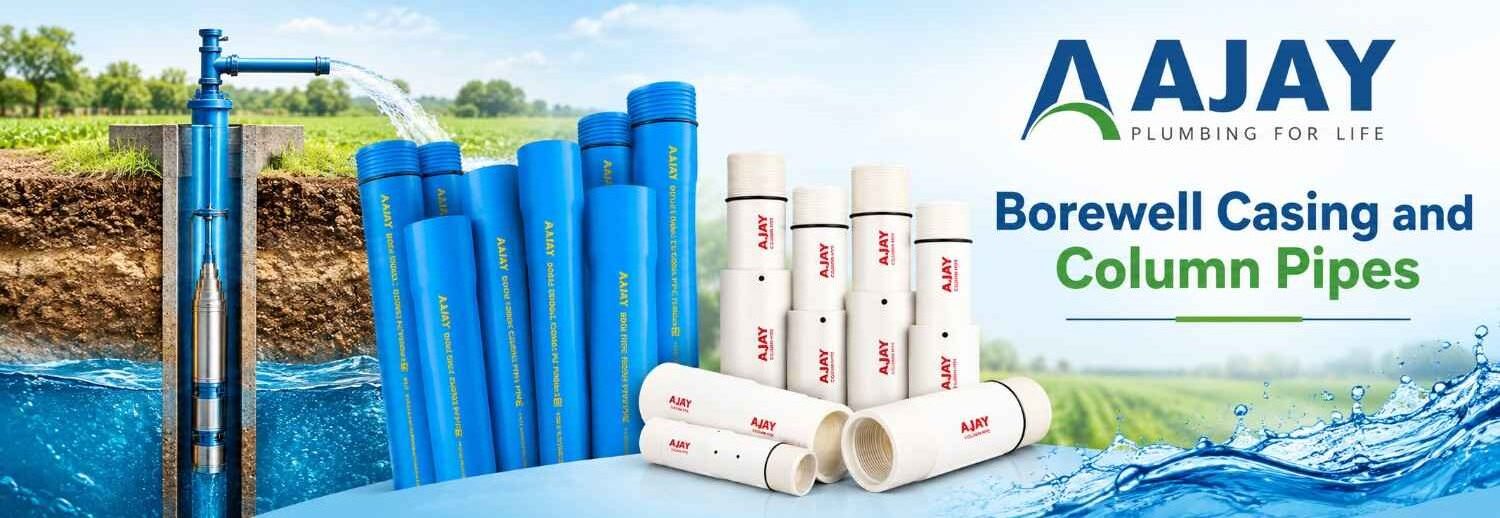
Borewell casing and column pipes do two separate jobs. Casing lines the drilled hole and keeps it stable. A column pipe carries water from the submersible pump up to the surface. This guide explains each role, shows how to match sizes, and lists what to check before you buy.
Quick Answer: Casing Protects the Bore, Column Pipe Lifts the Water
Casing is a fixed part of the bore. It stays in the ground for the life of the borewell. A column pipe hangs inside the casing, connects to the pump, and carries the water upward. In short, casing is structure and column pipe is the delivery path.
What Does a Borewell Casing Pipe Do?
A casing pipe holds the walls of the bore in place. Without it, loose soil, sand, and weak rock can fall into the hole and block the water source. Casing also keeps surface runoff and shallow contaminants away from the water you draw.
Not every bore needs full-depth casing. Hard rock may stand on its own below a certain point, while soft soil near the surface almost always needs lining. Your drilling contractor decides the casing length after reading the ground conditions during drilling. Ask for that length in writing, along with the reason.
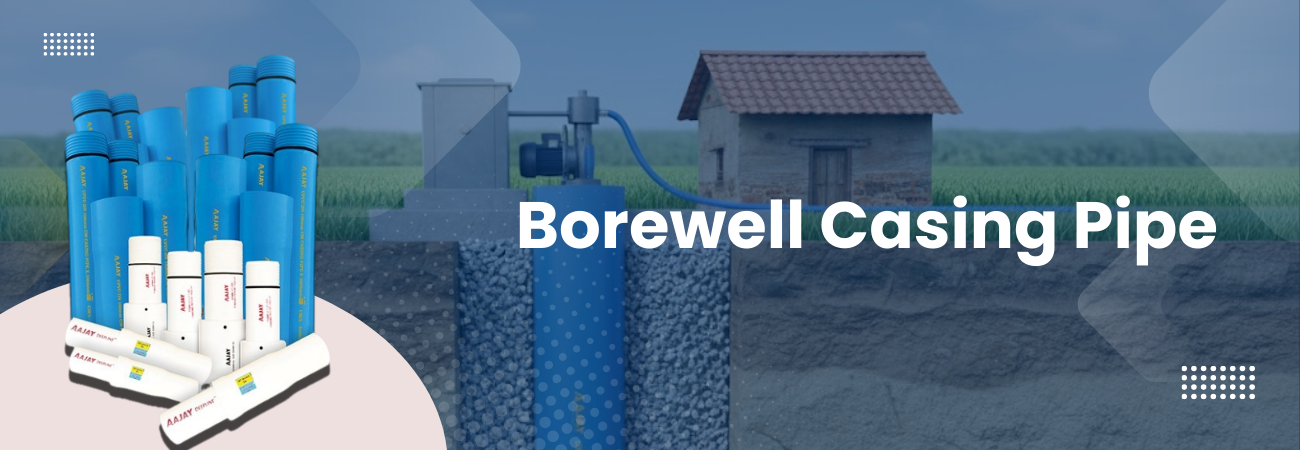
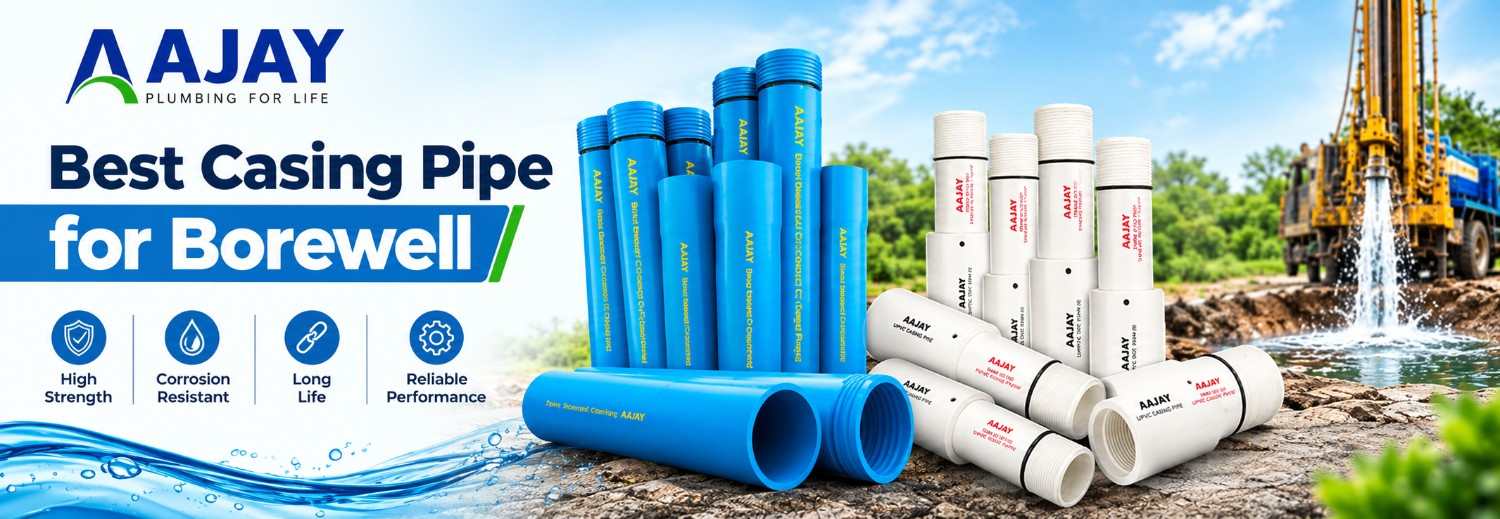
Casing comes in plain and screen types. Plain casing seals off sections you do not want water from. Screen casing has slots or ribs that let water enter while the pipe blocks sand. Ajay Pipes offers casing pipes in medium well, shallow well, and ribbed screen types, with diameters from 40 mm to 300 mm depending on the type.
What Does a Column Pipe Do?
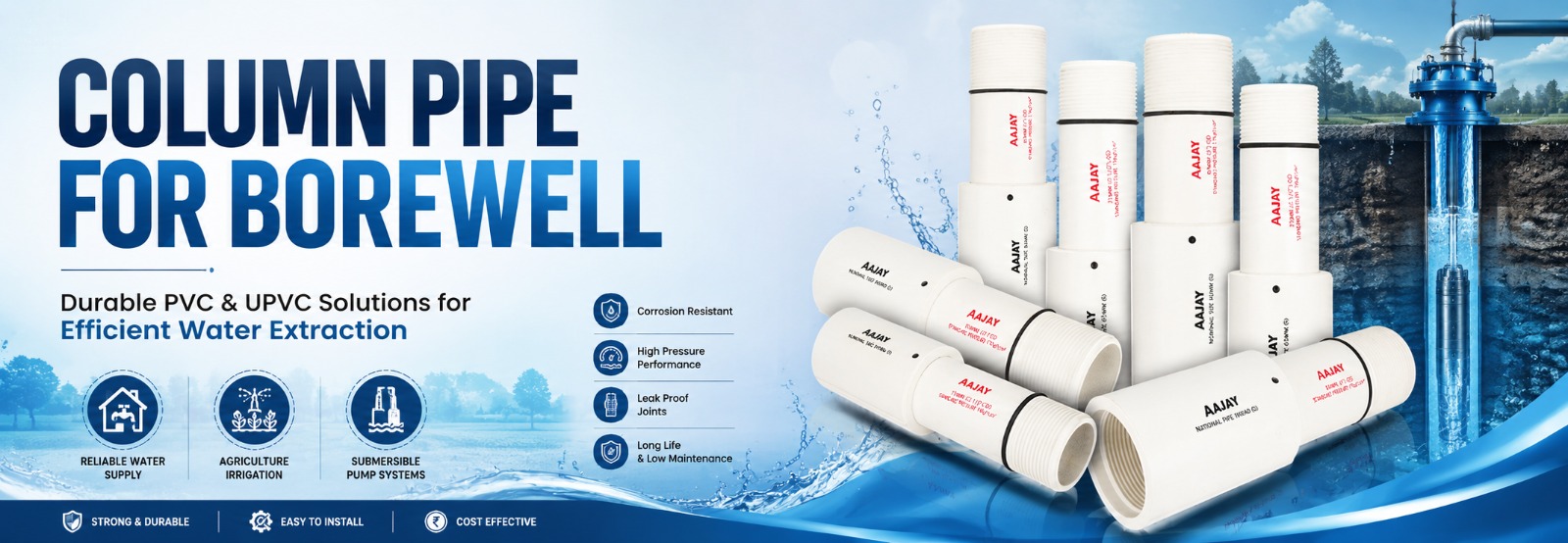
A column pipe connects directly to the submersible pump and forms the water path to the surface. It carries two loads at once. It withstands the pressure of the water the pump pushes upward, and it supports the weight of the pump and the water column below the joint.
Because of this dual load, the joint design matters as much as the pipe wall. Look for square threads, a screw lock, and an EPDM O-ring at each joint. These features keep the string tight as it goes down the bore and stop it from unscrewing under vibration.
Ajay Pipes makes UPVC column pipes under the Deepline range. The range covers 1 inch to 4 inch sizes in several wall classes, with bell type and socket type joints. UPVC resists rust and scaling, which helps when the water carries salts or sand.
Casing vs Column Pipe at a Glance
| Point | Casing Pipe | Column Pipe |
|---|---|---|
| Main Job | Lines and protects the borehole | Lifts water from the pump to the surface |
| Position | Fixed in the ground | Installed inside the casing |
| Connected To | Borehole structure and top cap | Submersible pump and outlet |
| Sized By | Borehole diameter and depth | Pump outlet and flow rate |
| Typical Size | 40 mm to 300 mm | 1 inch to 4 inch |
| Replaced When | The bore fails or collapses | The pump or pipe string needs servicing |
How Do You Choose the Right Size?
Work through these steps in order. Each step narrows the next choice.
- Confirm the bore diameter. Your drilling contractor can tell you the finished diameter. The casing must fit this size.
- Get the casing depth. Ask where plain casing ends and where screen casing, if any, begins.
- Read the pump nameplate. Note the outlet size, head rating, and flow rate. The column pipe must match the pump outlet.
- Mark the pump setting depth. This depth decides how many column pipe lengths you need. Add a few spare lengths for adjustment.
- Check the clearance. The column pipe and its joints must pass through the casing without rubbing. A cable and safety rope also need room beside the string.
- Plan the surface line. Decide how water leaves the borewell, whether to a tank, a field line, or a distribution pipe.
Keep the pump nameplate photo and the drilling report on your phone when you visit the dealer. Those two documents answer most sizing questions in minutes.
What Should You Check Before Installation?
Inspect every pipe before it goes into the bore. Retrieval after installation costs time and money, so a few minutes of checking saves a lot of trouble.
- Threads: Look for chips, burrs, or dirt. Clean them and never force a damaged thread.
- Pipe ends: Make sure no stones or debris sit inside the pipe.
- O-rings: Confirm each joint has its ring seated and undamaged.
- Straightness: Roll the pipe on a flat surface and check for bends.
- Markings: Verify the size and class on each pipe match your order.
Store pipes flat on a clean, level surface. Do not drag threaded ends on rough ground, and do not throw pipes off a vehicle. Lower the string slowly and keep it aligned so the threads do not cross.
Which Mistakes Cost Borewell Owners the Most?
These errors appear again and again on borewell jobs:
- Asking for “borewell pipe” without saying casing or column.
- Buying column pipe before confirming the pump depth.
- Skipping spare lengths, then stopping work to wait for one more pipe.
- Using damaged threads to save time.
- Ignoring the surface line until the borewell is finished.
The Central Ground Water Board publishes groundwater guidance that helps you understand water levels in your area before you drill. Read it early, because water depth affects both casing and pump choices.
Conclusion
Borewell casing and column pipes work as a team, but they are not the same product. Casing protects the bore. Column pipe lifts the water. Confirm which one you need, share your bore and pump details with the dealer, and ask for a complete material list. If you want to compare options, explore the Ajay Pipes column pipe range and ask your installer to confirm the final selection for your site.
FAQs
No. Casing lines the bore and stays fixed, while a column pipe carries pump load and water upward. Their joints and wall design suit different jobs.
Your drilling contractor decides this from the soil and rock found during drilling. Loose soil, sand, or weak rock normally need casing.
Match the column pipe size to the pump outlet and flow rate on the pump nameplate. Your installer should confirm the final size.
UPVC does not rust or scale, and it weighs less to handle. It suits sites where the water carries salts or sand.
Yes, keep a few spare lengths so the installer can adjust the pump depth without delay. Return unused lengths to your dealer if they are unopened.
For any queries, contact the plumbing experts at Ajay pipes on the Toll Free No. : 1800-11-4050 or via email at our email address enquiry@ajaypipes.com