Types of Plumbing Pipes: A Complete Guide for Your Water Supply Needs
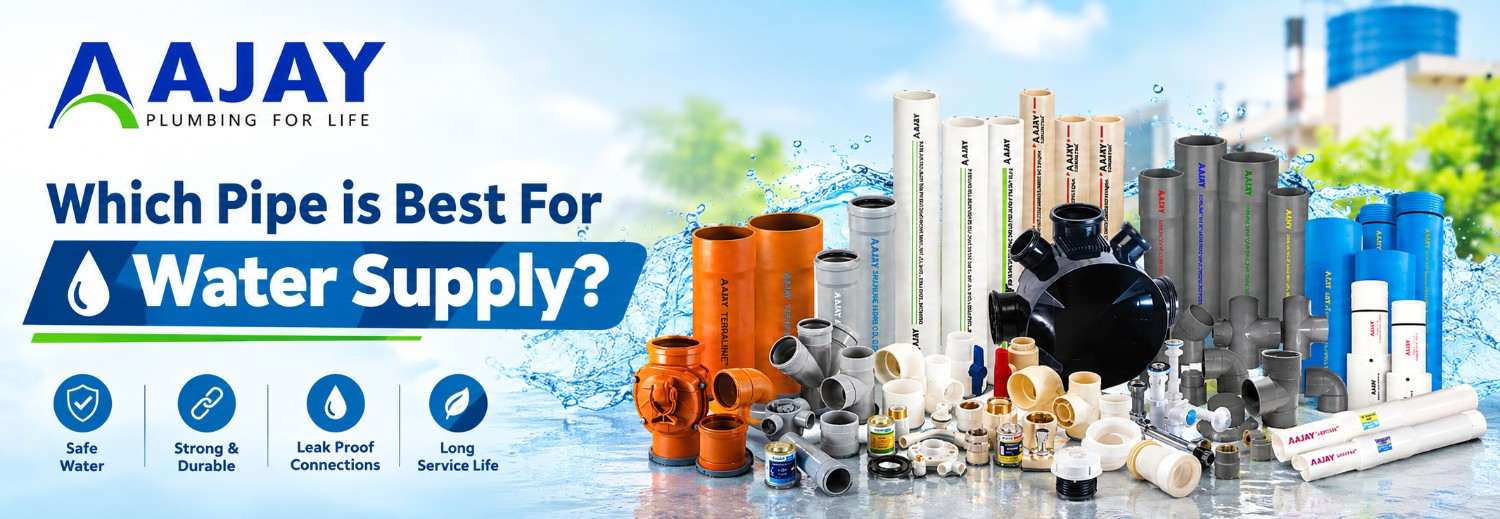
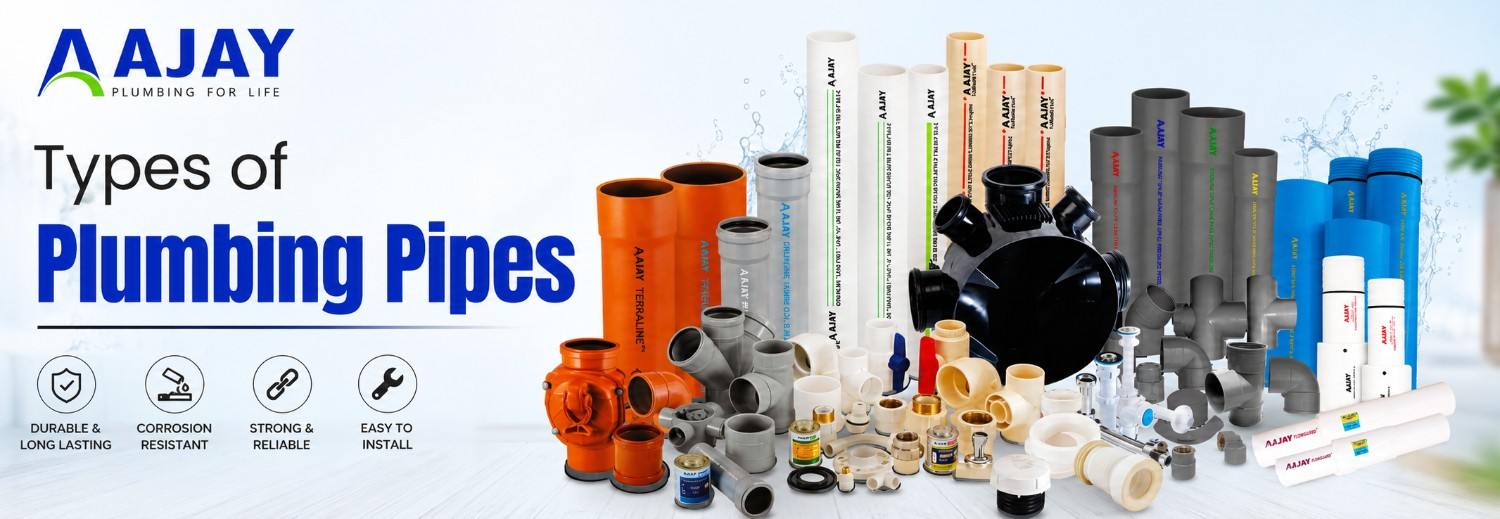
Choosing the right pipe decides how long your water system lasts. In this guide, you will learn the main types of plumbing pipes, from PVC and CPVC to SWR drainage, borewell and metal pipes. First, you will see what each pipe does best. Then, a comparison table and a room-by-room guide help you pick the right plumbing pipes for your home, farm or project.
1. PVC Pipes for Cold Water Supply

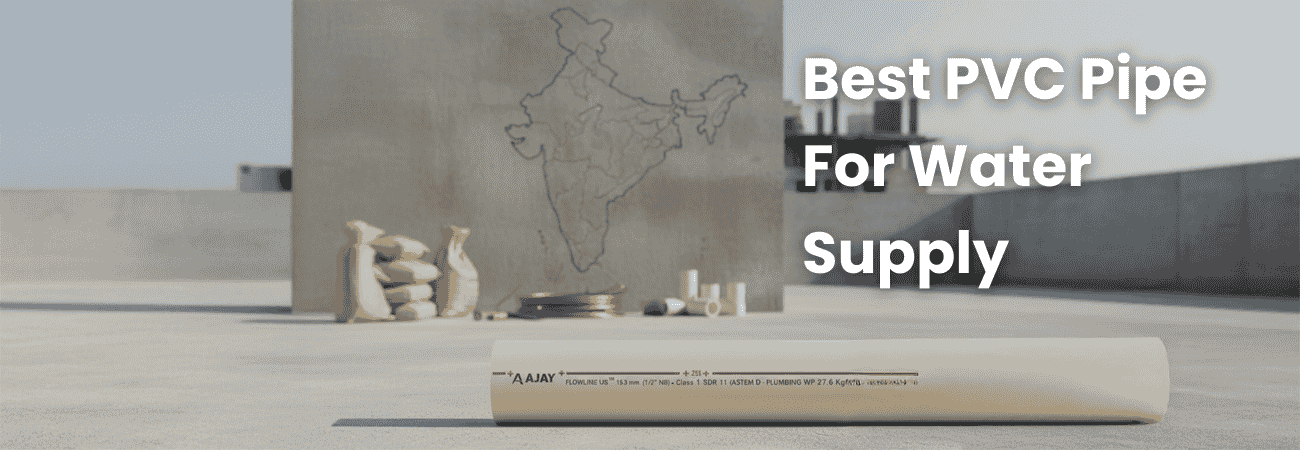
PVC (Polyvinyl Chloride) pipes are among the most common types of plumbing pipes. They resist rust and chemical corrosion, and they cost less than metal. Because they weigh little, installers also handle them quickly. As a result, builders often choose PVC for cold water lines in homes and buildings.
Best for: cold water supply, irrigation lines and general plumbing.
2. CPVC Pipes for Hot and Cold Water

CPVC (Chlorinated Polyvinyl Chloride) pipes handle much higher temperatures than PVC. For example, Ajay Flowline Plus CPVC carries hot water up to 93°C, and the system holds NSF/ANSI 14 and 61 certification for drinking water. In addition, CPVC resists scaling and corrosion, so it lasts long in kitchens and bathrooms.
Best for: hot and cold water distribution, commercial plumbing and fire sprinkler lines.
3. UPVC Pipes for Potable and Underground Lines

UPVC (Unplasticized Polyvinyl Chloride) pipes stay rigid because they contain no plasticizers. Therefore, they keep their shape under pressure and resist scaling. Ajay Greenline UPVC serves cold water plumbing at service temperatures up to 60°C. Moreover, it comes in SCH 40 and SCH 80 grades from 1/2″ to 8″.
Best for: potable water supply, underground lines and industrial pipelines.
4. SWR Pipes for Drainage Systems

SWR (Soil, Waste and Rainwater) pipes carry used water and sewage out of your building. Ajay Drainline SWR follows IS 13592 and comes in 75, 90, 110 and 160 mm sizes. Besides that, you can choose ring fit or solvent fit joints. Since SWR pipes do not rust, they also replace old cast iron stacks well.
Best for: toilets, wash basins, kitchen sinks and rainwater downpipes.
5. Agriline Pipes for Irrigation

Agriline pipes are rigid, UV-stabilised PVC pipes for farms and outdoor water lines. Ajay Agriline follows IS 4985 and comes in sizes from 20 mm to 315 mm. In addition, the pressure classes run from 2.5 to 10 kg/cm². Therefore, you can match the class to your pump and field layout.
Best for: agricultural irrigation, fertigation, garden watering and farm water distribution.
6. Column Pipes for Borewells

Column pipes lift water from a borewell pump up to your tank. They must resist both pump pressure and the weight of the pipe column. For this reason, Ajay Deepline column pipes use square threads, a screw lock and EPDM O-rings for tight joints. They come in 1″ to 4″ sizes.
Best for: borewell water extraction, submersible pumps and overhead tank supply.
7. Casing Pipes for Borewells

Casing pipes line the borewell and support its walls, so the hole does not collapse. They also keep soil and surface contamination out of your groundwater. Ajay casing pipes range from 40 mm to 300 mm, and they do not scale or conduct electricity.
Best for: borewell lining, groundwater protection and industrial borewells.
8. GI, Copper, PPR and HDPE Pipes

Buyers often ask how metal and other pipes compare. First, GI (galvanised iron) pipes are strong and fire resistant. However, they are heavy, and rust and scale build up inside, so they typically last 20 to 30 years. Next, copper pipes handle hot and cold water and can last 50 years or more. Still, they cost far more and need skilled soldering.
Meanwhile, PPR pipes suit hot and cold lines, and installers join them with heat fusion, which needs a fusion machine and a trained fitter. HDPE pipes are flexible and tough, so they work well for underground mains and irrigation.
Overall, plastic pipes such as PVC, CPVC and UPVC do not rust, weigh less and cost less to install. In contrast, metal pipes tolerate extreme heat and sunlight, but they corrode, scale and cost more.
Types of Plumbing Pipes at a Glance (2026)
| Pipe type | Best use | Max temperature | Pressure | Typical life |
|---|---|---|---|---|
| PVC | Cold water, irrigation, general plumbing | Up to 60°C | Medium | Up to 50 years |
| CPVC | Hot and cold water, sprinklers | Up to 93°C | High (SDR 11: 8.8 kg/cm² at 82°C) | Up to 50 years |
| UPVC | Potable water, underground, industrial | Up to 60°C | High (SCH 40 and SCH 80) | Up to 50 years |
| SWR | Soil, waste and rainwater drainage | Normal drain water | Non-pressure | Up to 50 years |
| Agriline | Irrigation, farm water lines | Cold water | Classes 2.5 to 10 kg/cm² | Long, UV stabilised |
| Column | Borewell delivery | Cold water | Pump delivery pressure | Long service life |
| Casing | Borewell lining | Ground temperature | External ground load | Long service life |
| GI | Older hot and cold lines | High heat tolerance | High | 20 to 30 years |
| Copper | Premium hot and cold lines | High heat tolerance | High | 50+ years |
| PPR | Hot and cold lines | Up to about 70°C | High (PN 10 to 20) | Up to 50 years |
| HDPE | Underground mains, irrigation | Up to about 60°C | PN 4 to 16 | Up to 50 years |
Values are typical and depend on size, grade and installation. Always check the product datasheet.
How to Choose Among the Types of Plumbing Pipes
Before you buy, check four things: water temperature, pressure, location and budget. Then match the pipe to the room or job:
- Kitchen: CPVC for hot and cold supply, and SWR for sink drainage.
- Bathroom: CPVC for geyser and shower lines, and SWR for WC and basin drains.
- Terrace tank: UPVC for cold water down-lines, because it resists UV light.
- Borewell: column pipes for lifting water, and casing pipes for lining the bore.
- Garden or farm: Agriline for irrigation and fertigation.
Why Choose Pipes from Ajay Pipes?
At Ajay Pipes, we offer CPVC, UPVC, SWR, Agriline, column and casing pipes for homes, farms and industry. In addition, our technical team guides you on the right pipe, size and fittings for your project. Moreover, our water supply and drainage systems cover most residential, commercial and agricultural needs.
Conclusion
The right pipe depends on temperature, pressure, location and budget. For instance, CPVC suits hot water, UPVC suits cold potable lines, and SWR handles drainage. Meanwhile, column and casing pipes serve borewells, and Agriline serves irrigation. As a result, understanding the types of plumbing pipes helps you build a system that lasts for decades.