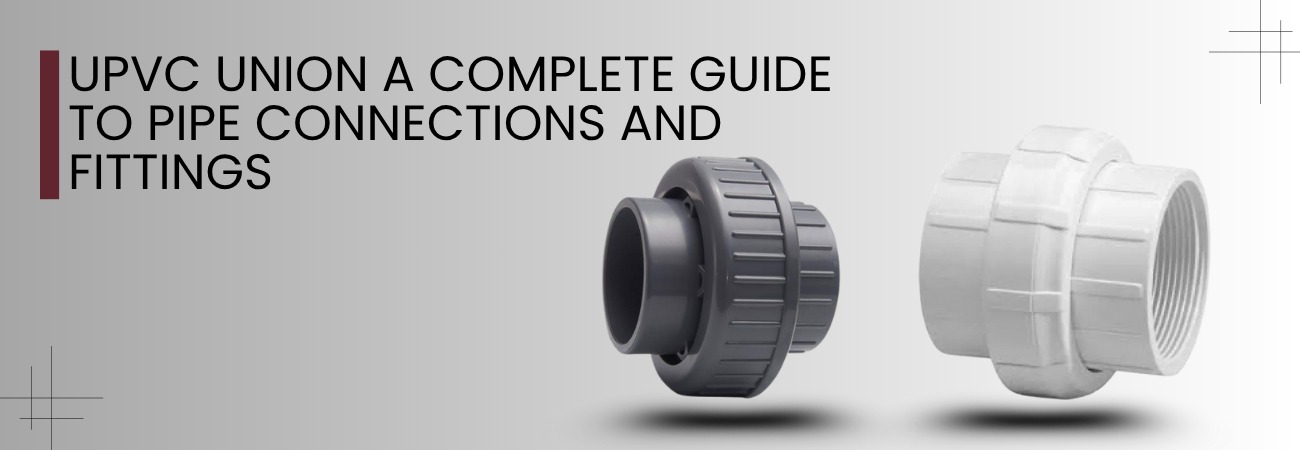
UPVC Union A Complete Guide to Pipe Connections and Fittings
Introduction
In modern plumbing systems, UPVC union fittings play a vital role in creating strong, reliable, and leak-resistant connections. Whether you are setting up a residential plumbing system, irrigation network, or industrial water supply line, UPVC unions make pipe connections easier to install, disconnect, and maintain.
Ajay Pipes UPVC unions are designed for applications where reliable performance, easy maintenance, and corrosion resistance are important. In this comprehensive guide, we’ll cover everything you need to know about UPVC unions, including their functionality, benefits, types, installation process, applications, and comparison with CPVC unions.
What Is a UPVC Union?
A UPVC union is a pipe fitting designed to connect two sections of UPVC pipe while allowing the connection to be disconnected without cutting the pipes.
In simple terms, a UPVC union works as a removable pipe joint. It is particularly useful in plumbing systems where pipes, pumps, filters, tanks, or other components may need to be removed for inspection, repair, or replacement.
Unlike a permanent joint, a union allows maintenance work to be carried out more conveniently.
Key Features of UPVC Unions
UPVC unions offer several features that make them useful for residential, commercial, agricultural, and industrial plumbing systems.
- Easy assembly: Designed for convenient installation and maintenance.
- Removable connection: Allows pipes and connected equipment to be disconnected without cutting the pipe.
- Chemical resistance: UPVC offers good resistance to many chemicals and corrosive substances.
- Leak-resistant sealing: A gasket or sealing mechanism helps create a secure connection.
- Lightweight construction: Easier to handle and install compared with many metal fittings.
- Low maintenance: Resistant to rust and corrosion, reducing maintenance requirements.
- Long service life: Suitable for applications where durability and consistent performance are required.
When Should You Use a UPVC Union?
UPVC unions are especially useful when future disconnection or maintenance is expected. They can be installed at strategic points in a piping system to make servicing easier.
Common situations include:
- Water filtration systems
- Irrigation pipelines
- Water treatment systems
- Industrial piping requiring periodic maintenance
- Residential plumbing near tanks and pumps
- Swimming pool plumbing
- Connections around valves and filtration equipment
For example, installing a union near a water pump can make it easier to remove the pump for servicing without dismantling the entire pipeline.
Types of Union Pipe Fittings
Union pipe fittings are available in different configurations depending on the type of pipe connection and installation requirements.
Socket Union
A socket union connects plain-ended pipes using solvent cement. The pipe is inserted into the socket and bonded using a suitable UPVC solvent cement.
Socket unions are commonly used where a secure solvent-welded connection is preferred while still allowing the union mechanism to be separated for maintenance.
Threaded Union
A threaded union uses threaded connections for installation and removal. It can be useful in systems where components need to be frequently dismantled.
Threaded unions are commonly considered around pumps, filters, valves, and other equipment that may require periodic servicing.
How to Install a UPVC Union
Installing a UPVC union requires proper pipe preparation and suitable solvent cement. Follow the manufacturer’s instructions and recommended curing times for the specific product.
Tools & Materials Needed
- UPVC pipes
- UPVC union
- UPVC solvent cement
- Pipe cutter
- Marker
- Clean cloth
Step-by-Step Installation
Step 1: Measure and Cut the Pipe
Measure the required pipe length and use a pipe cutter to make a clean, straight cut.
Step 2: Clean the Pipe Ends
Remove dirt, dust, moisture, and debris from the pipe ends. Also clean the internal surfaces of the union sockets.
Step 3: Mark the Insertion Depth
Mark the pipe at the appropriate insertion depth so you can confirm that it has been pushed fully into the socket.
Step 4: Apply UPVC Solvent Cement
Apply the recommended UPVC solvent cement to the outside of the pipe and the inside of the socket as directed by the product manufacturer.
For safe and effective application, follow the recommended instructions for the particular solvent cement being used.
Step 5: Join the Pipe and Union
Push the pipe firmly into the union socket and twist slightly to help distribute the cement evenly.
Step 6: Hold the Joint
Hold the connection firmly for approximately 30 seconds or according to the solvent cement manufacturer’s instructions.
Step 7: Allow Proper Curing
Allow the joint to cure for the recommended period before pressure testing or putting the system into service. Curing time can vary depending on pipe size, temperature, humidity, and the solvent cement manufacturer’s recommendations.
UPVC Union vs. CPVC Union: What’s the Difference?
Both UPVC and CPVC unions provide convenient removable connections, but their material properties and intended applications differ.
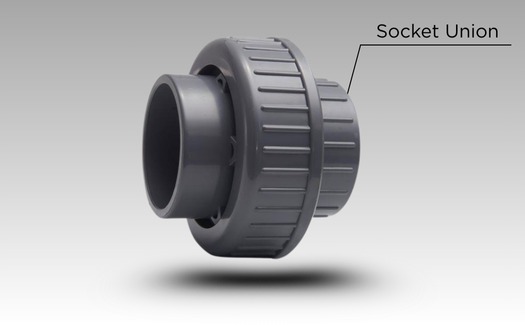
Socket Union
Joins two plain-ended pipes using solvent cement.Offers a permanent but serviceable connection.
| Feature | UPVC Union | CPVC Union |
|---|---|---|
| Temperature Capability | Generally suited to lower-temperature applications | Designed for higher-temperature applications |
| Material | Unplasticized Polyvinyl Chloride | Chlorinated Polyvinyl Chloride |
| Ideal Use | Cold-water and suitable chemical applications | Hot- and cold-water plumbing |
| Heat Resistance | Lower than CPVC | Higher than UPVC |
| Cost | Generally economical | Generally higher than UPVC |
| Common Applications | Water supply, irrigation, filtration | Hot-water and cold-water plumbing |
For hot-water applications, CPVC unions are generally the more appropriate choice. For suitable cold-water and chemical applications, UPVC unions can provide a practical combination of durability, corrosion resistance, and affordability.
Always select the fitting according to the manufacturer’s specifications, operating temperature, pressure, and application requirements.
Why Choose Ajay Pipes UPVC Unions?
Choosing the right union fitting can improve the serviceability and reliability of a plumbing system. Ajay Pipes UPVC unions offer several practical advantages:
- Long-lasting performance
- Hassle-free maintenance
- Reliable, leak-resistant connections
- Lightweight construction
- Corrosion resistance
- Resistance to many chemicals
- Easy installation
- Convenient disconnection during maintenance
- Suitable for various residential, agricultural, and industrial applications
Common Applications of UPVC Unions
UPVC unions can be used across a wide range of plumbing and fluid-handling systems.
Water Treatment Plants
Unions can simplify the maintenance of filters, pumps, valves, and other equipment in water treatment systems.
Swimming Pool Pipelines
They can be used around pumps, filters, and other pool equipment where components may need to be disconnected for servicing.
Agricultural Irrigation
UPVC unions can provide convenient connections in irrigation networks, particularly around pumps, filters, and control components.
Residential Plumbing
They can be useful around water tanks, filtration systems, pumps, and other plumbing equipment that may require future maintenance.
Industrial Piping
In suitable chemical and water-handling applications, UPVC unions can provide corrosion-resistant and maintainable connections.
Water Tank Connections
Unions can make tank-related plumbing easier to disconnect when cleaning, replacing, or servicing connected equipment.
Benefits of Using UPVC Unions in Plumbing
The main advantage of a union is serviceability. A conventional permanently joined pipe connection may require cutting the pipe during replacement or repair. A union, when correctly installed, provides a convenient point for disconnection.
Other benefits include:
- Reduced maintenance effort
- Easy equipment removal
- Corrosion resistance
- Lightweight handling
- Clean and compact installation
- Reliable sealing when properly installed
- Reduced need for cutting and rejoining pipes during maintenance
Important Installation Tips
For better performance and long-term reliability, keep the following points in mind:
- Always use compatible UPVC pipes and fittings.
- Ensure pipe ends are clean, dry, and properly cut.
- Use the recommended UPVC solvent cement.
- Do not overtighten threaded components.
- Ensure the sealing gasket is correctly positioned.
- Follow the manufacturer’s recommended curing time.
- Pressure-test the system only after the joints have adequately cured.
- Select the fitting based on the application’s pressure, temperature, fluid compatibility, and installation requirements.
Conclusion
UPVC unions are practical fittings for plumbing systems where easy maintenance and convenient pipe disconnection are important. Their lightweight construction, corrosion resistance, and removable connection make them useful across residential, irrigation, water treatment, swimming pool, and suitable industrial applications.
When selecting a UPVC union, consider the pipe size, pressure, temperature, fluid compatibility, connection type, and manufacturer’s specifications. For applications involving higher temperatures, a suitable CPVC union may be a better choice.
With properly selected and installed Ajay Pipes UPVC unions, plumbing systems can be designed for easier servicing, reliable connections, and long-term performance.
FAQs
A UPVC union is used to join two sections of pipe, offering a convenient way to disconnect them for maintenance or repair without cutting or damaging the pipe.
No, UPVC unions are best for cold water systems. For hot water, consider union CPVC fittings, which can withstand higher temperatures.
Yes, it’s recommended for socket-type unions. A reliable UPVC solvent helps create a secure and leak-resistant connection.
Go for a union when you want the option to easily separate the pipes later. Use a coupling for a permanent bond created with solvent cement.
For any queries, contact the plumbing experts at Ajay pipes on the Toll Free No. : 1800-11-4050 or via email at our email address info@ajaypipes.com