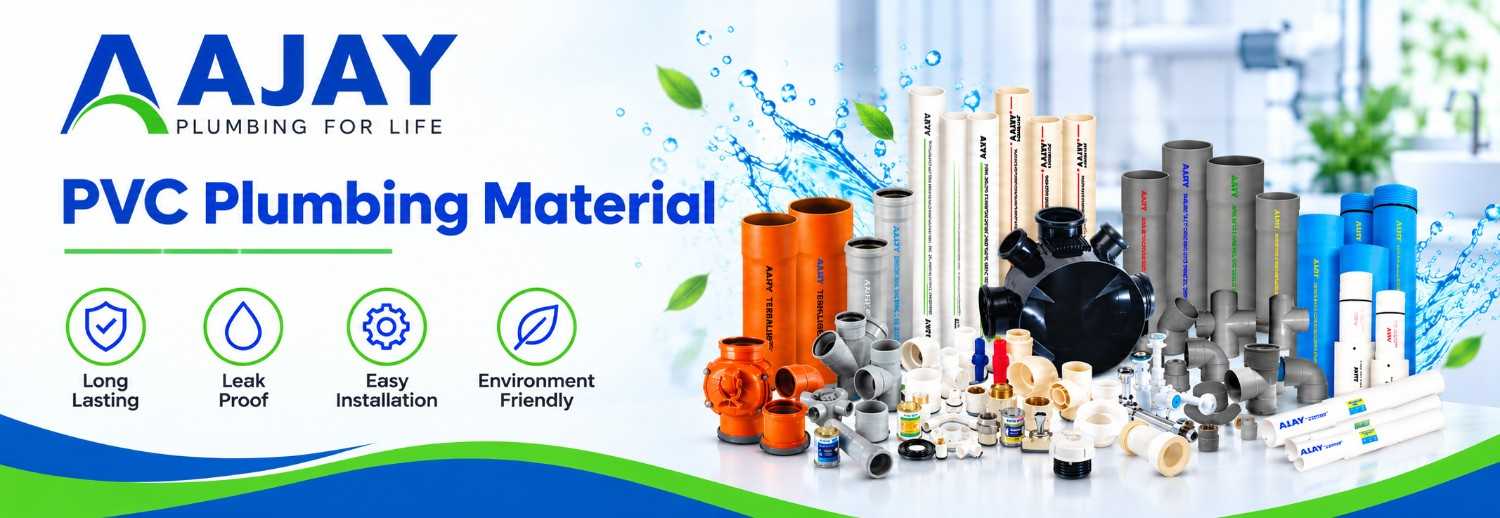
What Is PVC Plumbing Material? Types, Pipes, Fittings and Uses
Introduction
Picture a half-finished bathroom wall, freshly tiled, with a pipe joint weeping behind it. Most such failures trace back to one early decision: the material chosen for the job. PVC plumbing material fills the walls, shafts, and drains of most Indian buildings today. This guide explains what falls under that name, how each type behaves, and how to prepare a plumbing material list that your site team can actually use.
What Is PVC Plumbing Material?
PVC plumbing material means every piece of a water or drain system made from polyvinyl chloride, a tough plastic. That covers pipes, fittings, valves, traps, and the cement that joins them.
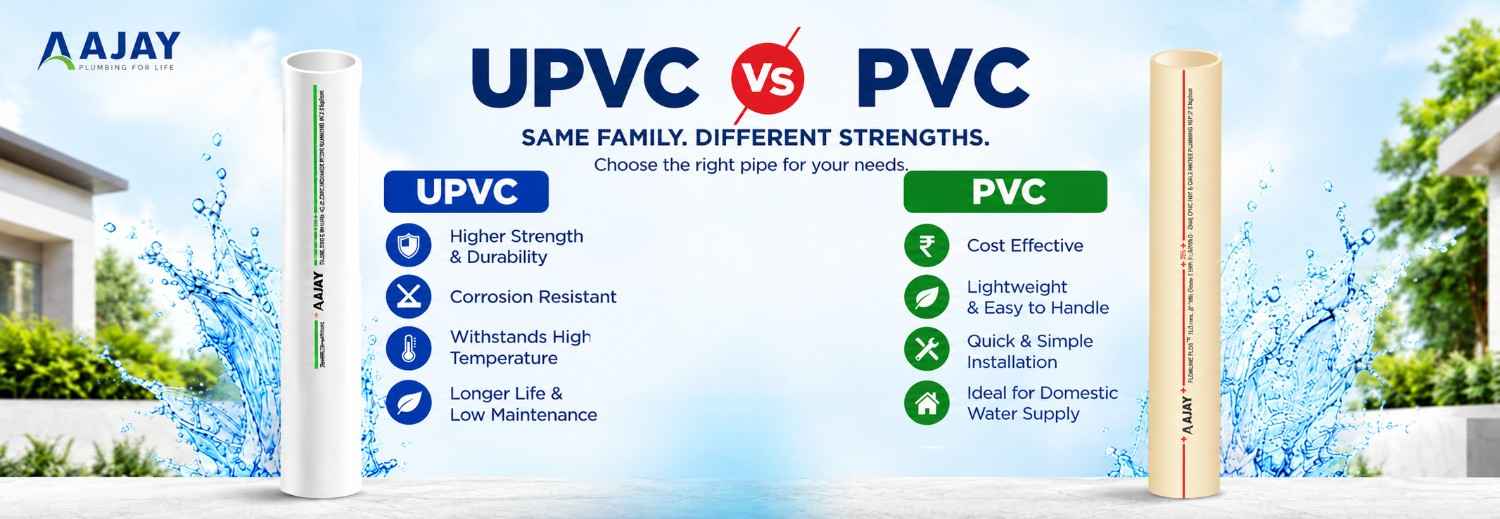
Three grades matter most in practice. UPVC serves cold water and drainage. CPVC is heat-tolerant, so it serves hot water lines. Standard PVC in larger diameters also serves irrigation and bulk transfer. Each grade follows its own specification, which is why one pipe never replaces another.
Benefits of PVC Plumbing Material Over Metal Pipes
Think about what happens to an iron pipe after ten monsoons. Rust builds inside, the flow narrows, and the water turns brown. PVC avoids that story entirely, because plastic cannot oxidise.
Several other traits help on site:
- The inner surface stays slick, so water meets less resistance.
- A single worker can carry and fix lengths that would need two people in steel.
- Solvent cement sets quickly, so crews finish more joints per shift.
- Material cost stays lower than copper or galvanised iron at comparable diameters.
- Quality pipes stay serviceable for decades when installed within their ratings.
These advantages explain why PVC plumbing pipes now dominate apartments, hotels, hospitals, and factories.
PVC Plumbing Pipes and Where Each Type Fits
Start from the liquid, not the catalogue. Ask what the line carries and at what temperature.
| Line type | Pipe to choose | Reference point |
|---|---|---|
| Cold water supply | UPVC pressure pipe | Ajay Greenline serves up to about 60 degrees C |
| Hot and cold water | CPVC pipe | Ajay Flowline Plus serves up to about 93 degrees C |
| Soil, waste, and rain | SWR pipe | Built to IS 13592 |
| Irrigation and bulk water | UPVC agricultural pipe | Built to IS 4985 |
Pressure lines use thicker walls, because they hold water under force. Drain lines use thinner walls, because water simply falls through them. Swapping the two invites bursts or sagging, so keep each pipe on its intended line.
A Practical Plumbing Material List for Your Site
An incomplete order creates the most irritating kind of delay: a crew waiting for a ten-rupee part. Build your plumbing material list by walking through the building one zone at a time.
- Supply pipes: UPVC or CPVC lengths, usually 3 m or 6 m long.
- Drain pipes: SWR pipes sized for each stack and branch.
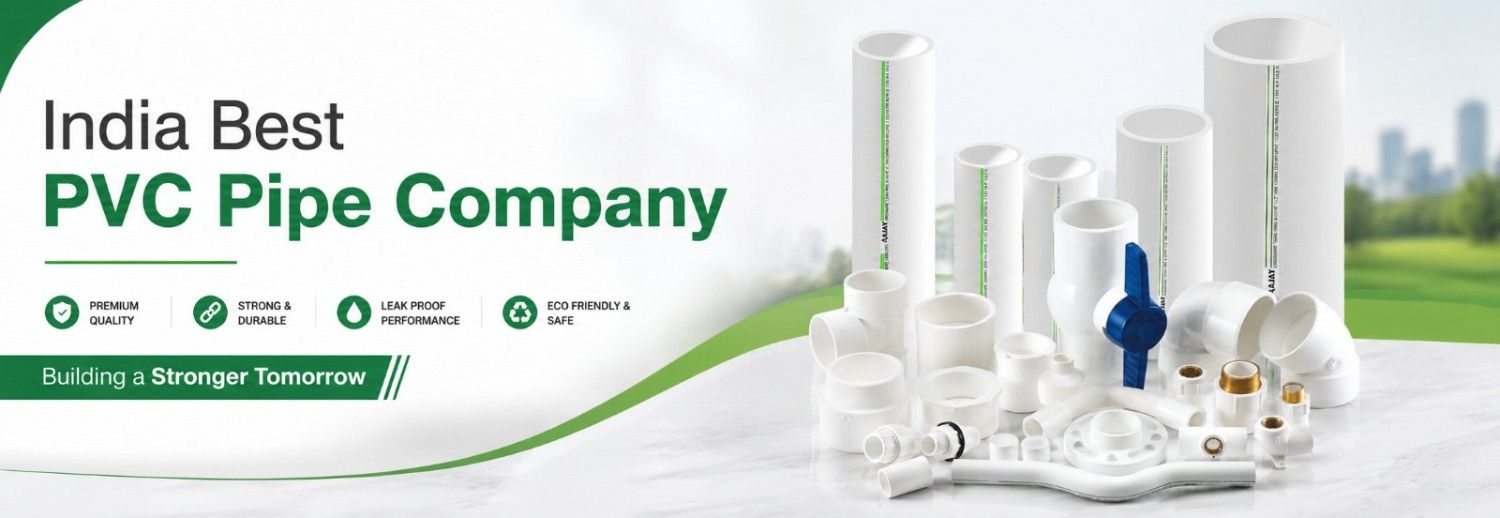
- Fittings: Elbows, tees, couplers, reducers, unions, and end caps.
- Control parts: Ball valves for each branch and each fixture group.
- Brass adaptors: Threaded pieces where pipes meet taps and tank outlets.
- Seal parts: P-traps, Nahani traps, floor drains, and vent cowls.
- Bonding supplies: Solvent cement and primer.
- Holding parts: Clamps and saddles at regular spacing.
- Hand tools: Pipe cutter, deburring blade, tape, and marker.
Total each item per room. Then add a modest allowance for offcuts and mistakes.
Joining PVC Pipe and Fittings Without Leaks
Pipes run straight, but buildings do not. Fittings bend, branch, reduce, and terminate the line. For a leak-free result, a PVC pipe and fittings set must match in grade, diameter, and standard.
Solvent welding is the common method. The cement slightly dissolves the mating surfaces, and the two parts then fuse as the solvent evaporates. A careful installer follows a short routine:
- Cut the pipe square.
- Scrape off the rough edge.
- Wipe both surfaces clean.
- Brush on primer where the system calls for it.
- Coat with cement, push home, and hold briefly.
Drain stacks often use ring fit joints instead. A rubber ring in the socket absorbs thermal movement, which suits tall vertical runs.
One practical rule saves many headaches: buy the pipe, fittings, and cement as one system. Odd combinations often leave tiny gaps at the socket.
Steps to Select the Right PVC Plumbing Material
Work through these checks before placing an order.
- Name the service. Cold supply, hot supply, or drainage decides the grade.
- Read the ratings. Compare working pressure and temperature with what the line will face.
- Fix the diameter. Flow demand drives the size. Our reference on PVC pipe sizes lists common diameters and their typical uses.
- Inspect the marking. A genuine pipe carries printed details and the mark of the Bureau of Indian Standards.
- Ask for test proof. Reputable makers share batch testing and warranty terms.
- Weigh price against lifespan. A current PVC pipes price list helps you compare, but wall thickness and quality matter as much as rate.
A thin-walled bargain pipe often fails first. Judge cost across the full life of the system.
Limits of PVC You Should Respect
Every material has limits. Ordinary UPVC must stay below its rated temperature, so hot lines need CPVC. PVC should also stay away from compressed air and gas service. Follow local codes and approved materials there.
Sun is the other enemy. Long exposure weakens unprotected plastic over time. Choose UV stabilised pipe for outdoor runs, or shield the line with paint or cladding.
Conclusion
PVC plumbing material offers a clean, durable, and economical route for moving water. Begin with a clear plumbing material list. Pair each line with the right grade. Then buy matched pipes, fittings, and cement from a maker that tests its output. Ajay Pipes has served the plumbing trade for over 50 years, with ranges for cold water, hot water, drainage, and agriculture.
FAQs
It carries cold water, removes household waste, and drains rain water. Its CPVC grade also supports hot water lines.
Choose UPVC pressure pipes made for potable water, with a BIS mark and lead free construction.
List pipes, fittings, valves, traps, solvent cement, primer, clamps, and tools. Add a small allowance for waste.
Avoid it where possible. Socket dimensions can differ slightly, which may weaken the joint.
Quality PVC systems can serve for decades when plumbers install them properly and respect the rated limits.
For any queries, contact the plumbing experts at Ajay pipes on the Toll Free No. : 1800-11-4050 or via email at our email address info@ajaypipes.com